
Maya mathematician Sak Tahn Waax decoded: first named astronomer-operator found in the Americas
A Xultun mural yields the name Sak Tahn Waax and a Mars-Venus orbit formula dated to AD 781.
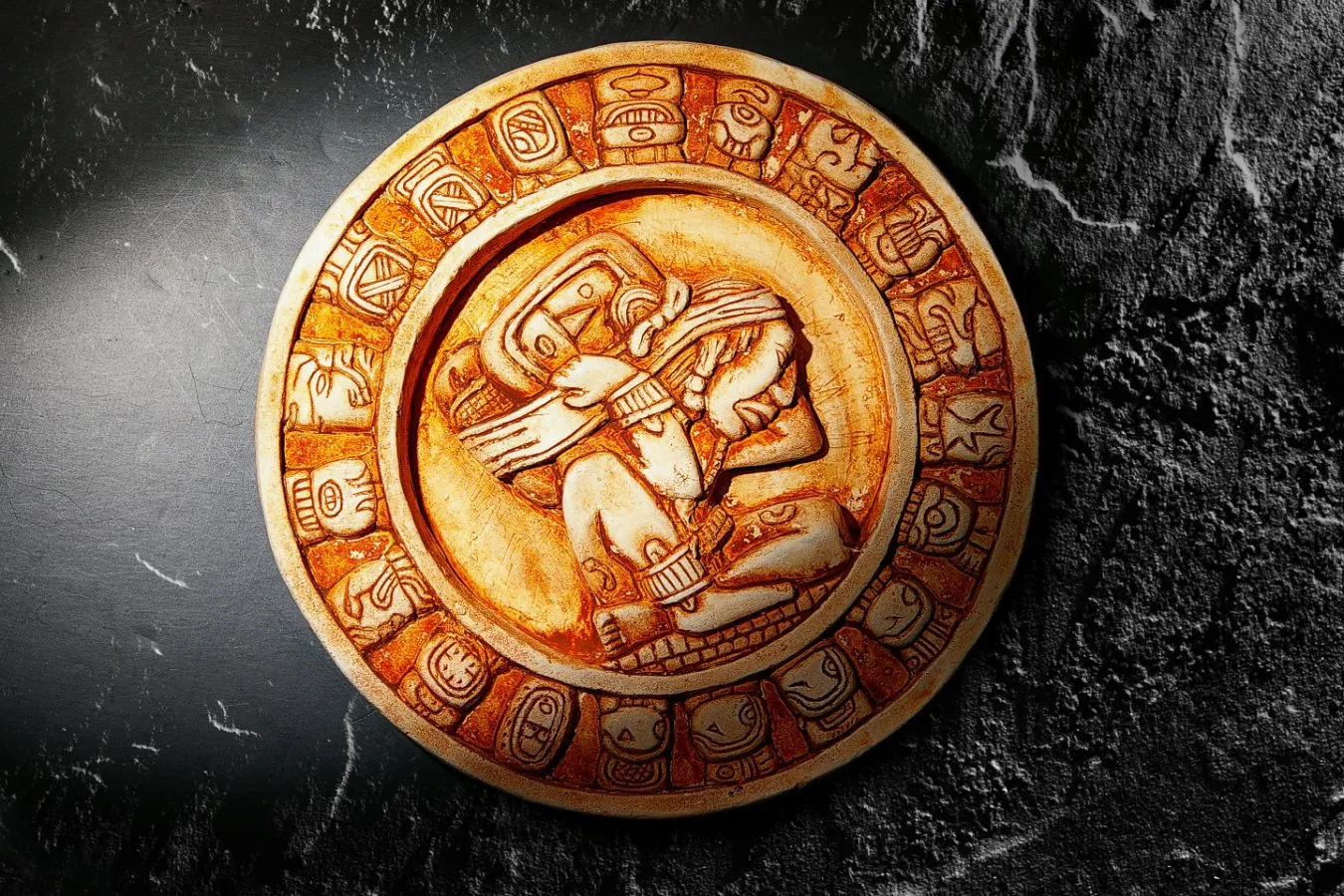
Researchers at MIT and colleagues have deciphered Xultun’s Text 19, identifying Sak Tahn Waax, the earliest named Maya astronomer-mathematician known in the Americas. The find lets decision-makers see how centuries-old predictive science was embedded in timekeeping, ceremony, and planning.
An ancient Maya wall text now carries a real human signature. In the Xultun site in Guatemala, researchers have deciphered Text 19 and identified its author as Sak Tahn Waax, translating to White-chested Fox. The team says this is the first direct mention of an ancestral Maya astronomer-mathematician by personal name, and it is also the oldest recorded name of an astronomer-mathematician ever known from anywhere in the Americas.
That breakthrough is not just a historical footnote. The mural is also packed with a mathematical formula, built to track orbital cycles of Mars and Venus, and it most likely points to a date of 7 November of AD 781 in the Julian calendar. The formula spans five Venus synodic cycles or 2920 days, while drawing on calendar structures linked to a 260-day calendar, a 365-day solar calendar, a 584-day approximation of Venus’s synodic cycle, and a 780-day approximation of Mars’s synodic cycle.
To understand why this matters outside archaeology circles, zoom in on how the Maya worked. According to the researchers, Text 19 includes around 50 texts across the east and north-east wall of a small masonry building at Xultun, which scientists believe are “rough drafts” by Maya mathematicians as they charted and predicted cycles of celestial objects relative to Earth and to one another. The Maya civilisation flourished in Central America between roughly 2000 BC and AD 1697. They had advanced knowledge of mathematics and astronomy, but much of it was lost after Spanish missionaries conducted a mass burning of their books. So every deciphered name and method is not simply academic trivia, it is a surviving data point in a partially destroyed record.
Text 19 itself is only 11 hieroglyphs, but the process to decode it was anything but simple. The characters had to be scanned, photographed, and magnified under different illumination angles, then compared to other, later astronomical-mathematical writings, before the meaning could be deduced. That matters for interpretation because hieroglyphs are not always readable straight off a wall. Light conditions can change what the carved marks reveal, and historical comparison can provide the pattern-matching needed to interpret a short inscription. In other words, the “math” here is tied to observational discipline and to a workflow that looks suspiciously like data validation.
Once decoded, the formula reveals a timekeeping engine: the calendar system on display in Text 19 uses maths in relation to time periods. Those periods are drawn from the 260-day calendar and 365-day solar calendar, then connected to synodic cycles approximations for Venus and Mars. Rossi and colleagues describe Venus’s synodic cycle as the period when the planet returns to the same position relative to both Earth and the sun, and they use a 584-day approximation for it. For Mars, they use a 780-day approximation of its synodic cycle. They then sum it up into a total length of five Venus synodic cycles or 2920 days. This is a calculation designed to make astronomy useful to timekeeping.
The million-dollar question is always application: what did someone actually do with this formula? Rossi says exactly how it would have been applied is unknown because the formula “isn’t incorporated into any larger body of work.” Still, he suggests what it likely supported: showing the relationship between Venus and Mars in ways that could then be applied to political ceremony, predictive astronomy, and understandings of seasonality. That framing is important. It suggests the work was not sitting in a vacuum. It connected celestial mechanics to human calendars, and human calendars connect to governance and ritual scheduling.
For today’s executives, the second-order implication is not that you need to learn hieroglyphs. It is the organizational lesson. Rossi describes such meticulous mathematical legwork as critical to structuring life in a world before computers, smartphones, and weather apps. Modern companies still run on imperfect forecasts, formal calendars, and decision cycles. When the “instrument” is human-made, not machine-generated, the quality of the underlying model and the clarity of its intended use becomes the entire system. Even in this ancient case, the researchers argue that a named individual mattered. Rossi says Text 19 includes a formula and the name of its creator, which demonstrates the importance of this kind of intellectual contribution for Classic Maya people, whether the scribe was signing his own calculation or attributing it to another.
The research, published in Antiquity with Journal Reference DOI: 10.15184/aqy.2026.10378, essentially adds a new character to the story of how predictive models were built and credited. If a short mural can encode orbital cycles, date references, and a plausible path to ceremony and seasonality, then information systems and accountability are not new problems. They are just wearing different costumes. For leaders building strategy in data-driven environments, the takeaway is blunt: models without named ownership, calibration discipline, and a clear downstream purpose are where forecasts go to die.
This story's Key Insights and Take-aways are locked.
Create a free account to unlock Executive Actions for one credit.
Register to UnlockAlways free for Executives Club members. Join the Club
More in Science

Alaska's 1,580-foot tsunami had warning signs. Scientists just found them.
Rapid glacier retreat, heavy rainfall, and thousands of tiny tremors preceded Alaska's 1,580-foot tsunami, a warning for every coastal community in a warming world.

The rare mutation that lets high-risk brains dodge Alzheimer's
Scientists found a natural defense against protein buildup, opening a new path to preventive treatments.

3,000 steps a day may halve Alzheimer's decline, study finds
New research links a modest daily walk to less tau buildup and nearly half the cognitive and functional decline, even for those with early signs.