
NASA finds “aggressive” air taxi motion lowers comfort and willingness to fly
A multi-year VR study maps sudden maneuvers to passenger thresholds, guiding design and flight operations for air taxis.
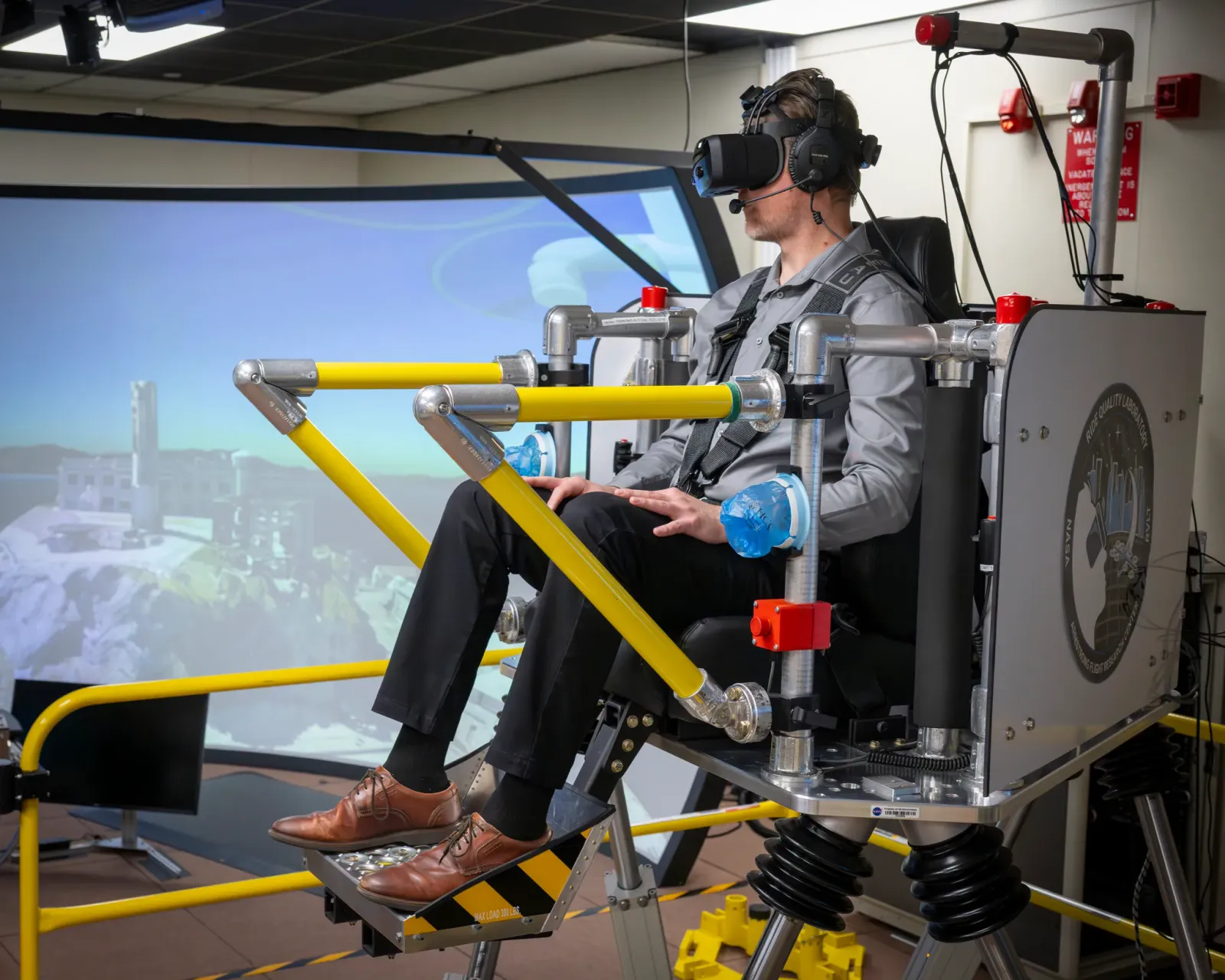
NASA’s Armstrong Flight Research Center, led by NASA Armstrong lead researcher Curtis Hanson, completed a multi-year study using a virtual reality motion simulator to assess air taxi ride comfort. The results produce new models that can predict when passengers may feel uncomfortable and help shape maneuvers, aircraft design, and flight operations.
No one wants an uncomfortable aircraft, and NASA just quantified the moment that “rough” becomes “no thanks.” In a multi-year study, NASA researchers used a virtual reality passenger ride quality simulator at the agency’s Armstrong Flight Research Center in Edwards, California, to measure how large, sudden air taxi motion affects comfort and willingness to fly.
The key takeaway is not just that motion matters, but that some kinds of large, sudden maneuvers can be especially bothersome, and NASA can estimate when passengers may begin to feel uncomfortable as motion increases. Using the data, the team developed new models linking specific sudden motions to passengers’ willingness to fly, with an aim of predicting how air taxis should fly so that most passengers find the experience enjoyable and want to ride again.
That may sound like “seat comfort basics,” but for an emerging air taxi industry, comfort is not a soft metric. Air taxis are small, vertical-takeoff-and-landing aircraft designed for short trips, and the business problem is immediate: early customer adoption depends on confidence, repeat ridership, and the reliability of the “feels good in the ride” promise. If an operator flies in a way that triggers discomfort for a meaningful slice of people, you do not just lose passengers. You erode trust, and trust is the unit of value in any new transportation category.
NASA’s approach is also unusually direct. Volunteers at Armstrong strapped into a VR motion simulator and experienced sudden shifts and tilts that tomorrow’s air taxis could encounter, effectively letting researchers see those moments from a passenger’s point of view. Their reactions are giving NASA insight into how aircraft motion influences both comfort and confidence in flight, including the idea that large, sudden motions can be especially bothersome.
In the simulator experiments, participants were exposed to four levels of aircraft pitching up and down, tilting from side-to-side, rotating, or accelerating quickly into a climb or a dive. Flights were simulated from downtown San Francisco to Alcatraz Island, California, which grounds the experience in a recognizable route rather than an abstract motion test. Participants rated each flight on a five-point scale and identified which motions felt uncomfortable. They were also asked whether they would take a real air taxi flight with motion they found uncomfortable.
What makes the findings operational is the way comfort and intent were modeled together. The data indicates that even moderate changes in these motions reduced comfort for some participants, while others remained comfortable at higher levels. That kind of spread is exactly what matters for designing an experience, because it suggests “one-size discomfort” is not the story. It is a spectrum, and NASA’s models are intended to translate motion patterns into predicted comfort thresholds.
NASA is careful about where the motion comes from. Large, sudden movements are not only the result of aircraft maneuvers; they can also come from gusting winds or landings. That expands the relevance of the research beyond “pilot training” into the broader system, including environment and flight profile choices. With models that estimate when passengers may begin to feel uncomfortable as motion increases, developers can plan aircraft design and flight operations to minimize the impact of those situations.
The work also plugs into how this industry is being built. NASA notes that the research effort is led under the Subsonic Vehicle Technologies and Tools project in NASA’s Research and Technology Mission Directorate and contributes to the agency’s advanced air mobility research. The study found clear relationships between specific aircraft motions and how comfortable people feel during flight, and it builds on earlier NASA ride-quality research that compared today’s feedback to airline passengers 50 years ago. According to NASA’s framing, today’s travelers may be less tolerant of rough motion than airline passengers 50 years ago, which matters because it suggests a tightening bar for what “acceptable” feels like, not just an overall improvement in technology.
For executives, boards, and product leaders watching advanced air mobility, this is a reminder that comfort is measurable and modelable, not just a marketing line. If NASA can map motion to comfort thresholds and willingness to fly, operators and OEMs can use similar thinking to reduce the frequency of discomfort-triggering events, set operational guidance that protects repeat ridership, and design for a passenger base that may expect smoother experiences. In other words, the next competitive edge in air taxis may not only be speed or price. It may be motion that passengers can actually tolerate, predictably, every trip.
This story's Key Insights and Take-aways are locked.
Create a free account to unlock Executive Actions for one credit.
Register to UnlockAlways free for Executives Club members. Join the Club
More in Science

Alaska's 1,580-foot tsunami had warning signs. Scientists just found them.
Rapid glacier retreat, heavy rainfall, and thousands of tiny tremors preceded Alaska's 1,580-foot tsunami, a warning for every coastal community in a warming world.

The rare mutation that lets high-risk brains dodge Alzheimer's
Scientists found a natural defense against protein buildup, opening a new path to preventive treatments.

3,000 steps a day may halve Alzheimer's decline, study finds
New research links a modest daily walk to less tau buildup and nearly half the cognitive and functional decline, even for those with early signs.