

McGregor returns after five years to rematch Holloway at UFC 329, July 11
The fight card stakes are simple: legacy points for McGregor and a title resume test for Holloway.
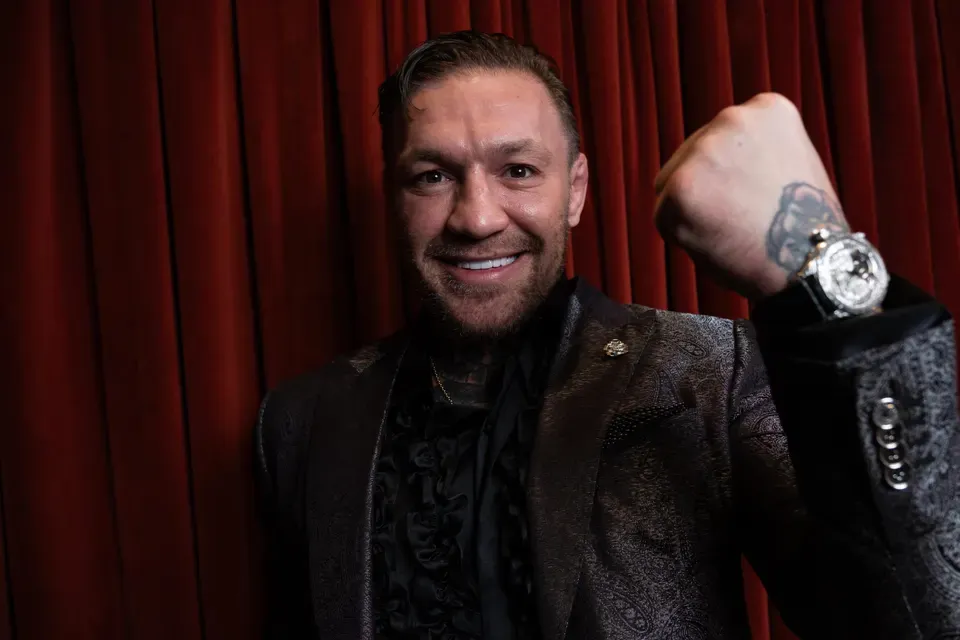
Conor McGregor returns from a five-year layoff to rematch Max Holloway at UFC 329 on July 11. For decision-makers tracking major sports properties, the rematch is a high-stakes credibility and audience-traction play.
Conor McGregor is back after a five-year layoff, and he is doing it with a direct line back to unfinished business. UFC 329, on July 11, features McGregor’s rematch against Max Holloway, a matchup that matters because both names carry built-in gravity with fans, sponsors, and the broader UFC ecosystem.
That timeline is the headline’s real stake: a five-year absence is long enough to turn momentum into a question mark. The event is not just “a return fight,” it is a credibility test for McGregor’s competitive relevance and for Holloway’s ability to keep stacking meaningful outcomes when the opponent is a returning mega-star. UFC 329 is where those questions get answered quickly, in one night, with real consequences for how both athletes are positioned next.
To understand why this rematch format hits so hard, you have to remember how UFC value accrues. Fighters build leverage through recurring proof. A rematch is a repeat measurement, and that makes it sharper than a one-off. It tells the market: the promotion and the fighters believe there is enough unresolved storyline to justify doing it again, under the brightest spotlight available in a given promotion cycle.
For McGregor, the five-year layoff creates a specific kind of risk. In combat sports, timing is everything. Even if a fighter trains continuously, time away changes the competitive landscape, the preparation rhythms, and the way opponents approach a matchup. That does not automatically doom anyone, but it raises the standard for what counts as “a successful return.” In practical terms, a win versus Holloway at UFC 329 does not just add a result to a record. It is a signal to matchmakers, to fans, and to the entire ecosystem that McGregor’s return is not symbolic. It is functional.
For Holloway, the stakes are equally sharp, just differently framed. Holloway’s value is built on staying in the hard center of the sport and repeatedly converting elite opposition into outcomes that keep him relevant to the biggest possible fights. A rematch against McGregor means Holloway is not being asked to develop against an unknown. He is being asked to execute again at a moment when the opponent comes back with a massive spotlight and a brand that can shift attention fast. The business consequence is straightforward: a strong performance helps maintain Holloway’s position as a constant gravitational force in a heavyweight-adjacent mainstream conversation, even when narratives try to revolve around the returning star.
There is also an industry reason this card is worth watching beyond the two athletes. UFC 329 happening on July 11 places it in the calendar where promotions, broadcasters, and partners tend to compete for attention. When a global name like McGregor returns, the event is not only a sporting product. It becomes an advertising event, a media event, and sometimes even a merch and sponsorship event, because the audience base arrives faster and with more certainty than it would for a purely incremental matchup.
Regulatory and operational framing matters too, even when it stays behind the curtain for most viewers. Major UFC events require state and athletic commission oversight, including licensing and compliance with the sport’s rules. That kind of process is routine for promotions, but it adds another layer of “realness” to fight night stakes. It is not just that McGregor and Holloway are stepping into a cage. It is that the event has to clear the same compliance machinery that governs any top-tier bout, with timelines and requirements that make fight card execution non-negotiable.
For executives and board-level leaders tracking sports properties, the strategic takeaway is that UFC 329 is effectively a stress test for narrative-to-performance conversion. A rematch with a returning five-year absence is inherently a question of whether star power translates into credible competitive outcomes. If McGregor’s return lands, the promotion and its stakeholders gain momentum on both entertainment and legitimacy. If it does not, the same stakeholders learn a different lesson: that even the biggest names cannot shortcut the sport’s demand for results. Either way, July 11 is the moment when the market gets an answer, not a projection.
This story's Key Insights and Take-aways are locked.
Create a free account to unlock Executive Actions for one credit.
Register to UnlockAlways free for Executives Club members. Join the Club
More in Business
Comcast shares jump 25% as it plans to split NBCUniversal and Sky
The tax-free spin-off could reshape focus, funding, and competition across media and tech for years.

Bungie cuts most Destiny 2 staff as Sony says Marathon still matters
Herman Hulst confirms layoffs affecting most Destiny and some Marathon teams after Bungie admits Destiny fell short.

SK Hynix jumps 11% after seeking up to $29.4B in Nasdaq listing
The chip giant filed for a Nasdaq listing plan that could raise $29.4 billion, instantly reshaping investor expectations.