

Meccha Chameleon paid creators $1M per day after a 2-month dev cycle
Two Japanese indies turned a June 9 launch into $10M sales in 3 weeks, then math got ugly.
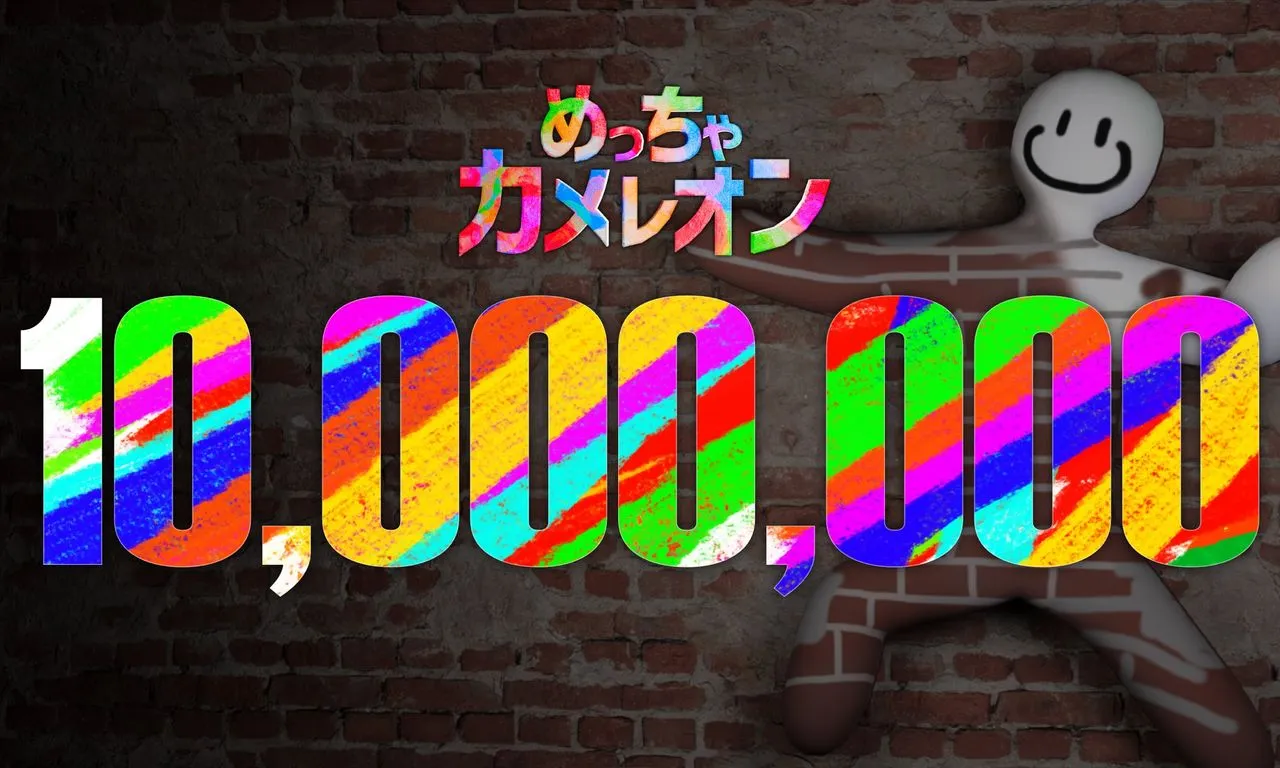
Meccha Chameleon, built in just two months by Japanese indie creators Lemorion and Haganeiro, sold more than 10 million copies in the three weeks since its June 9 launch. At roughly $60 million in gross sales revenue by June 25, their output implies about $1 million per day of work.
Meccha Chameleon’s creators, Lemorion and Haganeiro, effectively earned about $1 million per day from a dev cycle that lasted just two months. The reason the figure lands like a punch is timing. By June 25, the hide-and-seek multiplayer camouflage game had sold more than 10 million copies in the three weeks since it launched on June 9.
PC Gamer’s back-of-the-napkin math starts with a simple retail price: at $5.99 per copy, 10 million sales implies roughly $60 million in gross revenue. That is not the same as what they keep. Steam takes a cut, taxes apply, and the game did not launch at full price for every buyer. The first week discount brought the price down to $4.79, so the realized revenue would be somewhat lower than the $60 million headline number. Also, some sales are outside the US, including Japan, where the effective price often comes in under $6. Still, even after you acknowledge those caveats, the scale stays absurd.
Why the “$1 million per day” framing is more than internet math is because of how quickly the work-to-revenue ratio collapsed. Reviews on Steam show a pattern where the daily review volume did not really pick up steam until after the first week. That detail matters for decision-makers because it suggests a real flywheel, not just a launch-day spike. As of PC Gamer’s writing, there were 36,810 total Steam reviews, with 20,712 in English, meaning western traction was real and not purely regional excitement. And in the two-month window, the creators effectively skipped the typical indie slog of long runway, slow content updates, and gradual discovery.
There’s also the incentive mechanics that cash in when revenue accelerates. PC Gamer notes that Meccha Chameleon likely already earned enough to graduate from Valve’s 30% cut of sales to the 20% rate Valve takes on all revenue above $50 million. That matters because it is not a vague “higher margins” story. It is a discrete threshold that can change the payout curve once the game crosses it. If your revenue ramps quickly, you are not just selling more units, you are potentially moving into a better revenue share band sooner than you would in a slow-growth trajectory.
For finance-minded operators, the other punchline is the “promotion budget equals zero” claim in the GameWith interview. PC Gamer reports the developers said they did not spend any money on promotion, so up-front costs were effectively zero. That is the kind of statement that makes boards sit up, because it changes how you think about unit economics and risk. If acquisition spend is truly near-zero, the model becomes more like: “did people find it, did they like it, and did the game sustain attention long enough to compound?” Meccha Chameleon’s timeline suggests yes, because sales hit 10 million copies within three weeks, then reviews and momentum continued to roll after the first week.
Then there is the production logic behind the speed. PC Gamer points to their GameWith interview as translated by Automaton. The creators described an approach built around getting a barebones mockup working first, then iterating. They also said that creating the entire thing up front allows them to hit the finish line more efficiently, and that the reassurance, “at worst, we can still release this as is,” was a strong motivator. That is not just inspirational talk. It’s a development and governance philosophy: reduce uncertainty early, build something complete enough to ship, and let the iteration cycle operate on a real playable base rather than an endless “someday” roadmap.
PC Gamer also adds the real secret isn’t only process, it is reuse. They say the creators reused assets from earlier projects, which themselves took 2-3 months to develop. Translation for executives: speed was not magic, it was leverage. You can ship fast when your pipeline is built to get to a shippable core quickly, and when assets already exist to avoid the slowest kinds of reinvention.
The strategic stakes are bigger than one viral indie. The article frames Meccha Chameleon as the second hit of the summer to earn bonkers amounts of money for fast work, contrasting it with horror film Obsession, filmed in 26 days on a budget of $750,000 and later making $371 million. Different industries, same signal: when production cycles shrink, the upside distribution can change quickly. For founders, studios, and investors, the lesson is not “copy their exact game loop.” It is that executives should expect more volatility, more attention shocks, and faster reward cycles as teams adopt development methods that shorten time to playable reality.
And for anyone trying to underwrite future winners, the uncomfortable takeaway is that Meccha Chameleon turns the normal cadence upside down. A game developed in two months, launching June 9, reaching 10 million copies by around June 25, and implying about $1 million per day creates a benchmark that can warp internal expectations. The question boards and leadership teams will have to answer next is whether they can build systems that reliably reach “shippable and iteratable” quickly, without turning speed into chaos. When momentum is this fast, the margin for indecision is… well, basically gone.
This story's Key Insights and Take-aways are locked.
Create a free account to unlock Executive Actions for one credit.
Register to UnlockAlways free for Executives Club members. Join the Club
More in Business

Comcast shares jump 25% as it plans to split NBCUniversal and Sky
The tax-free spin-off could reshape focus, funding, and competition across media and tech for years.

Bungie cuts most Destiny 2 staff as Sony says Marathon still matters
Herman Hulst confirms layoffs affecting most Destiny and some Marathon teams after Bungie admits Destiny fell short.

SK Hynix jumps 11% after seeking up to $29.4B in Nasdaq listing
The chip giant filed for a Nasdaq listing plan that could raise $29.4 billion, instantly reshaping investor expectations.