

Meccha Chameleon player RNGeezMC wins by not disguising at all
The “imposter” tactic exploits public lobby habits, and it actually works against seekers.
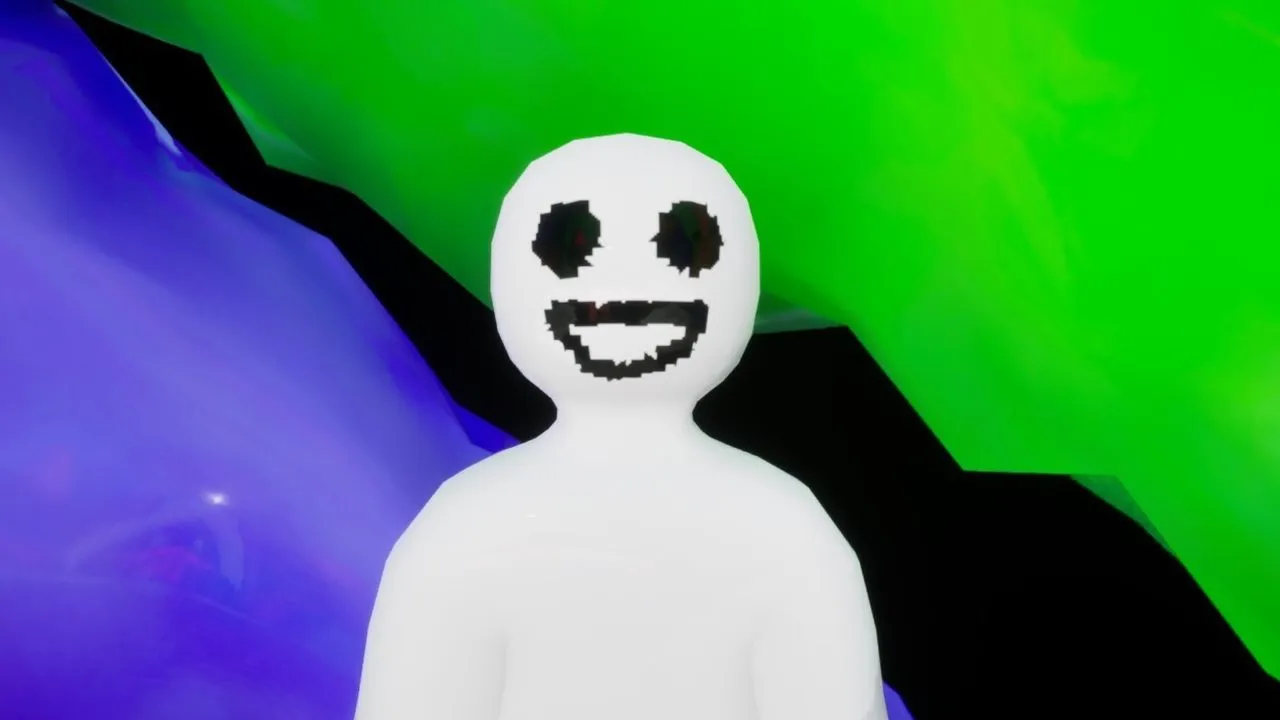
Meccha Chameleon player RNGeezMC demonstrated a public-lobby strategy where they never disguise themselves, coating their featureless body in white and moving openly. The playbook matters to decision-makers because it shows how quickly players can weaponize emergent behavior, not just mechanics.
Most Meccha Chameleon clips show hide-and-seek mastery: people blend into paintings so well the whole screen looks curated by an artist with perfect aim. Then RNGeezMC drops a different kind of flex. In a recent public-lobby clip, they win while not disguising at all, essentially challenging the assumption that you must “disappear” to survive.
The method is brutally simple. RNGeezMC coats their featureless body in white and walks around openly like they are part of the environment, as if they are the seeker, not the hider. Nobody seems to notice that they are slightly smaller and, crucially, that they are walking without a shotgun. That is the whole pivot: instead of hiding, they behave confidently enough that other players keep scanning for the classic disguise tells.
RNGeezMC also leans into the chaos of player attention. They do not even try hard to stay out of the seekers' first-person camera, and at one point they stand in front of another player who is so focused on the hunt that they get pushed out of the way. Even more telling, RNGeezMC raises their hands like they are surrendering, a gesture “that I don't think seekers can even perform,” and they still get away unscathed. The match ends, and RNGeezMC appears in disbelief that it worked, which is a classic tell of what makes games like this spread: the community discovers a rule bend that feels unearned, until you replay it and realize the system never explicitly forbade it.
Here is why this is more than a funny clip. In these disguise-based games, players typically treat visibility as a binary problem. Either you blend in, or you get hunted. RNGeezMC reframes it as an attention problem. If other players are busy scrutinizing everything for expected deception, then “unexpected deception” becomes its own camouflage. The strategy also benefits from the public-lobby context: strangers bring variance. When you only get one run at a match, players cannot all coordinate on a perfect detection script. So a single player who subverts norms can create a temporary “folk rules” mismatch that lasts just long enough to win.
That matters for anyone thinking about how a hit game scales, because the success path may not be the one the developers imagined. The source notes that Meccha Chameleon has exploded in popularity over the last few weeks, selling over 10 million copies, and that it is “the first breakout game in years” where the reviewer, PC Gamer's Lincoln Carpenter, felt like he was applying skills and understanding with broader relevance. That framing lines up with what we are watching here: the game rewards not just camouflage skill, but also social inference and meta-awareness. If you can read what other players expect, you can turn their training into your win condition.
It is also a quick reminder of how “emergent gameplay” can outperform “intended gameplay.” Meccha Chameleon already looked incredible when players hid underneath tables and up against paintings using the game's rudimentary painting system. RNGeezMC simply shows that the rudimentary part is not the only advantage surface. Players can exploit that humans are not sensors. They are pattern-matching machines that get distracted by what they have seen before. In other words, the game can become a laboratory for psychology under pressure, not just an art contest.
Now zoom out to the second-order implications for executives, studios, and anyone allocating resources in live or community-driven gaming. A viral exploit like this can change player behavior overnight. It can also change retention. If people believe the only way to win is to master the painting system, they will practice one set of skills. If they see someone win “in plain sight,” some players will shift toward meta tactics, and others will get frustrated if the system feels inconsistent. That can drive churn, but it can also drive deeper engagement if the community keeps finding counterplays, new tells, and new strategies for seekers. For boards and product leaders, the key question becomes: does the game maintain competitive clarity as players evolve faster than you can update matchmaking rules or balance tools?
It is worth noting the regulatory angle is light here, but the governance angle is not. This is not a monetization fraud story or a security exploit. It is gameplay behavior within public lobbies. Still, games that grow to tens of millions of copies create bigger expectations about fair play norms, anti-toxicity, and how quickly developers respond when “strategies” feel like loopholes. The source even frames RNGeezMC’s approach as something that other games might punish for, but not Meccha Chameleon, precisely because subverting the rules is “a valid tactic.” When a title is explicitly open to player ingenuity, the developer's job shifts from preventing every edge case to sustaining an ecosystem where edge cases do not permanently break trust.
So the strategic stake is simple: in a world where games can sell 10 million copies in a matter of weeks, player-discovered rule bending becomes product behavior. If you are a studio executive, an investor underwriting live services, or a creator building around competitive mechanics, you should assume that norms are temporary and playbooks mutate quickly. RNGeezMC’s “hiding is for amateurs” performance is funny. It is also a real signal: the market will reward players who understand systems, not just those who master the obvious path.
This story's Key Insights and Take-aways are locked.
Create a free account to unlock Executive Actions for one credit.
Register to UnlockAlways free for Executives Club members. Join the Club
More in Entertainment

Russell Brand's accuser 'bewildered and confused' as he denies 7 sex charges
The criminal case against the comedian is a live test of how media companies manage talent risk when serious allegations go public.

'It's a Magic Trick': Ballet Experts Say Rosalía's SNL Pose Is Impossible
Three ballet experts tell Rolling Stone Rosalía's gravity-defying SNL stillness shouldn't be possible - and why the debate is now part of the show.

Activision CMO: GTA 6 Will Boost Call of Duty, Not Bury It
Activision's top marketer says Rockstar's blockbuster will drive players back to consoles and into Modern Warfare 4, even as the company admits its recent strategy failed.