

Meccha Chameleon sells 7 million copies in under two weeks, then keeps accelerating
A niche artsy hide-and-seek game is suddenly a sales machine, forcing studios and publishers to rethink what “indie” can do.
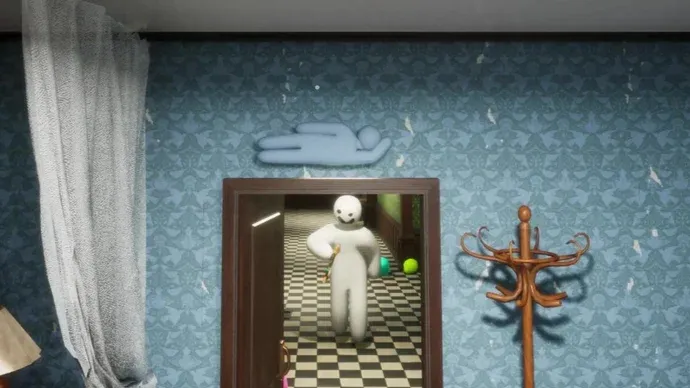
Eurogamer reports that artsy hide-and-seek indie game Meccha Chameleon has passed 7 million copies sold since release in less than two weeks. For decision-makers, the hit is a live data point on how fast distribution, audience fit, and momentum can compound in games.
Meccha Chameleon, an artsy hide-and-seek indie game, has passed 7 million copies sold since its release, in less than two weeks. That speed matters more than the number because it tells you something about demand dynamics: players are not just curious, they are buying quickly enough to turn a fresh launch into an event.
The really important part is the timeline. Eurogamer frames the milestone as “since its release less than two weeks ago,” which means the game did not build a long, slow ramp typical of many smaller releases. It is effectively sprinting. When an indie game reaches 7 million copies in that window, it is not merely a marketing success story. It is a distribution and conversion success story, because getting people to notice is one thing, and getting them to purchase is another. The game is clearing both bars at once.
So why does this land with such force on execs, investors, and publishers? Because it breaks a comfortable assumption many teams still carry about scale and runway. In most industries, there is a belief that massive outcomes require massive budgets or massive brands. Meccha Chameleon is showing a different pattern: a specific gameplay hook, an identifiable aesthetic, and enough early traction can generate a self-reinforcing wave. The second-order effect is that internal expectations get stress-tested. If a studio can plausibly reach 7 million sales in under two weeks for an “indie” project, then the industry has to ask what the average team is missing, or what it is underestimating.
Momentum also creates strategic pressure inside publishing and investment roles. Publishers and platform stakeholders typically evaluate projects with risk models that assume slower curves, more uncertainty, and longer feedback loops. But an ultrafast hit compresses the whole cycle. You can see why that changes decision-making: deals and support plans that used to be slow-burn conversations become urgent. If you wait for months of signals, you miss the window where momentum is most valuable. In practical terms, this affects what studios negotiate early, how aggressively publishers reallocate marketing spend, and how quickly businesses respond to emerging audience signals.
There is also a product lesson hiding inside the marketing. Meccha Chameleon is described as “artsy” and “hide-and-seek.” That combination signals a specific kind of audience fit: people want something that looks and feels distinctive, but also delivers a clear, easy-to-understand activity. Hide-and-seek is instantly legible. “Artsy” implies style and tone, not just mechanics. When those align, discovery becomes easier. In crowded storefronts, “easy to describe” games often travel farther because word of mouth and streamable moments carry the pitch for you.
From a regulatory and compliance standpoint, this kind of explosive performance is more about operational reality than new rules. Game sales at this scale typically trigger routine business processes around consumer protection, platform obligations, payment processing, and regional tax handling. The story does not cite regulators or rule changes, so the key point for executives is simpler: once you cross a major sales threshold quickly, your backend has to keep up. Fraud checks, billing dispute handling, customer support throughput, and platform reporting accuracy stop being “nice to have.” They become the difference between growth that compounds and growth that trips over avoidable failures.
Now zoom out to the competitive landscape. A 7 million copy launch in under two weeks becomes a benchmark. That changes how boards and management teams talk about pipeline quality. It also changes how investors compare projects, especially indie projects that previously seemed too small to matter. Even if most games will not replicate these exact numbers, the existence of the outcome raises the floor on what could happen when timing and audience alignment land. It makes “unproven” less persuasive as a reason to underfund. It also makes “we can’t compete with that level” less useful, because the real competitive question becomes: can you generate the kind of early conversion curve that creates an acceleration effect?
Second-order implications show up in partnership behavior. When a game like this breaks out, teams across the industry rush to understand the engine behind it: what channels drove early awareness, how quickly players adopted it, and how streamers or communities amplified it. Even without new claims in the source, the pattern is clear in how execs behave after a breakout: they want attribution they can act on. The strategic stakes are immediate. If your company is preparing your next launch, you need to be ready for a world where indie hits can move like blockbuster launches, and where “early traction” is no longer a vague concept, it is a measurable sales curve that can arrive in days.
This story's Key Insights and Take-aways are locked.
Create a free account to unlock Executive Actions for one credit.
Register to UnlockAlways free for Executives Club members. Join the Club
More in Entertainment

Russell Brand's accuser 'bewildered and confused' as he denies 7 sex charges
The criminal case against the comedian is a live test of how media companies manage talent risk when serious allegations go public.

'It's a Magic Trick': Ballet Experts Say Rosalía's SNL Pose Is Impossible
Three ballet experts tell Rolling Stone Rosalía's gravity-defying SNL stillness shouldn't be possible - and why the debate is now part of the show.

Activision CMO: GTA 6 Will Boost Call of Duty, Not Bury It
Activision's top marketer says Rockstar's blockbuster will drive players back to consoles and into Modern Warfare 4, even as the company admits its recent strategy failed.