
Messi scores his seventh straight World Cup game, leapfrogging Mbappe to Golden Boot lead
Argentina rotated, Jordan almost answered, then Messi’s 80th-minute free kick locked in seven straight scoring matches.
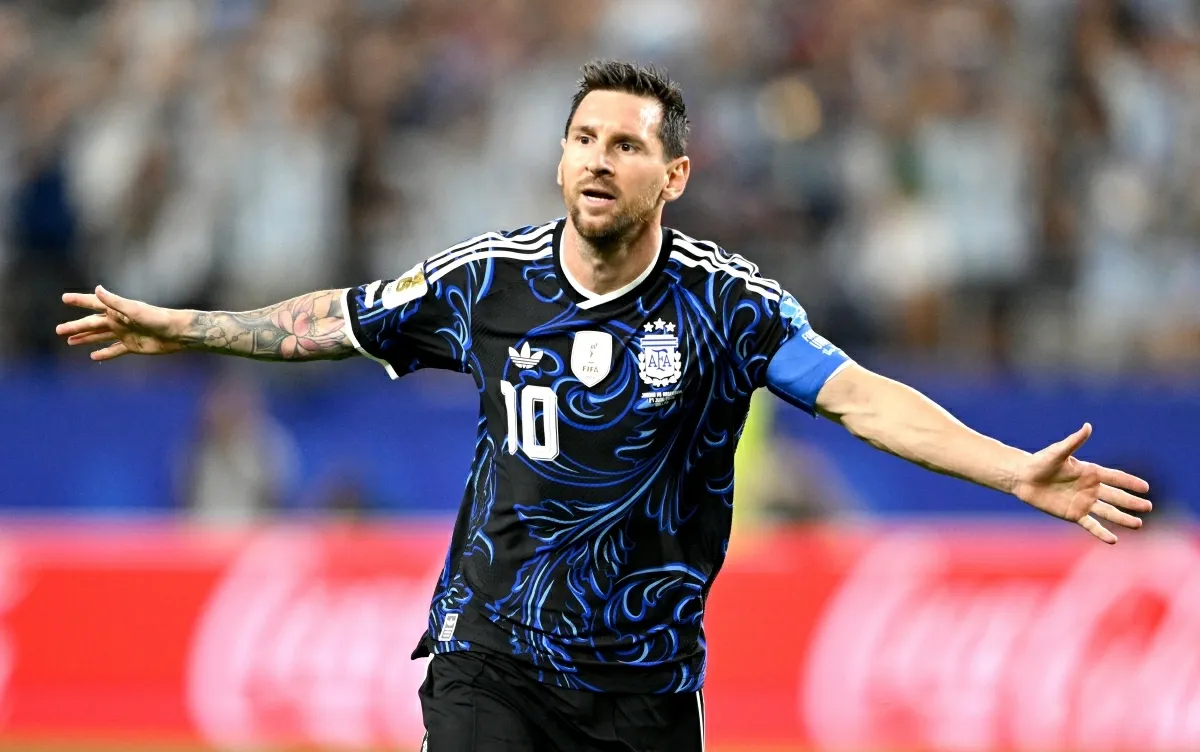
Lionel Messi came off the bench for Argentina, scoring in his seventh consecutive World Cup match as the defending champions beat Jordan 3-1 to finish Group J perfect. The record matters because it reshapes the 2026 Golden Boot race while highlighting how elite teams manage star minutes without losing momentum.
ARLINGTON, Texas - Lionel Messi came off the bench and scored in his seventh consecutive World Cup match, making him the first player in history to do it. Argentina sealed a 3-1 win over Jordan on Saturday and finished Group J with three wins from three matches, completing a perfect group-stage campaign.
The captain, 39, had started on the bench because Argentina had already secured top spot. But when he replaced Lautaro Martínez and took the pitch to a thunderous ovation from 70,649 fans inside AT&T Stadium, Messi picked up exactly where the record books left off. In the 80th minute, he struck a free kick that curled through a gap in the Jordan wall and into the bottom corner, his trademark move after winning a free kick just outside the penalty area. The goal became his 19th career World Cup goal and took his tally to six at the 2026 World Cup, moving him two clear of Kylian Mbappé, Vinícius Júnior and Erling Haaland in the Golden Boot race.
This is the kind of stat line that turns into a leadership story, not just a sports trivia flex. Argentina’s coach Lionel Scaloni rotated his squad once qualification was secured, leaving Messi on the bench until the 60th minute when he replaced Martínez. The reason is simple and very boardroom-friendly: you preserve your best assets for “what’s coming next” while still keeping the product sharp. Scaloni also framed it that way when asked about the milestone, saying, "What you're seeing, I'm seeing the same thing," and that it was "a little bit of an uncomfortable situation every single time people ask because I no longer know what to say."
On the pitch, the match had its own momentum swings. Jordan did not fold after falling behind. Lautaro Martínez opened the scoring from the penalty spot. Giovani Lo Celso doubled the lead with a first-half free kick, becoming the first Argentina player other than Messi to score for the defending champions in the tournament. Jordan then pulled a goal back before Messi’s 80th-minute strike ensured Argentina kept control and finished the group stage with maximum points after victories over Algeria, Austria and Jordan.
Messi’s record run also tells you something about competitive incentives. His milestone surpasses the previous World Cup mark of six straight scoring matches, which he had shared with Just Fontaine and Jairzinho. That places his 2026 performance inside a longer historical ladder, and it helps explain why the Golden Boot conversation is already turning into a chase. Messi’s 80th-minute free kick was also his 72nd free-kick goal of his career and his 12th for Argentina. Off the tournament stage, the numbers keep climbing too: he has now scored 123 international goals in 202 appearances, second only to Cristiano Ronaldo’s record tally of 145.
Then there is the human and availability angle, which matters in every high-performance business and every elite sports operation. Messi had entered the tournament managing a minor hamstring issue, but Scaloni confirmed his captain was fit enough to play a full match, saying, "Today he could have played 90 minutes." Scaloni added that Messi wanted his teammates to have time on the pitch and to save himself for what's coming next, and that he "doesn't think so much about the numbers people are talking about." In other words, the record is not being chased as a self-made requirement. The team’s execution seems to come first, and the milestones arrive as a byproduct.
For executives watching any kind of tournament-like environment, the second-order lesson is about rotation and risk management. Argentina secured top spot early, so Scaloni could manage workload and still end with a perfect group stage. That is not just coaching flair; it is a strategy of minimizing downside once the main qualification constraint is removed. It also sets up a crucial phase shift: Argentina will begin its round-of-32 campaign next Friday in South Florida as it continues its bid to retain the World Cup title.
Meanwhile, the stakes for peers are obvious even if your world is not football. If you run a business where performance windows are compressed and matchups are sequential, you face the same question Argentina answered with Messi’s cameo: how do you protect key talent without letting standards slip? Argentina’s answer, at least in Group J, was to rotate, preserve, and then unleash a record-setting finisher when the scoreboard demanded it. The result is a team heading into the knockout rounds with maximum points and a captain adding one more unreachable line to the history file.
This story's Key Insights and Take-aways are locked.
Create a free account to unlock Executive Actions for one credit.
Register to UnlockAlways free for Executives Club members. Join the Club
More in Entertainment

Russell Brand's accuser 'bewildered and confused' as he denies 7 sex charges
The criminal case against the comedian is a live test of how media companies manage talent risk when serious allegations go public.

'It's a Magic Trick': Ballet Experts Say Rosalía's SNL Pose Is Impossible
Three ballet experts tell Rolling Stone Rosalía's gravity-defying SNL stillness shouldn't be possible - and why the debate is now part of the show.

Activision CMO: GTA 6 Will Boost Call of Duty, Not Bury It
Activision's top marketer says Rockstar's blockbuster will drive players back to consoles and into Modern Warfare 4, even as the company admits its recent strategy failed.