

Met’s Elamite raptor helmet pairs “battle” imagery with gold-plated gods
A 3,500-year-old bronze masterpiece from southwestern Iran suggests elite status, symbolism, and battlefield warding.
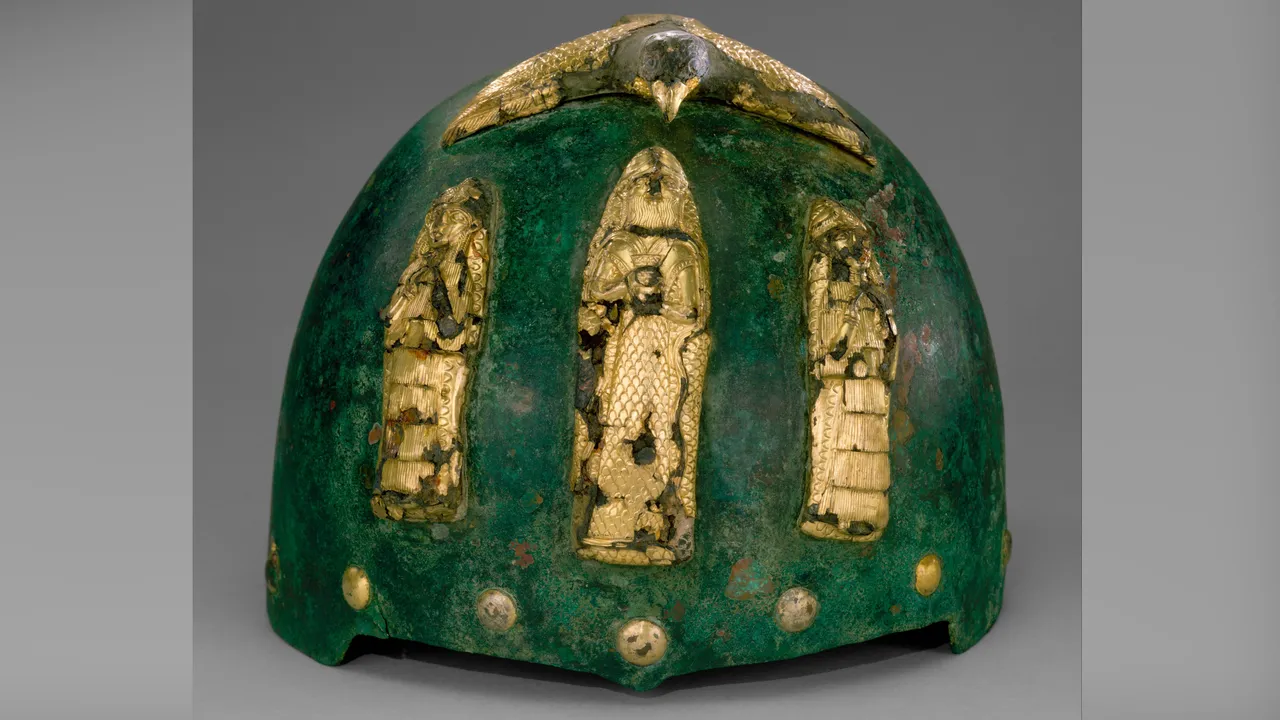
A bronze Elamite helmet in the Metropolitan Museum of Art, dated circa 1500 to 1100 B.C., features a swooping raptor above three gold-plated deities. For decision-makers, it is a reminder that artifacts, like institutions, blend function with narrative power when power and conflict converge.
There is a specific kind of object that instantly changes the way you picture an ancient world: one that is both practical and theatrical. This Elamite bronze helmet, in the collection of the Metropolitan Museum of Art and dated circa 1500 to 1100 B.C., is built for exactly that kind of dual purpose. Its dome-shaped bronze body measures roughly 8.5 inches (21.6 centimeters) in diameter, with a thin cutaway on the front where it would have fit over the wearer’s eyebrows, plus a small projection that would have extended down to cover the nose. But the real headline is the decoration. A large bird of prey (a raptor) is positioned vertically over three gold-plated divine figures, turning head protection into a rolling piece of battlefield theater.
This story's Key Insights and Take-aways are locked.
Create a free account to unlock Executive Actions for one credit.
Register to UnlockAlways free for Executives Club members. Join the Club
More in Science

Alaska's 1,580-foot tsunami had warning signs. Scientists just found them.
Rapid glacier retreat, heavy rainfall, and thousands of tiny tremors preceded Alaska's 1,580-foot tsunami, a warning for every coastal community in a warming world.

The rare mutation that lets high-risk brains dodge Alzheimer's
Scientists found a natural defense against protein buildup, opening a new path to preventive treatments.

3,000 steps a day may halve Alzheimer's decline, study finds
New research links a modest daily walk to less tau buildup and nearly half the cognitive and functional decline, even for those with early signs.