
Meta launches Muse Image on Instagram and WhatsApp to sprint in the AI race
Muse Image turns AI into realistic images for everyday sharing apps, raising the pressure on competitors chasing engagement and distribution.
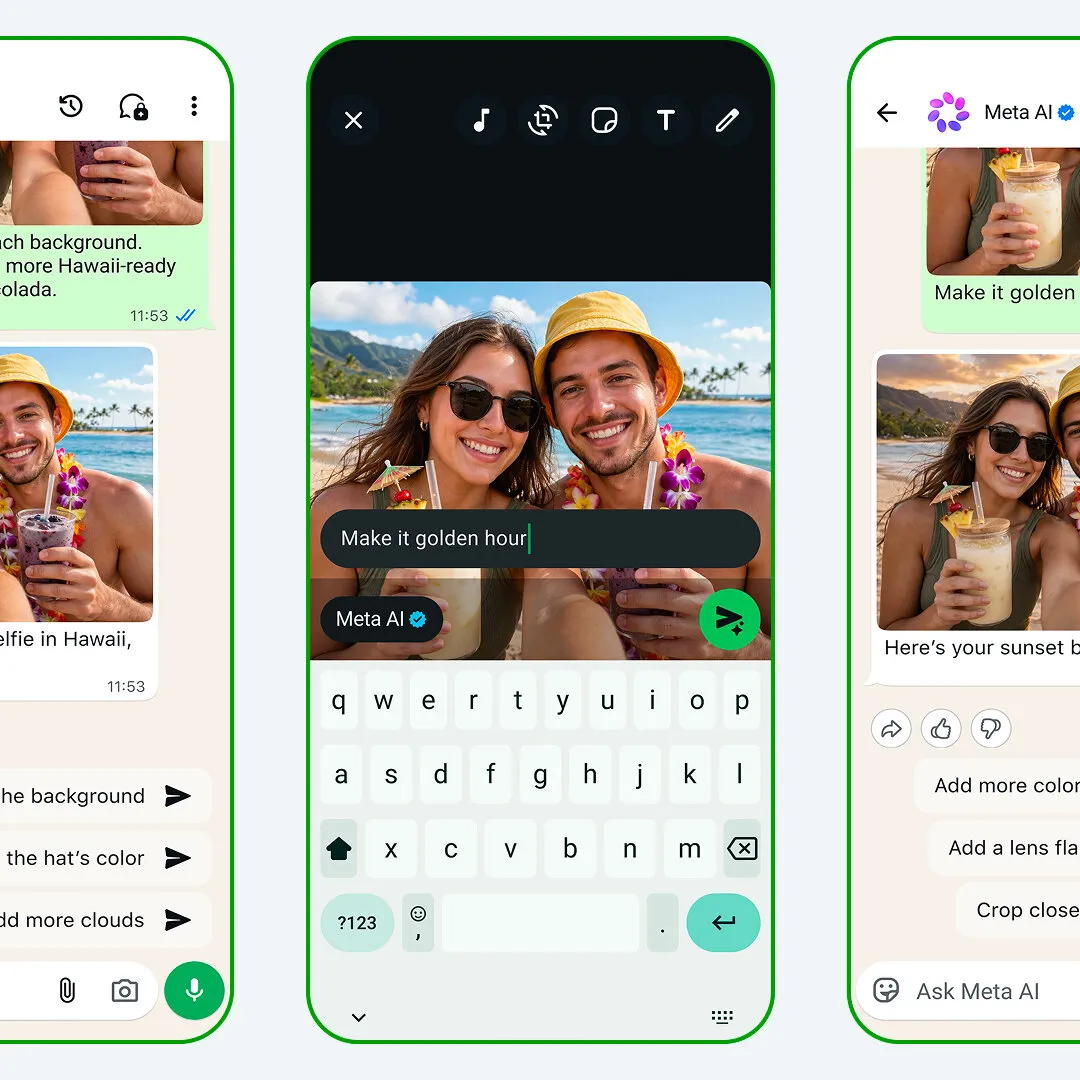
Meta unveiled Muse Image, an AI image generator that can create realistic images for users on Instagram and WhatsApp. For decision-makers, the move signals how Meta is using its biggest social distribution channels to keep pace as AI becomes a feature, not a lab project.
Meta’s latest bet is not a new lab or a distant research preview. It is Muse Image, an AI image generator that can create realistic images for users on Instagram and WhatsApp. And it matters because this is Meta trying to catch up in the global artificial intelligence race using the only thing that reliably beats novelty: scale.
Muse Image is designed for the moment of creation and sharing. Users can generate realistic images directly within two of Meta’s most important consumer touchpoints, Instagram and WhatsApp. That sounds simple, but it is the point. In an AI arms race, “who ships first” is often less important than “who gets the output into daily behavior.” Meta is aiming to make AI images feel like normal internet stuff you do in seconds, not like a separate product you have to learn.
This is also a distribution strategy, not just a model strategy. Instagram is built for visuals. WhatsApp is built for messaging. Put an AI image generator in both, and you create two growth loops. First, users get a reason to open the apps and interact with new image content. Second, the generated images naturally travel through the same networks, because the whole workflow is built around sharing. If your competitors offer better models but require users to take extra steps or leave familiar apps, you have an advantage that is hard to measure and hard to copy.
That advantage comes with a reality-check for boards and executives: AI features are increasingly evaluated like any other product line tied to engagement. The pressure is not only to produce impressive outputs, but to produce consistent outputs that do not create reputational risk at scale. Even though the source only states what Muse Image can do and where it is available, the strategic implication is clear. Any image generator inserted into mainstream consumer platforms can quickly turn model quality, speed, and reliability into brand perceptions. If images are frequently wrong, uncanny, or otherwise disappointing, users will blame the app, not the underlying AI.
Regulation is the other big constraint shaping how these launches play out. The global AI race is happening in a world where policymakers are watching high-volume consumer systems closely, especially those that can create realistic content. While this article does not cite specific rules, it sits in the same environment where regulators and lawmakers are grappling with questions like authenticity, misuse, and how companies should handle generated media. In practice, that means executives cannot treat AI image generation as “just another feature.” They have to anticipate compliance demands that may arrive after a product is already live and popular.
There is also an internal Meta dynamic worth noting for decision-makers across tech. Meta has spent years building community and communication surfaces where users already spend time. When a company that already has distribution starts launching AI tools inside those surfaces, it forces a board-level reassessment in competitors and partners. The competitive threat is not merely that Meta has an AI model. It is that Meta can wrap that model in user habits, then scale it rapidly. That changes how leaders think about partnerships, investments, and build-versus-buy.
For the broader market, Muse Image is a reminder of how the AI race is migrating from prototypes to products. “Catching up” is no longer a behind-the-scenes effort. It is about shipping to mass audiences, then iterating in public. If Meta’s approach works, it sets a template other companies will feel compelled to follow: integrate AI generation into the apps people already use, tie it to sharing, and make the creation pipeline frictionless.
So what is at stake? For executives, Muse Image is a concrete signal that AI image generation is becoming a mainstream engagement lever. For boards, it is a reminder that distribution power can compress timelines. And for peers in the AI space, it is a warning that models alone do not win the consumer battle. The product that lives in the flow of everyday behavior usually wins the largest share of attention. Meta is betting that Muse Image will help it catch up by meeting users where they already are, on Instagram and WhatsApp.
This story's Key Insights and Take-aways are locked.
Create a free account to unlock Executive Actions for one credit.
Register to UnlockAlways free for Executives Club members. Join the Club
More in Technology

OpenAI replaces Advanced Voice Mode with full-duplex GPT-Live, rolling out to all tiers today
Two voice models, GPT-Live-1 and GPT-Live-1 mini, let ChatGPT listen and speak at once, plus stream longer reasoning.
Jensen Huang says Nvidia engineers prefer building agents over writing Python code
The Nvidia CEO argues AI is reshaping software work into agent design, not job replacement.

Zhipu AI and Iluvatar CoreX jump after HK$31.4B accelerated bookbuild secondary placements
Two recently-listed names use separate secondary share sales to fund hardware and research, and investors bid up the stock anyway.