

Meta's 'hook, hold, harvest, hide' strategy on trial as 29 states allege addiction and privacy harm
The landmark trial's opening week lays out a four-word business model that could reshape how platforms treat young users and their data.
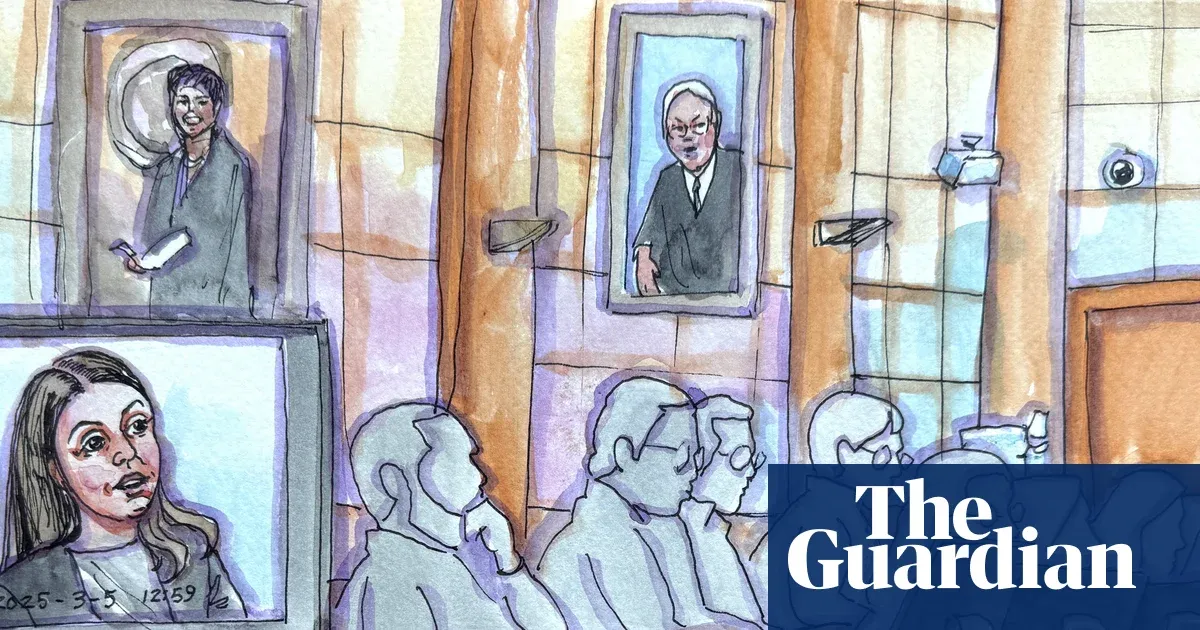
Meta Platforms faces a 29-state lawsuit alleging it deliberately engineered addictive experiences and violated children's privacy laws. The trial's opening framing, 'hook, hold, harvest, hide,' sets the stage for potential design changes and industry-wide regulatory shifts.
On Tuesday, California and 28 other states opened a landmark trial against Meta Platforms, accusing the owner of Facebook and Instagram of deliberately engineering addictive experiences that violate children's privacy laws. The prosecution's opening argument distilled the alleged business model into four H-words: hook, hold, harvest, and hide. That crisp formulation - delivered by the lead lawyer for the states - instantly reframed Meta's entire growth playbook as a legal liability, turning engagement metrics into potential evidence of wrongdoing.
The prosecuting lawyer argued that Meta 'hooks' users at a young age, 'holds' them on its platforms for as long as possible, 'harvests' their personal data, and then 'hides' the harmful consequences from the public. The implication is that these are not passive side effects but deliberate design choices intended to maximize ad revenue at the expense of children's well-being. If accepted, this framing could transform how courts interpret routine product features like infinite scrolling, algorithmic recommendations, and notification timing - from neutral tools into allegedly deceptive practices.
The case rests on state consumer protection and privacy laws, which broadly prohibit unfair or deceptive acts in commerce. Unlike federal actions that often stall in partisan gridlock, state attorneys general have become increasingly aggressive enforcers, and this coalition - spanning California's influential attorney general's office plus 28 others - signals a coordinated push to hold Big Tech accountable at scale. Legal analysts note that the trial will likely hinge on whether the court accepts that product design, not just explicit fraud, constitutes an unfair practice under these statutes. The sheer breadth of states involved suggests the outcome could set a powerful precedent, potentially inspiring parallel suits against other platforms with significant underage user bases.
For Meta, the stakes are existential. The company derives the overwhelming majority of its revenue from advertising, which depends directly on user attention and behavioral data. Any court-ordered injunction requiring design changes - such as removing default autoplay, limiting session lengths, or restricting data collection on minors - would compress the very engagement loops that fuel its ad business. Even a favorable ruling would likely trigger a lengthy appeals process, keeping uncertainty over Meta's product roadmap for years. Financially, the company has weathered regulatory fines before, but a judgment that imposes ongoing court supervision would be a novel and costly constraint.
The trial also casts a long shadow over the broader attention economy. Executives at social media startups, gaming companies, and even edtech platforms are watching closely because the 'hook, hold, harvest, hide' framework is not unique to Meta; it describes a common growth playbook across the industry. If the plaintiffs succeed, boards may need to re-evaluate whether their own engagement tactics - especially those targeting users under 18 - could be construed as manipulative under similar state laws. The phrase is already becoming a red flag in the boardroom, prompting conversations about self-regulatory audits and transparency measures.
The defense has not yet presented its full response in the opening week, but Meta has historically argued that its platforms include robust safety features, age-appropriate controls, and that correlation between usage and harm is not causation. The company may also point to its cooperation with regulators and existing compliance mechanisms. However, the prosecution's early narrative has set a sharp tone, and the judge's willingness to let the case proceed suggests the claims have sufficient merit to reach trial.
For decision-makers outside the tech sector, the deeper lesson is that psychological design is now a legal battleground. Companies of all stripes-from fintech apps to streaming services - collect data on minors and use engagement tactics that could be scrutinized under the same lens. The trial's first week offers a preview of how regulators will frame these issues, and the stakes extend beyond fines to fundamental questions about product architecture. The prudent move is to audit internal communications for language about 'maximizing stickiness' or 'growth loops,' and to ensure that any design pattern aimed at younger users can be defended as enhancing welfare rather than merely exploiting attention. The 'hook, hold, harvest, hide' acronym may become the new checklist for compliance - and a cautionary tale for every product leader.
This story's Key Insights and Take-aways are locked.
Create a free account to unlock Executive Actions for one credit.
Register to UnlockAlways free for Executives Club members. Join the Club
More in Technology

doubleAI's Maxwell rewrites code while it runs, claims 38x speedups
The Tel Aviv startup's code execution model formally verifies optimizations, turning AI into an agent for the hardware itself.
Saudi military official paid to fly OpenAI bugging suspect's family out, prosecutors say
A court filing says a Saudi military official funded the family's exit and Riyadh offered bail, putting foreign-influence risk squarely on AI boards.

AI researcher's 26,000-word claim: Neural nets aren't tangled after all
Nick Cammarata's Goodfire post has the AI world split - if he's right, monitoring frontier models just got a lot easier.