

Metallica’s Glasgow set was a “no repeats” flex, proving hits still sell deep cuts.
A one-night Hampden Park stop stacks four drum kits, a 15-song range, and a Proclaimers cover.
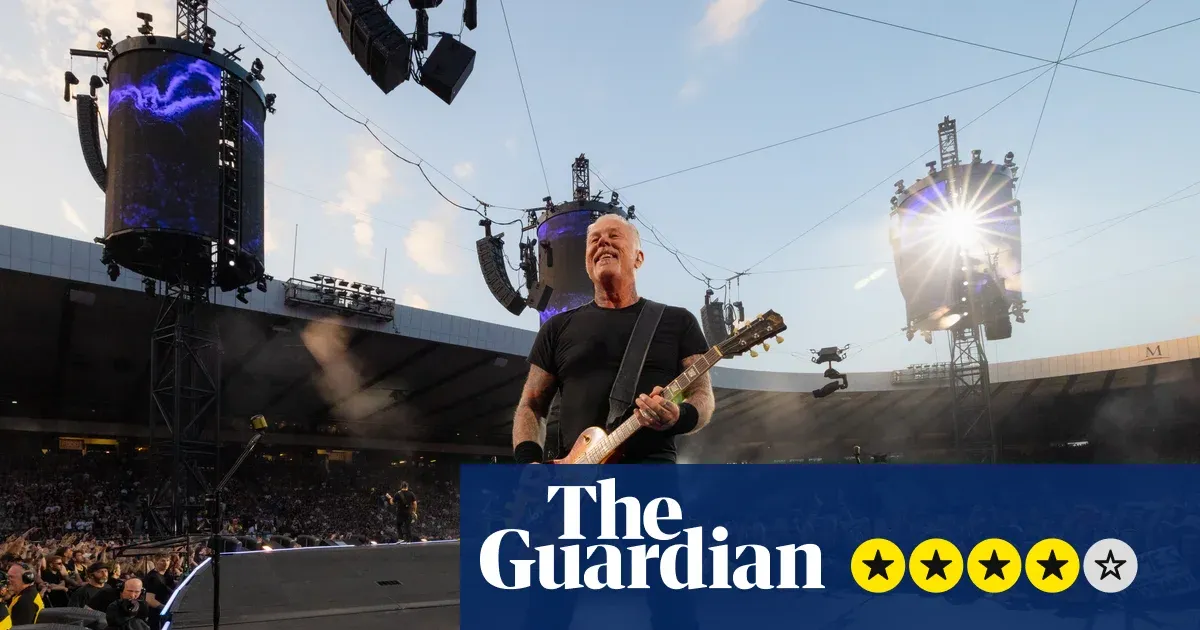
Metallica, led by Lars Ulrich, played a one-night closing-leg show at Hampden Park in Glasgow, packed with pyrotechnics, deep-cut potential, and a 500 Miles cover. For decision-makers, it is a live case study in how touring economics reward both certainty (hits) and scarcity (no-repeat framing).
Hampden Park in Glasgow looked built for combustion: relentless heatwave sun, a 50,000-strong snake pit, and four drum kits ready to turn volume into a business model. Metallica, with Lars Ulrich and the band in full control, kicked off their night with Ennio Morricone’s The Ecstasy of Gold before detonating into Fuel and then an opener so reliable it almost feels unfair, Hit the Lights. The stakes were clear from the start because this stop was not an open-ended residency. It was for one night only, a closing-leg moment on a three year-plus world tour that has been structured to feel both premium and scarce.
What made the Glasgow show more than a greatest-hits victory lap was the band’s stated touring philosophy across the run: mini-residencies paired with back-to-back “no repeats” shows that promise deep cuts while betting on completists’ wallets. This one-night Glasgow set had a 15-strong setlist designed to deliver the full spectrum, from the heavy and pyrotechnics-laden Fuel and Kill ’Em All’s incredible opener Hit the Lights to the moodier tempo change of The Unforgiven and Nothing Else Matters. And yes, the band still delivered its certainty bait in the shape of crowd-facing anthems, but the sequencing mattered. The title track from 72 Seasons, while the only song from the newest album to make the setlist, still managed to pull its weight, sparking two mini circle pits in the standing area.
If you are looking at this like an operator rather than a fan, the Glasgow show reads like a lesson in incentive design. The tour’s longer arc started with the release of Metallica’s solid 2023 album 72 Seasons, and the structure of mini-residencies suggests a deliberate rhythm: concentrate demand, tighten supply, and keep the audience guessing within a controlled box. Back-to-back “no repeats” shows are the key lever. They create a reason for superfans to attend more than once, not because the band is changing its identity, but because the band is changing the probability distribution of what you might miss. In other words, uncertainty is monetized.
At the same time, the band did not lean entirely on scarcity. The setlist still includes anchor tracks that show up in fans’ muscle memory, like Nothing Else Matters, positioned here alongside moodier material to keep the night from turning into one continuous surge. The source captures the atmosphere and the audience behavior directly: “I see people crowd surfing,” singer James Hetfield says, bemused. “Whatever it takes, man”. That small moment of humor lands because it signals something important about crowd dynamics. Even when the show is marketed with a premium scarcity framing, the energy has to be managed in real time. Pyrotechnics and sonic intensity are only part of the delivery. The other part is making sure the crowd is participating safely enough to stay loud.
There is also a subtle second-order move in how Metallica handles regional connection without breaking the machine. The show includes a regular spot for a cover of a local song, courtesy of bassist Rob Trujillo and guitarist Kirk Hammett. Tonight’s pick was arguably too easy, The Proclaimers’ 500 Miles. That choice matters because it shows how global touring acts can maintain local flavor at low risk: pick a widely recognizable local tune that functions as a reset button in the set. You can think of it like inserting a high-recognition interval into a program that otherwise runs on deep catalog complexity. It keeps the room unified, and it keeps momentum from stalling.
For executives and board-level thinkers, the bigger takeaway is that “hits plus deep cuts” is not a contradiction. It is a strategy for reducing execution risk while still extracting value from superfans. If you only chase deep cuts, you narrow the audience. If you only chase hits, you erode the sense of event. The Glasgow night shows an audience-tested balance: a one-night stop built to guarantee both hits and lesser played gems. The band’s approach is also transparent about the economic logic of touring: completists can pay for the chance to see what they cannot get elsewhere, while casual attendees can still leave feeling like they experienced the “real” Metallica.
And because this is a marathon world tour that began with 72 Seasons and stretches through a closing leg, the show also underscores a persistence principle. Long-run projects win when the structure holds up under fatigue. Mini-residencies and no-repeat framing turn what could be repetition into an ongoing storyline. In Glasgow, Metallica delivered a masterclass in controlling the emotional arc, from the Ennio Morricone opener to Fuel pyrotechnics, from The Unforgiven’s mood to the Unstoppable Nothing Else Matters, from the title track to the communal reset of 500 Miles. The strategic stakes for peers in live entertainment, content, and community-driven businesses are simple: if you can engineer scarcity without sacrificing trust, you do not just sell tickets. You sell momentum.
This story's Key Insights and Take-aways are locked.
Create a free account to unlock Executive Actions for one credit.
Register to UnlockAlways free for Executives Club members. Join the Club
More in Entertainment

Russell Brand's accuser 'bewildered and confused' as he denies 7 sex charges
The criminal case against the comedian is a live test of how media companies manage talent risk when serious allegations go public.

'It's a Magic Trick': Ballet Experts Say Rosalía's SNL Pose Is Impossible
Three ballet experts tell Rolling Stone Rosalía's gravity-defying SNL stillness shouldn't be possible - and why the debate is now part of the show.

Activision CMO: GTA 6 Will Boost Call of Duty, Not Bury It
Activision's top marketer says Rockstar's blockbuster will drive players back to consoles and into Modern Warfare 4, even as the company admits its recent strategy failed.