
Metallica sing 'Delilah' at Principality after WRU ban forces choir silence
The Welsh Rugby Union banned Tom Jones' hit in stadiums. Metallica covered it anyway, and the crowd carried it.
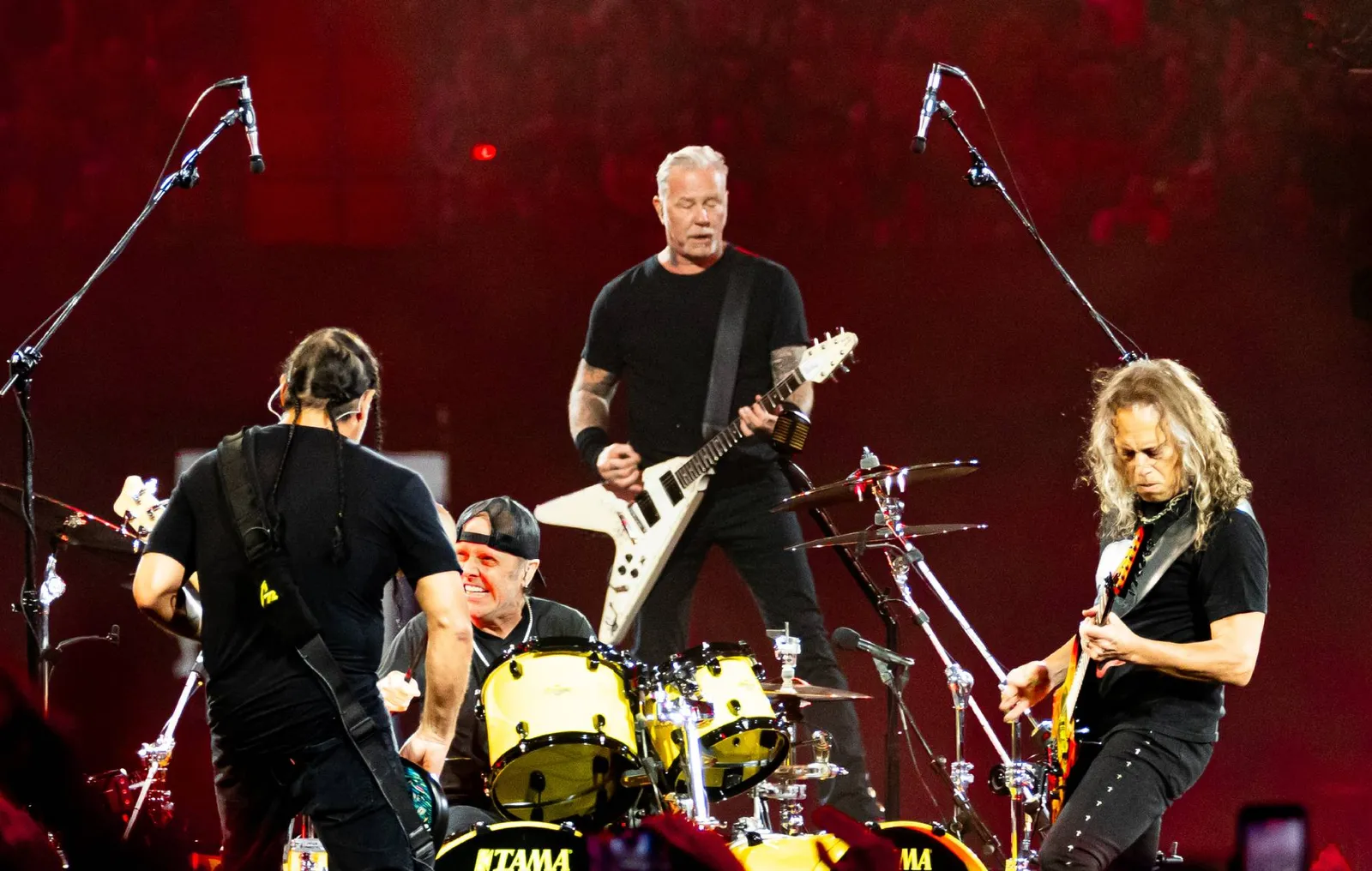
Metallica covered Tom Jones' 'Delilah' during the June 28 show at Cardiff's Principality Stadium as part of their M72 world tour. The WRU's 2023 ban on performing the 1968 song at Wales internationals over domestic violence references is the flashpoint, with Tom Jones later challenging the decision.
Metallica played Tom Jones' 'Delilah' at Principality Stadium in Cardiff on June 28, despite the fact that the Welsh Rugby Union (WRU) previously banned the song from being performed by choirs at Wales internationals. The twist is that the band chose to nod to one of Wales' best-known musical exports inside their mid-set 'Kirk and Rob Doodle' section, turning a venue-level rule into a live, public test of what “banned” really means.
To understand why this matters beyond a fun bit of rock show trivia, you have to go back to 2023. That year, the WRU said the 1968 hit should not be performed by choirs at Wales internationals due to its references to domestic violence. The song's lyrics, written by Barry Mason, are from the perspective of a man who kills his partner after seeing her with another man. In its explanation, the WRU said it “condemn[s] domestic violence of any kind” and that it had sought advice from “subject matter experts” on the issue of censoring the song. The WRU also said it was “respectfully aware that it is problematic and upsetting to some supporters because of its subject matter.”
So where does Metallica fit into that? This was not a quiet academic discussion. The band performed last night (June 28) as part of the final UK run of their ongoing 'M72' world tour, and they built the moment around an established ritual. Their 'Kirk and Rob Doodle' has become a regular mid-set feature, giving Kirk Hammett and Robert Trujillo a slot for looser bass-and-guitar jams, often used to pay tribute to local musical heroes. In other cities, they have played Rammstein's 'Sonne' in Berlin, ABBA's 'Dancing Queen' in Sweden, and a-ha's 'Take On Me' in Norway. More recently, earlier this month, they covered The Pogues' 'Dirty Old Town' during their second show in Dublin, then went on to perform The Proclaimers' 'I’m Gonna Be (500 Miles)' and Nazareth's 'Hair Of The Dog' in Glasgow.
This specific choice creates a second-order effect that executives and operators should care about: when regulators or governing bodies try to manage sensitive content in one context, it often gets reinterpreted across neighboring stages. The WRU targeted choir performance in Wales internationals. Metallica is a different setting, with different performers, different production choices, and a different audience behavior pattern. But the core controversy follows the song, not the category. Even the framing around the decision is sticky. The WRU explicitly acknowledged that the song is “problematic and upsetting to some supporters.” That means the underlying concern is moral and reputational, not just logistical.
That is exactly why Tom Jones, the original artist, pushed back in July 2023 after a show at Cardiff Castle where he said the song had been banded. Jones told the crowd, “You can’t stop us singing ‘Delilah’.” He added, “They may stop the choir from singing it, but they haven’t stopped the crowd,” and “Keep on singing it - and I’ll keep on singing it too.” Metallica covering the track in Cardiff reads like the live-action continuation of that argument. Whether or not each party intended a direct challenge, the outcome is similar: audiences get to test the boundary between institutional restriction and mass participation.
For decision-makers, the business lesson is that “censorship” debates rarely stay confined to the original rulebook. They become a content governance question for venues, promoters, broadcasters, and tour operators: what exactly is the scope of a ban, who is responsible for compliance, and how does the organization handle predictable workarounds? Metallica's UK run keeps rolling, with two nights at London Stadium on July 3 and 5. The first night features support from Gojira and Knocked Loose, and the second features Pantera and Avatar. Meanwhile, the band has also been releasing music assets, including 'Reload (Remastered),' an expanded reissue of their 1997 album with previously unreleased demos, rough mixes, live performances, and more.
There is also a parallel reputational layer playing out in real time around Metallica itself. Kirk Hammett recently made headlines after falling from the stage during 'Seek & Destroy' in Dublin. He later joked about it on Instagram, captioning a clip: “Slip & Destroy.” That incident came shortly after Hammett drew criticism from Taylor Swift fans for wearing a T-shirt reading “Taylor Swift Is A CIA Psyop” during Metallica’s June 13 show in Budapest. Put those together and you get a brand that repeatedly lands at the intersection of performance freedom and public sensitivity. In that world, the 'Delilah' cover is more than a cheeky nod. It is a signal that heavy entertainment will keep testing where the boundaries are, and regulators will keep being forced to clarify what “banned” is supposed to prevent.
For executives, the stakes are simple: rules can reduce harm, but they can also provoke audience behavior that undermines the intended effect. If you run venues or events, you have to plan for both compliance and culture. And if you advise boards or regulators, you have to assume that a ban on one mechanism, like choir performance, may not quiet the underlying controversy. Metallica just showed how fast a banned song can resurface once it becomes a crowd-producer moment, not a choir-only problem.
This story's Key Insights and Take-aways are locked.
Create a free account to unlock Executive Actions for one credit.
Register to UnlockAlways free for Executives Club members. Join the Club
More in Entertainment

Russell Brand's accuser 'bewildered and confused' as he denies 7 sex charges
The criminal case against the comedian is a live test of how media companies manage talent risk when serious allegations go public.

'It's a Magic Trick': Ballet Experts Say Rosalía's SNL Pose Is Impossible
Three ballet experts tell Rolling Stone Rosalía's gravity-defying SNL stillness shouldn't be possible - and why the debate is now part of the show.

Activision CMO: GTA 6 Will Boost Call of Duty, Not Bury It
Activision's top marketer says Rockstar's blockbuster will drive players back to consoles and into Modern Warfare 4, even as the company admits its recent strategy failed.