

Michael Sarnoski’s Robin Hood rewrite dares history, but the sources tell a different story
IndieWire breaks down what the film gets right about the “real” Robin Hood and what it changes on purpose.
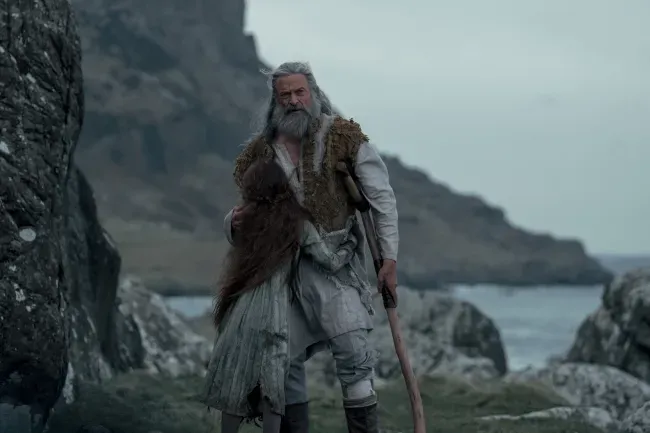
Writer/director Michael Sarnoski discusses what is known about Robin Hood, the centuries of legend, and what his script is based upon. For decision-makers watching how narratives get built, the film is a case study in how cultural “facts” move markets of attention.
Michael Sarnoski, the writer and director behind The Death of Robin Hood, is essentially doing two jobs at once: telling a violent, revisionist tale and asking a more delicate question, “What do we actually know about Robin Hood?” IndieWire’s conversation with Sarnoski centers on the gap between the legendary version that most people carry around and whatever historical anchor (if any) exists beneath the myth. That gap matters because it decides what audiences accept as “truth” when the script asks them to feel something first and verify later.
The key point, as Sarnoski frames it, is that Robin Hood is not a straightforward historical record. He is a character shaped by centuries of storytelling, and any attempt to treat him like a single, consistent historical person runs into the same problem: the legend evolved long before modern audiences ever showed up. So when a film retools the story, it is not simply “changing plot,” it is picking a stance on what the legend is allowed to do. Sarnoski’s discussion, per IndieWire, stays on that question of sources and foundations, explaining what his script is actually based upon and how that differs from the version that lives in popular culture.
To understand why this matters beyond movie trivia, you have to zoom out to how “history” becomes a product. Robin Hood stories have been retold for generations, each time reflecting the era’s tastes and anxieties. The result is that what people remember as “the real Robin Hood” is often a composite. That is the first-order effect. The second-order effect is more interesting for executives: when a high-profile creative project reframes a famous legend, it risks colliding with the audience’s private archive. Some viewers show up expecting a known mythic template; others show up ready for a fight about accuracy. Even if the script is not trying to be a documentary, controversy can still function like distribution. It drives attention, shapes press cycles, and determines how platforms categorize the film: prestige revision, historical offense, or both.
Sarnoski’s approach, as IndieWire outlines it, is explicitly revisionist. That means the film is not just borrowing the Robin Hood name, it is reinterpreting the character through a lens that emphasizes violence and modern sensibilities. The historical accuracy question is therefore not a checkbox. It is the story’s engine for legitimacy. When creators talk about “what we know,” they are also talking about authority: where the tale gets its right to exist, and what evidence is strong enough to withstand dramatic pressure.
There is also a business implication hiding in plain sight. In entertainment, intellectual property has two layers. One is legal: who owns the rights to the story-world or specific expressions. The other is cultural: what the audience believes is “canonical.” Revisionist projects can win big when they successfully convince viewers that their version is not disrespect, it is a fresh reading of a myth that never had one stable “original” in the first place. But if the creative team misreads the audience’s expectations, backlash can harden into something stickier than bad reviews. It can turn into a brand problem for the creators, or an acquisition and investment problem for the studios that bet on them.
For decision-makers evaluating similar projects, the lesson is not “accuracy always wins.” IndieWire’s framing around Sarnoski and the real Robin Hood points to a subtler reality: legendary material often comes with an informational fog, and the public fills it in. The moment you monetize that fog with a confident new narrative, you are competing with centuries of collective memory. That competition shows up in marketing copy, in how journalists explain the film’s basis, and in how audiences decide whether to treat the movie as commentary, spectacle, or scholarship.
Second-order implications show up in governance too. Boards and executive teams typically manage risk through a mix of budget control, reputational risk assessment, and brand alignment. A project like The Death of Robin Hood forces those conversations to include the “sources” question. If the film is anchored in something more defensible than pure invention, it can absorb criticism more gracefully. IndieWire’s focus on what the script is based upon signals that, at least in Sarnoski’s telling, the creative choices are tied to a particular understanding of the legend’s origins rather than an attempt to rewrite from scratch.
The strategic stake for peers in creative leadership, finance, or platform strategy is this: when you build on cultural icons, the market will judge you twice. First on entertainment value, then on narrative credibility. IndieWire’s discussion with Michael Sarnoski makes clear that his revision does not escape history; it negotiates with it. And the more violent and modern the reinterpretation, the more important that negotiation becomes, because audiences are not just watching a story. They are watching whether the storyteller respects the boundaries of what people think is real.
This story's Key Insights and Take-aways are locked.
Create a free account to unlock Executive Actions for one credit.
Register to UnlockAlways free for Executives Club members. Join the Club
More in Entertainment

Russell Brand's accuser 'bewildered and confused' as he denies 7 sex charges
The criminal case against the comedian is a live test of how media companies manage talent risk when serious allegations go public.

'It's a Magic Trick': Ballet Experts Say Rosalía's SNL Pose Is Impossible
Three ballet experts tell Rolling Stone Rosalía's gravity-defying SNL stillness shouldn't be possible - and why the debate is now part of the show.

Activision CMO: GTA 6 Will Boost Call of Duty, Not Bury It
Activision's top marketer says Rockstar's blockbuster will drive players back to consoles and into Modern Warfare 4, even as the company admits its recent strategy failed.