

Michael Smerconish calls network TV “condescension” for skipping Trump election speech
The CNN host argues major broadcasters should trust viewers, after NBC, ABC, and CNN declined to air Trump’s address live.
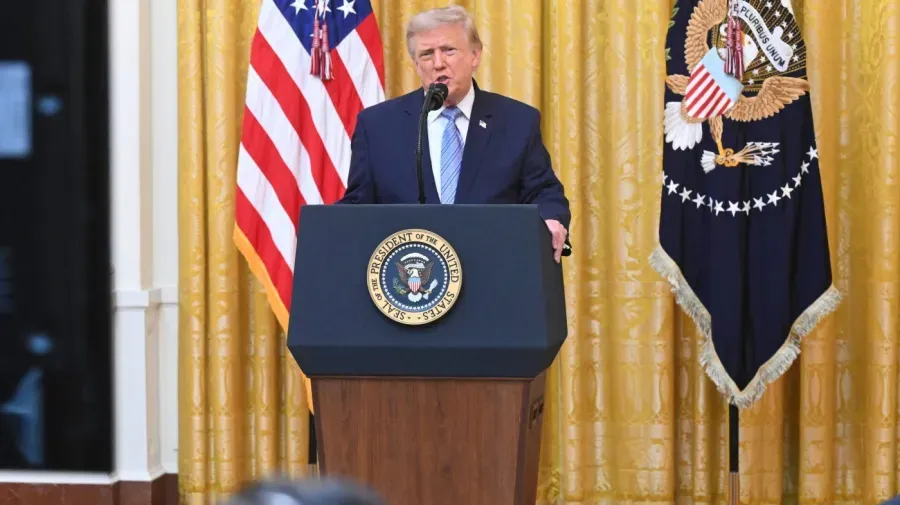
CNN host Michael Smerconish criticized major television networks for refusing to broadcast President Trump’s Thursday night primetime speech on election fraud. His backlash raises a reputational and regulatory-adjacent question for broadcasters: whether the omission is protective editorial judgment or “condescension” toward viewers.
CNN host Michael Smerconish went after his own industry this week, blasting major television networks for what he called “condescension” in connection with President Trump’s primetime speech on election fraud. The core of his complaint was simple: several of the nation’s biggest networks, including CNN, NBC and ABC, refused to broadcast Trump’s Thursday night address live.
Smerconish’s argument was that viewers should be treated like adults. He said networks should trust people to evaluate the president’s remarks for themselves rather than deciding what the public should see. That point is not just a pundit’s talking line. It is a direct challenge to the editorial logic networks often use when they choose not to air a political statement live, especially when the subject is contested and potentially inflammatory.
To understand why this matters beyond cable chatter, look at what broadcasters are balancing when they decide whether to carry a live political speech. On one side, networks face audience expectations and a basic journalistic question: if something is newsworthy, why block it? On the other, they also face incentives to shape framing through alternative programming, commentary, or delayed coverage. In practice, a decision not to air live can be a way to avoid giving a disputed claim the imprimatur of real-time broadcast distribution.
That is where the “condescension” accusation hits. Smerconish is essentially arguing that refusing to air Trump’s remarks is not neutral. It signals, to him, that broadcasters think viewers cannot handle the content without guidance. Whether executives agree or disagree, the optics are immediate. When multiple major outlets make the same call, it can look coordinated even if it is not. And when the networks in question include both the messenger (CNN) and the critics (a CNN host), it adds an extra layer of scrutiny, because the industry is criticizing itself.
From a corporate perspective, this kind of controversy creates a second-order problem: it puts pressure on the network’s internal governance of editorial decisions. Decisions like whether to interrupt programming or not are usually handled through newsroom and standards processes, often with legal and compliance input depending on the circumstances. But when a high-profile on-air personality publicly calls the approach “condescension,” it can create tension between brand positioning and operational choices. It also raises a governance question boards and exec leadership care about: how unified is the editorial philosophy across personalities, platforms, and time slots.
Regulatory context matters too, even if the source does not cite a specific enforcement action. U.S. broadcasters operate under a framework that has historically emphasized public interest obligations. That does not mean every controversial statement must be aired verbatim. But it does mean the decision not to transmit a political address can be interpreted as a statement of priorities. In today’s media environment, those priorities are judged not only by regulators and lawyers, but by advertisers, audiences, and competitors watching what peers do.
The competitive dimension is unusually sharp because the networks named in the source, including CNN, NBC and ABC, are among the most visible players. When multiple major broadcasters refuse to broadcast Trump’s Thursday night address live, it becomes a market-wide signal. Viewers do not just notice the absence. They notice the pattern. That can push rival outlets to compete on access, commentary, or speed of coverage, and it can influence how political campaigns and the White House communicate with media during future scheduled remarks.
For executives, the stake is reputational and strategic. If the omission is seen as protecting viewers from misinformation, that may reinforce credibility with some audiences. But if it is seen as gatekeeping, it can produce backlash and amplify claims that broadcasters are avoiding accountability. Smerconish’s framing, specifically his insistence that viewers should be trusted to evaluate the president’s remarks for themselves, turns the “editorial choice” into a trust debate.
And the trust debate is the kind leadership cannot treat as noise. In an environment where media credibility is constantly tested, every high-visibility programming choice becomes a proxy for values. The broadcast decision around Trump’s primetime speech on election fraud is not just about one night. It is about how networks define their role when a president speaks on claims that many observers dispute. Executives and boards at other outlets will likely look at what Smerconish said and what major networks did, because future decisions about political coverage will be judged through this same lens: trust versus condescension, access versus framing, and neutrality versus editorial judgment.
This story's Key Insights and Take-aways are locked.
Create a free account to unlock Executive Actions for one credit.
Register to UnlockAlways free for Executives Club members. Join the Club
More in Politics

LA County: DOJ's 20,000 'noncitizen' voter list is 'unreliable,' includes U.S.-born
Preliminary review by Los Angeles County election officials finds errors in the federal list, raising the stakes for voter roll integrity ahead of November.
Trump's $1.5B Pentagon chip investment lands in North Carolina
A $1.5 billion defense infusion for North Carolina chipmaking signals a new era of Pentagon-backed reshoring - here's what it means for the industry.

Nigeria confirms first Ebola case in Abuja, a woman just off a Uganda flight
Health Minister Muhammad Ali Pate says the patient flew in from Uganda, putting Africa's latest outbreak on Nigeria's doorstep.