
Mick Jagger calls it “really stupid” he avoided Elvis after John Lennon’s advice
The Stones frontman says he regretted not meeting Elvis, and explains why Lennon’s nudge mattered more than it should have.
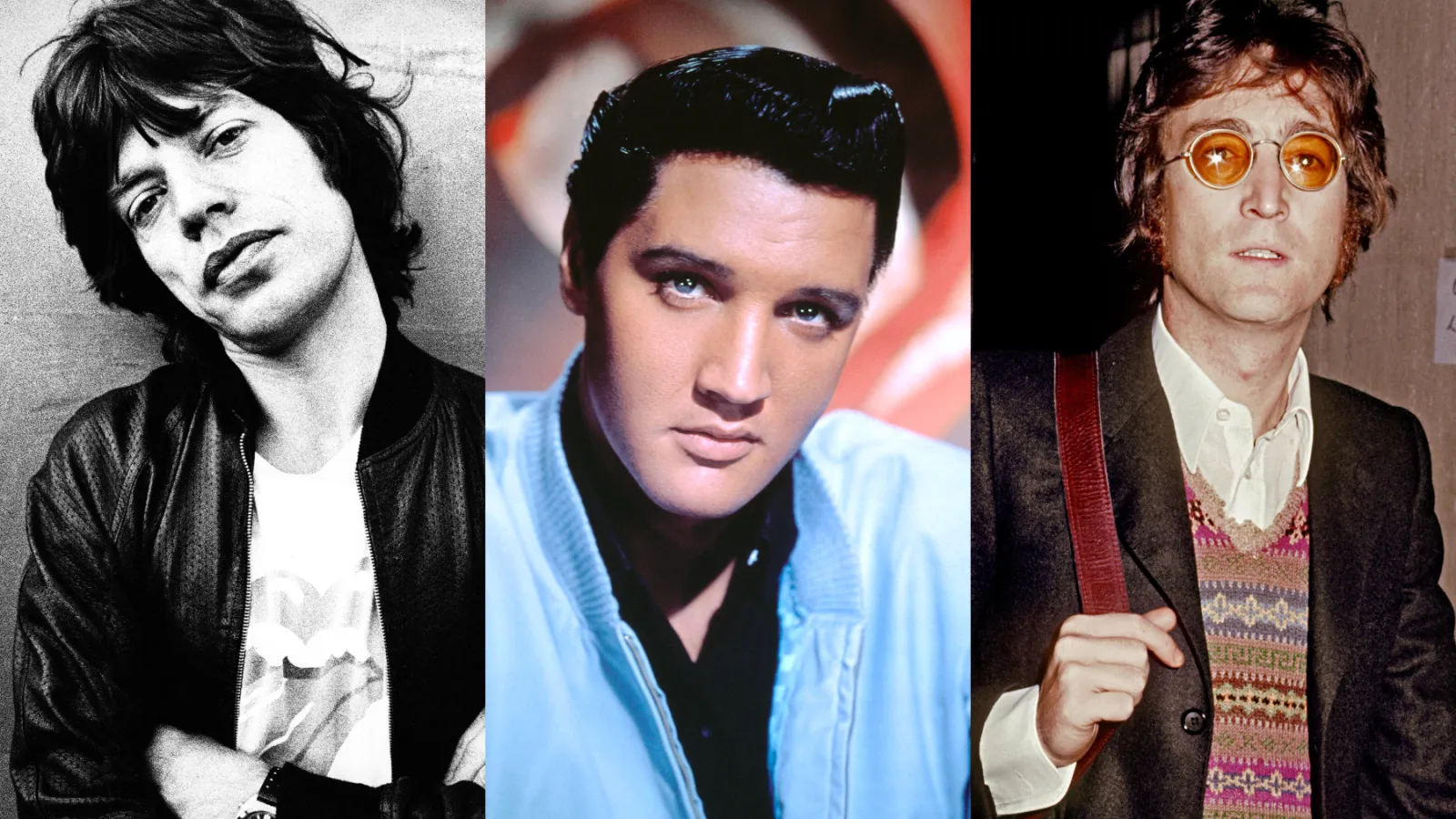
Mick Jagger says he regretted taking John Lennon’s advice not to meet Elvis Presley. He frames the decision as a personal mistake that still sticks with him, even decades later.
Mick Jagger now says he regrets listening to John Lennon’s advice not to meet Elvis Presley, calling it “really stupid of me.” That is the blunt part. The more interesting part is why a Beatles-era suggestion could knock such a giant interaction off the rails for an artist who, by reputation, has always seemed wired for cultural gravity.
Rolling Stone reports Jagger’s reflection on heeding Lennon’s advice not to meet Elvis Presley. In other words: Jagger’s regret is not about missing a rumor or a minor gig. It is about not taking a meeting with Elvis Presley at a time when the “what if” question would still be debated by fans, historians, and basically everyone who tracks music history like it is a stock chart.
To understand why this matters, it helps to remember how decisions like this happen. In creative industries, network moments are not calendar events. They are reputation signals. They are door openings. They can also be influence transactions, where a respected peer’s recommendation changes what you think is “the move.” Lennon advising Jagger not to meet Elvis is a reminder that celebrity advice can function like informal governance. When you trust someone whose taste is widely validated, you do not just consider the recommendation, you operationalize it.
That leads to the second-order problem: even when you make a choice that seems rational at the time, it can calcify into a story you cannot rewrite. Jagger’s “really stupid of me” regret is essentially an acknowledgment that the decision lost optionality. The option to meet Elvis was a one-time window. Once you skip it, you do not get to re-run the scenario, even if you later realize the counterfactual was better.
Boards and executives in any industry have a version of this. Call it advice risk. It shows up when a credible insider, trusted advisor, or powerful peer sets a direction. The organization then rationalizes the decision after the fact because it already committed social capital. In a music context, “social capital” looks like deference and storyline coherence. In business terms, it looks like stakeholders doubling down on what they already endorsed.
Music history is also a kind of ecosystem, where incentives are rarely pure. Artists cultivate images, labels manage branding, managers broker opportunities, and public narratives become part of the product. A meeting like Jagger and Elvis would not only be personal. It would be content. It would be symbolism. It would influence fan perception and media framing. Jagger’s regret signals that he understands the magnitude of the missed moment, even if he is describing it through a personal lens.
It also matters because John Lennon and the Beatles are not just a band. They are a cultural institution that shaped mainstream pop credibility and songwriting authority. Lennon giving a directive, even casually, would carry interpretive weight. Jagger’s decision shows how peer authority can override a person’s own instinct about an opportunity. In executive terms, think of when a star investor or respected operator convinces a team that a route is blocked, risky, or unnecessary. Later, the team realizes the blockage was self-imposed, not external.
The strategic takeaway here is not “meet everyone” or “ignore advice.” It is about how quickly credibility transfers. If someone you trust tells you not to do something, your organization may treat that as a decision, not a suggestion. When Jagger says it was “really stupid of me,” he is not just regretting Elvis. He is pointing to the failure mode: letting a trusted voice substitute for your own assessment of a unique, irreplaceable opportunity.
For today’s founders, operators, and investors, this is the same lesson dressed in rock-and-roll clothing. Your career and your company will be shaped by moments that cannot be scheduled later. If a peer’s advice narrows your options, you should ask what opportunity cost you are swallowing. Jagger’s regret is a reminder that sometimes the most expensive mistake is not a risky bet. It is a missed meeting, a reduced optionality, and a decision you cannot undo.
This story's Key Insights and Take-aways are locked.
Create a free account to unlock Executive Actions for one credit.
Register to UnlockAlways free for Executives Club members. Join the Club
More in Entertainment

12TB Steam 'teraleak' goes beyond Valve: GTA 3, Mafia 2 prototypes exposed
A 12-terabyte dump of Steam data reveals prototypes and builds of third-party classics like GTA 3 and Mafia 2, plus unreleased Valve content, rewriting game history.

LinkedIn's romance problem: 1 in 4 workers say dating on it is fair game
A new survey shows a quarter of U.S. employees treat the professional network as fair game for romance, even as LinkedIn bans it and removes hundreds of thousands of offending posts.

Enhypen's first No. 1 album breaks K-pop's Billboard 200 streak
The K-pop group's 98,000-unit debut tops the chart while Dolly Parton's catalog reentry shows how death reshapes streaming.