

Micron Taiwan workers to strike, demanding a bigger profit share
A walkout at one of the world's key memory chip hubs threatens supply just as AI demand peaks, and puts Taiwan's profit-sharing norms to the test.
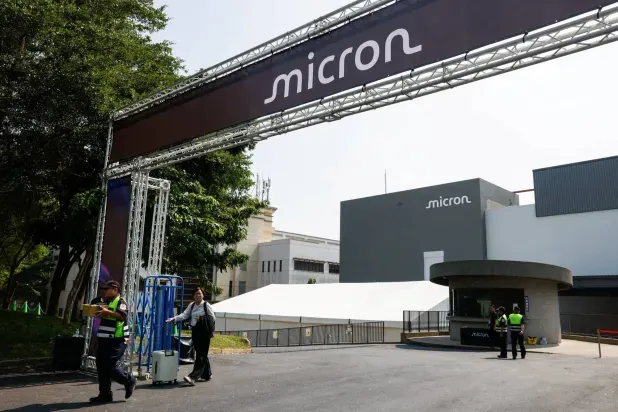
Micron's Taiwan workforce is set to strike in a push for a larger share of company profits, escalating labor tensions at one of the world's most critical memory chip production hubs. For executives and boards, the walkout threatens supply continuity in a market already stretched by AI-driven demand and signals rising pressure on profit-sharing norms across Taiwan's semiconductor sector.
Workers at Micron's Taiwan operations are set to strike in a push for a bigger share of the company's profits, a direct challenge to management at one of the world's most important memory chip production hubs. The planned walkout, reported by Asharq Al-Awsat, centers on a single, blunt demand: workers want a larger cut of the windfall flowing through the semiconductor industry. The dispute pits the company's Taiwan workforce against management at a moment when memory chips have never been more valuable.
The timing is the story. Memory chips, DRAM and high-bandwidth memory in particular, have become the scarce, high-margin engine of the AI boom, and Micron is one of the handful of companies that make them at scale. Demand for high-bandwidth memory, the specialized chips that sit alongside AI accelerators, has outstripped supply for years running, giving producers unusual pricing power. The AI buildout has turned memory from a commodity into a strategic asset, and the companies that control supply are capturing record margins. A strike at Micron's Taiwan facilities threatens to tighten an already stretched supply chain, just as hyperscalers and AI server builders are scrambling for every available wafer. For customers, the risk is delayed shipments and firmer pricing; for Micron's leadership, the risk is a very public labor dispute in the middle of its best market in years.
For context, Taiwan is not a side operation for Micron; it is central to the company's manufacturing strategy. Micron has spent years building out its DRAM production on the island, including through its acquisition of the former Inotera Memories joint venture, and Taiwan now anchors a large share of its global output. The island's mature semiconductor ecosystem, deep engineering talent pool, and established supply chain make it difficult to shift production elsewhere quickly, which is precisely why a labor disruption there carries outsized weight. For a company that competes on scale and reliability, losing even a few days of output at a key site is not a trivial matter.
Strikes are relatively rare in Taiwan's tech sector, historically, which makes this one notable. Profit-sharing and year-end bonuses are deeply embedded in the compensation culture of Taiwanese semiconductor companies, typically tied to company performance. When record profits arrive, workers expect to see them reflected in their paychecks. The current dispute suggests that expectation is not being met, at least in the eyes of the workforce, and the decision to escalate to a strike signals that negotiations have reached an impasse. It also reflects a broader shift: labor activism in Taiwan's technology industry has grown more visible in recent years, as workers in a tight talent market gain leverage.
The broader stakes extend well beyond Micron. Memory chip supply is a chokepoint for the entire technology industry: AI accelerators need high-bandwidth memory, data centers need DRAM, and consumer devices need both. Any sustained disruption at a major producer can ripple through pricing and availability across the sector. Rivals such as Samsung and SK Hynix, which dominate the memory market alongside Micron, will be watching closely, both for supply implications and for the precedent it sets for labor relations in a booming but demanding industry. Customers, meanwhile, have limited alternatives: the memory market is effectively an oligopoly, and switching suppliers is not a quick fix. For the biggest buyers, from cloud providers to PC makers, the strike is another reminder that the memory supply chain is concentrated in a few hands, in a few regions.
For boards and executives, the strike is a reminder that in a capacity-constrained, talent-driven industry, worker expectations rise with the balance sheet. When a company's products become the bottleneck for the world's most valuable technology trend, employees notice. The question is whether profit-sharing structures that were designed for cyclical, boom-and-bust memory markets are fit for a moment when the boom looks structural. If workers at one of the industry's most profitable players feel they are being left out, similar demands could surface elsewhere, at other chipmakers, at equipment suppliers, and across the broader semiconductor supply chain.
The immediate test for Micron is operational: keep the fabs running, or at least minimize the disruption, while finding a resolution that does not set a costly precedent. The deeper test is strategic. In an industry where capacity takes years to build and talent is hard to replace, labor peace is a competitive advantage. How Micron handles this strike will be read by its own workforce, by its rivals, and by every customer that depends on its chips. For executives in any industry enjoying a demand surge, the lesson is straightforward: when the money flows, the workforce is watching.
This story's Key Insights and Take-aways are locked.
Create a free account to unlock Executive Actions for one credit.
Register to UnlockAlways free for Executives Club members. Join the Club
More in Business

Musk barred from the room as Tesla, SpaceX boards weigh $3.5 trillion merger
The CEO of both companies is a 'conflicted party' watching independent directors negotiate a tie-up that would create a $3.5 trillion giant he would own about a third of.

Elon Musk just showcased a flying car - and it wasn't at Tesla
The Tesla CEO's latest reveal came at SpaceX, not Tesla, signaling where vertical mobility is headed.

Apple's $2,000 iPhone Duo opens preorders, taking on Samsung and Google
Apple's first foldable hits the market at a premium price, reshaping a category Samsung and Google have led.