

Microsoft faces real “multiple compression” risk, even as its core story stays intact
The market may punish valuation, but fundamentals, cash flow, and product momentum are the deciding line for investors.

Yahoo Finance flags multiple compression as a real threat to Microsoft stock, while arguing Microsoft’s core story is not broken. For decision-makers, the implication is clear: valuation downside can show up even when operations remain healthy.
If you only watch the chart, Microsoft can still surprise you to the downside. Yahoo Finance’s core point is that “multiple compression” is a real threat to Microsoft stock, even if the underlying business story is not broken. In plain English: investors can decide to pay less for each dollar of Microsoft’s earnings, simply because the market’s tolerance for valuation risk changes.
That matters because multiple compression does not require Microsoft to suddenly get worse. It can happen when buyers cool off, when interest rates or risk appetite shift, or when the broader market rotates out of “expensive but high-quality” names into cheaper ones. Yahoo Finance frames this as a threat to the stock’s performance, not a verdict on Microsoft’s fundamentals. So the immediate question for executives and allocators is not “Is Microsoft broken?” It is “Can the stock fall because the math of valuation changed, even while the company keeps executing?”
To understand why this can happen, you have to understand how equity pricing works. Stock multiples are basically a shortcut for expectations. When those expectations stay high, investors pay a premium. When the market becomes more skeptical, the premium shrinks. That shrinkage can drive returns lower even if earnings growth continues. The stock can look like it is “down for no reason,” but what is really happening is investors moving to a different discount rate and a different hurdle for what they consider worth paying for.
This is especially relevant for mega-cap tech, because it sits at the intersection of growth, cash flow durability, and capital market sentiment. Microsoft is not a microcap whose valuation is determined by a single product cycle. It is a consolidated platform business with multiple engines. That kind of business tends to keep investors’ trust longer than lower-quality stories do. But even “trust” does not protect a stock from valuation resets. If the market decides that even great companies should trade at lower multiples, the tape will reflect that decision quickly.
There is also a second layer that executives should care about: portfolio behavior. When funds rebalance, they do not rebalance based on your long-term narrative. They rebalance based on current risk, benchmark weights, and factor exposures. Multiple compression risk tends to rise when markets prefer value-or-income profiles over growth profiles, or when investors reduce exposure to a crowded trade. So even if Microsoft’s operational trajectory is fine, its stock price can be pressured by how investors distribute capital across the market.
Regulatory background and compliance costs can also influence how investors think about long-term returns, even if they do not immediately derail operations. For large platforms, regulators worldwide can apply pressure through antitrust scrutiny, data governance expectations, and compliance regimes. Yahoo Finance’s framing is not that the core story is shattered by regulation, but that valuation risk can rise when uncertainty rises. In markets, uncertainty can act like gravity. It pushes down multiples because investors demand more margin of safety.
The strategic stake is that peers learn from how Microsoft’s stock is treated during valuation stress. If the market compresses multiples for Microsoft while still saying the core story is intact, then the lesson is broader: a “good company” is not the same as “a guaranteed stock.” Boards and CFOs should think about how capital allocation plans and messaging hold up under valuation resets. For management teams, it also raises the importance of communicating what part of the story is resilient, what part is simply expected to grow, and what could change if investor expectations shift.
Finally, there is the board-level question of what executives can control. You cannot control the market’s multiple. You can control execution, cash flow quality, product outcomes, and how quickly you translate strategy into measurable results. Multiple compression is a risk, but it is not a verdict. Yahoo Finance’s message is essentially that Microsoft’s core story remains intact, even while the market can still choose to value it differently. That is the kind of nuance that determines whether you are planning for opportunity or panic.
In a world where valuation multiples can swing quickly, the most important skill is separating business performance from stock performance. Yahoo Finance is pushing that distinction: the threat is real for the share price, but the thesis does not hinge on the company being fundamentally broken. It hinges on what investors are willing to pay today.
This story's Key Insights and Take-aways are locked.
Create a free account to unlock Executive Actions for one credit.
Register to UnlockAlways free for Executives Club members. Join the Club
More in Business

Uber buys Delivery Hero for nearly $15B, vaulting to top food delivery outside China
The deal doubles Uber's dual-services footprint and pushes a ride-and-eats bundling play into 50 more markets.

Epic and Google drop settlement bid, forcing rival Android app stores by July 22
Google told the court it is ready to carry third-party app stores starting Wednesday, July 22.
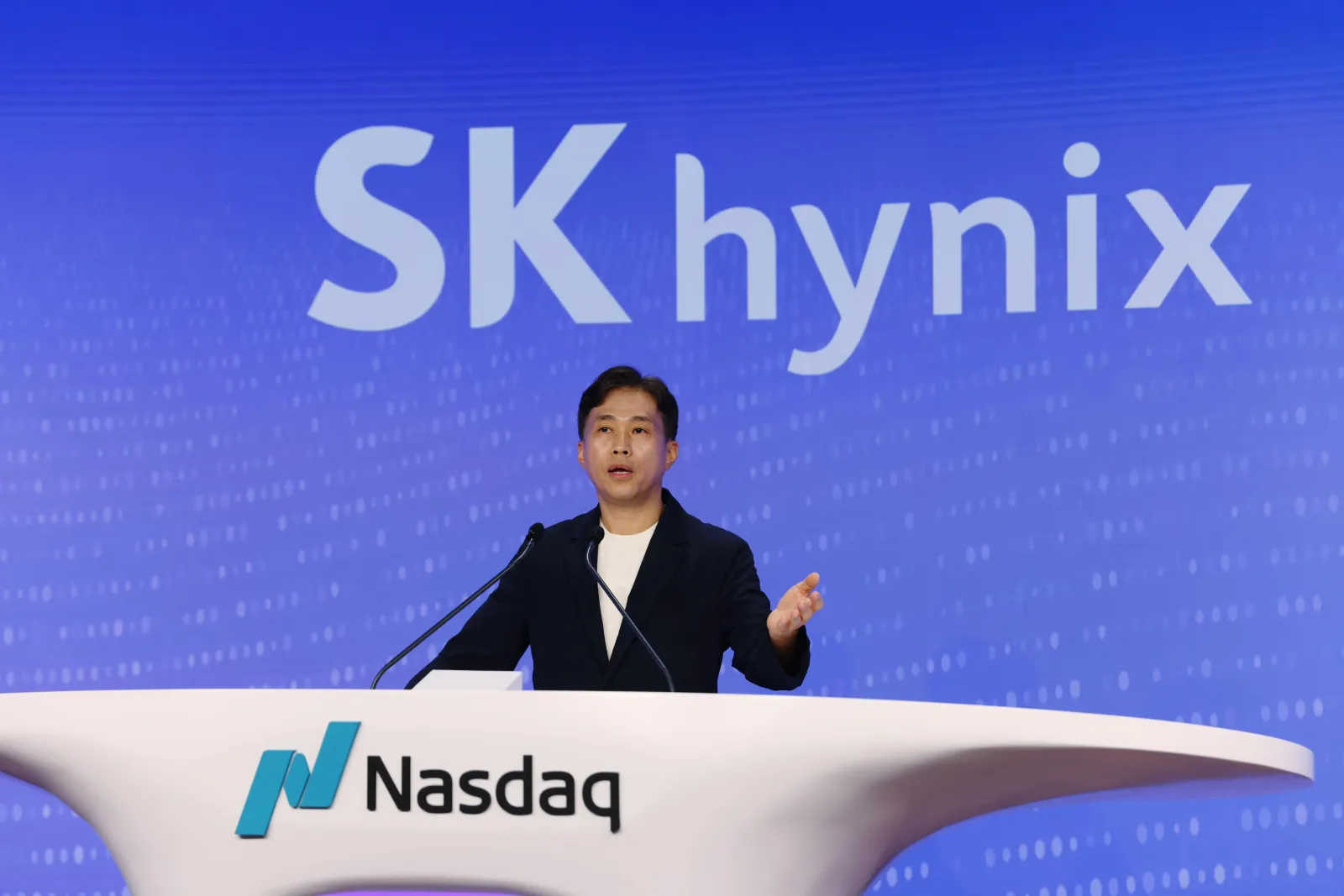
SK Hynix opens at $170, raises $26.5B, and tops foreign IPO records
In Friday's Wall Street debut, SK Hynix turns AI RAM demand into a $26.5B fundraising moment that rewrites comps.