

Microsoft hikes Xbox prices August 2: $100 up for 512GB, $150 for 1TB
It also withdraws the 2TB Xbox model, blaming a components crisis around storage and memory that ripples into pricing decisions.
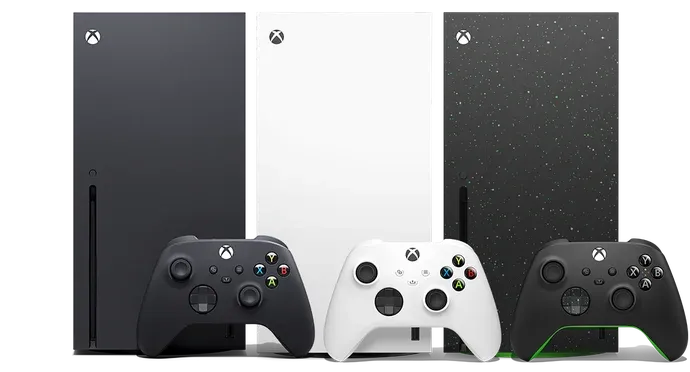
Microsoft will increase Xbox prices worldwide starting August 2, raising the 512 GB model by $100 and the 1TB model by $150, and withdrawing the 2TB variant. For decision-makers, the move signals how quickly component costs and supply constraints are hitting consumer hardware margins and portfolio planning.
Microsoft is raising Xbox prices worldwide starting August 2, and the company is doing it with a straight-through set of numbers: the 512 GB Xbox model goes up by $100, the 1TB model increases by $150, and Microsoft withdraws the 2TB variant altogether. The reason Microsoft gives is blunt and familiar in tech hardware: increased costs for console storage and memory, with the company citing a “components crisis.”
This is not a small tweak buried in a line item. A $100 step-up for the 512 GB SKU and a $150 jump for the 1TB SKU change purchase math for households and for retailers that plan bundles, promotions, and inventory. Microsoft also has not immediately confirmed pricing for non-US markets, which matters because “worldwide” usually means different timing, different FX pressure, and different retailer margins. The first-order implication is consumer sticker shock; the second-order one is that Microsoft is managing the supply-demand and margin problem by redesigning the product lineup.
To understand why withdrawing the 2TB model is as consequential as raising prices, you need to know what that SKU represents: a specific storage configuration that depends on availability and cost of components. When storage and memory get more expensive, companies can respond in two ways. They can spread the pain across the whole line with broad price increases, or they can cut off the least workable option where component cost and supply constraints are hardest to absorb. Microsoft is clearly doing both, and in doing so it is prioritizing consistency and feasibility over offering every configuration to every buyer.
There is also a planning and governance angle here for executives and boards. Hardware businesses do not just sell devices; they negotiate a supply chain that must hit production schedules, component allocations, and forecast demand. When a “components crisis” hits storage and memory, the company’s ability to hold previously published price points weakens quickly. A withdrawn model reduces complexity for procurement and manufacturing, and it limits the range of BOM (bill of materials) pressure across variants. That kind of SKU pruning is operational, but it also becomes a financial lever, because it changes mix and the average cost per unit.
For competitors and platform partners, the move is a signal that component cost pressure is not fading in the short term. If Microsoft can only make the economics work by raising prices and pulling the 2TB option, other console and hardware players should take note of how fast cost pressures translate into consumer pricing and product availability. Retailers will also feel this. Even without the final confirmation for non-US markets, they will have to reprice shelf plans, adjust bundles, and manage customer expectations about which storage tiers they can actually buy.
On the regulatory and market-structure side, “worldwide” pricing changes can trigger scrutiny depending on how they are applied across regions. The source says Microsoft did not immediately confirm pricing for non-US markets. That gap matters because regulators and watchdog groups sometimes compare whether pricing changes are justified by costs or whether they reflect more opaque pricing power. Even if the cost rationale holds, the absence of immediate confirmation in non-US markets creates uncertainty that can become a narrative issue.
From an investor and operator perspective, this announcement reads like a company protecting its ability to ship rather than optimizing for maximal SKU coverage. When the constraint is components, you can either force the product line to bend around supply or you can bend the lineup. Microsoft is bending the lineup: 2TB is withdrawn, 512 GB and 1TB rise by $100 and $150 respectively, and the pricing change starts August 2.
Strategically, this is the kind of decision that can ripple through a quarter or two of results, because hardware margins, attach rates for services, and consumer sentiment are tied together. The most immediate pressure is the customer decision: spend more now, or choose a different storage tier. The longer-run question for leaders in similar roles is whether that tradeoff becomes permanent. If the components crisis persists, pricing discipline may become the new normal, and product lineup pruning may become a recurring tool rather than a one-off response.
This story's Key Insights and Take-aways are locked.
Create a free account to unlock Executive Actions for one credit.
Register to UnlockAlways free for Executives Club members. Join the Club
More in Entertainment

Russell Brand's accuser 'bewildered and confused' as he denies 7 sex charges
The criminal case against the comedian is a live test of how media companies manage talent risk when serious allegations go public.

'It's a Magic Trick': Ballet Experts Say Rosalía's SNL Pose Is Impossible
Three ballet experts tell Rolling Stone Rosalía's gravity-defying SNL stillness shouldn't be possible - and why the debate is now part of the show.

Activision CMO: GTA 6 Will Boost Call of Duty, Not Bury It
Activision's top marketer says Rockstar's blockbuster will drive players back to consoles and into Modern Warfare 4, even as the company admits its recent strategy failed.