
Microsoft is testing AI wearables to monitor office workers' data
The company is deploying a 'wearable access badge' and desktop device, signaling a major shift in corporate surveillance and productivity tracking.
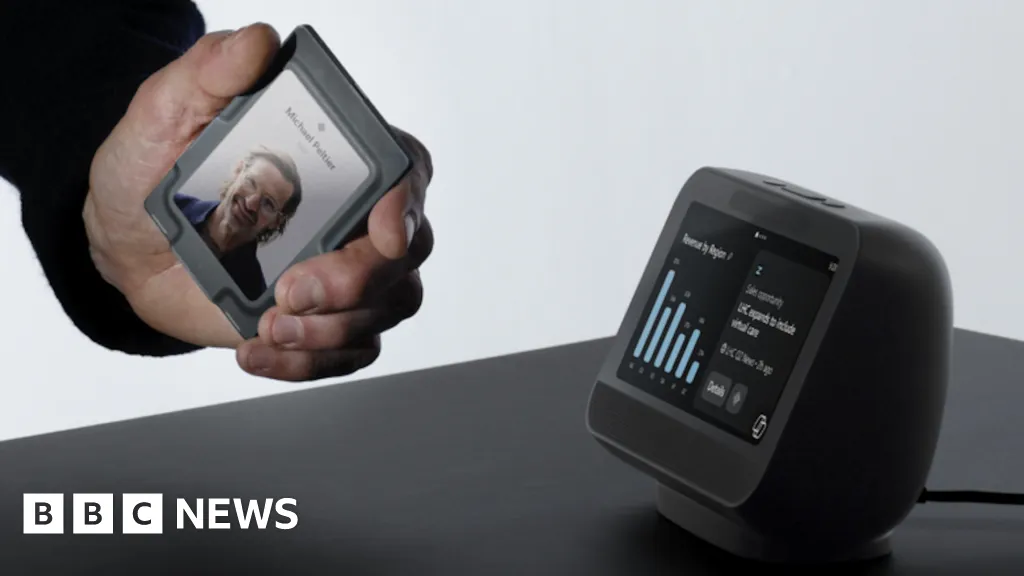
Microsoft is currently having its own employees test a new 'wearable access badge' and a desktop device designed to monitor office worker activity. This signals a potential industry pivot toward mandatory, AI-driven workplace surveillance, forcing every company to re-evaluate its employee monitoring policies.
Microsoft is quietly rolling out a new suite of AI-powered tools, including a 'wearable access badge' and a complementary desktop device, for its own employees to test. This initiative represents a significant, and potentially unsettling, leap in corporate technology, moving beyond simple keycard access to deep, biometric, and activity-based monitoring. While the company has not released a full technical specification, the existence of these tools suggests a move toward a highly integrated, AI-managed workplace ecosystem. The core function, as far as the initial reports indicate, is to manage and track employee presence and movement within a corporate environment, but the integration of AI suggests the data collected will go far beyond simple 'in' or 'out' timestamps. This is not just a new badge; it is a data capture point designed to feed a larger system of productivity metrics and access control.
For decision-makers, the implications are immediate and profound. If Microsoft, a global tech giant, is pioneering this level of internal monitoring, it sets a powerful, de facto industry standard. The stakes are no longer just about physical security; they are about quantifying human presence, optimizing movement flow, and generating granular data points on employee efficiency. The combination of a wearable element (implying constant, passive data collection) and a desktop component (suggesting data aggregation and analysis) creates a powerful feedback loop. This system promises to give management unprecedented visibility into the daily routines of their workforce, potentially linking physical location and time spent at a desk to performance metrics. This level of data collection raises immediate, critical questions regarding privacy, data ownership, and the ethical boundaries of employer monitoring.
Historically, corporate monitoring has ranged from time-clock punch cards to network activity logs. The leap represented by Microsoft's wearable AI badge is a qualitative jump. It moves the monitoring from what you did on a computer to where you were and how you moved in the physical world. This type of system can track everything from which meeting rooms are utilized most frequently to the duration of breaks, all while attributing that data to an individual employee. The underlying assumption of such a system is that physical presence and measurable activity are directly correlated with productivity and value. This assumption, however, is increasingly debated by labor advocates and privacy experts, who argue that it fundamentally misunderstands the nature of modern, knowledge-based work.
From a market context, this development fits into a broader trend of 'quantified self' applied to the workplace. Companies are increasingly adopting AI tools that promise to optimize every facet of business, from supply chain logistics to employee scheduling. The wearable badge is simply the latest, most intimate data source. It suggests that the next frontier of corporate efficiency will be measured not just by lines of code or sales figures, but by the minute-by-minute, physical movements of the human capital itself. For large organizations with complex, multi-floor campuses, the potential for optimization is enormous. Management could theoretically use the data to redesign office layouts, ensuring that high-collaboration areas are utilized optimally, or conversely, identifying 'dead zones' where employees are spending time without apparent purpose.
However, the deployment of such technology is not without regulatory and ethical friction. Privacy laws, particularly in Europe (like GDPR), are already highly sensitive to the collection of personal data, especially biometric and location data. Any company deploying this must navigate a minefield of legal compliance, requiring explicit employee consent and clear data usage policies. The mere existence of this technology forces a reckoning for HR departments and legal counsel across the industry. They must develop policies that balance the legitimate business interest in productivity and security against the fundamental right to employee privacy. The conversation shifts from 'Can we track them?' to 'How far can we legally and ethically push this?'
For founders and operators, the strategic takeaway is clear: the tools are coming, and the question is whether your company is prepared to implement them. If your business model relies on physical office presence, or if you operate in a highly regulated sector (like finance or healthcare), you must begin stress-testing your current monitoring infrastructure. Consider the data gaps your current systems leave. Can you track collaboration patterns beyond just calendar invites? Can you measure the efficiency of physical space utilization? The wearable badge represents the ultimate data layer, promising a level of operational insight previously reserved for science fiction. It is a powerful signal that the definition of 'workplace efficiency' is undergoing a radical, data-driven overhaul, and those who ignore this shift risk being left behind in a new era of hyper-optimized, monitored labor.
This story's Key Insights and Take-aways are locked.
Create a free account to unlock Executive Actions for one credit.
Register to UnlockAlways free for Executives Club members. Join the Club
More in Technology

OpenAI says 10,000 agents cracked a 90-year math problem in 88 hours
The company's claim is audacious, but one mathematician is pushing back. Here's what it means for AI-driven discovery.

Meta still serves child sexual abuse ads on Instagram in India - BBC report
A new report following the BBC Eye investigation says the ads are still there - what it signals for every platform with a self-serve ad engine.

White House yanks 'Build the Wall' game after Tetris Company copyright warning
The administration's arcade game vanished in hours - and the takedown playbook every brand can learn from.