

Microsoft's new AI model challenges OpenAI's IPO timing
The unveiling of a proprietary reasoning engine signals a major shift in the AI race, forcing investors and competitors to reassess the valuation and timeline of the generative AI market.
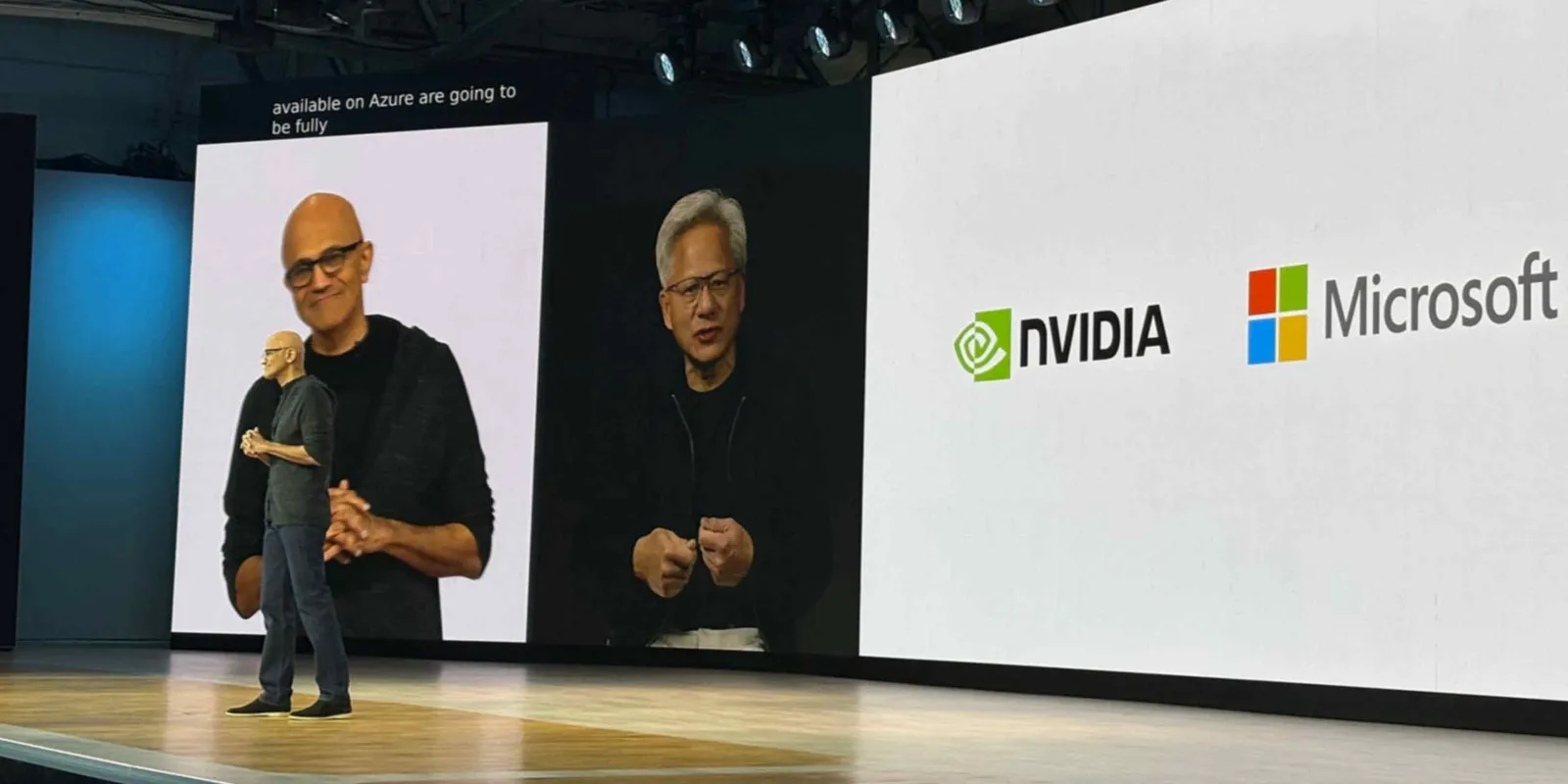
Microsoft unveiled its proprietary AI reasoning model, signaling a direct challenge to the market dominance and timing of OpenAI's anticipated IPO. This move forces investors and competitors to rapidly re-evaluate the competitive landscape and the true valuation metrics for the next generation of foundational AI infrastructure.
Microsoft has dropped a significant AI development, unveiling a new reasoning model that directly challenges the market narrative built around OpenAI's anticipated Initial Public Offering (IPO). This proprietary model represents a major strategic pivot for Microsoft, signaling that the company is not merely a cloud provider or a partner to OpenAI, but a primary, independent competitor in the foundational AI layer. The timing of this unveiling is critical, occurring just as the market is heavily focused on OpenAI's potential listing and the valuation metrics that will define the entire generative AI sector. By showcasing its own advanced reasoning capabilities, Microsoft is effectively setting a new, higher bar for what the market considers 'best-in-class' AI, forcing both OpenAI and its investors to justify their premium valuation against a direct, powerful competitor.
This new reasoning model is designed to address the limitations of current large language models (LLMs) by focusing on complex, multi-step logical inference and structured problem-solving, areas where even the most advanced generative AI often struggles. While OpenAI's models have captured the public imagination with their conversational fluency and creative output, Microsoft's emphasis on 'reasoning' targets the enterprise use case: the ability to reliably solve complex, real-world business problems that require deep logical chains. For enterprise clients, the difference between a model that can write a poem and one that can reliably optimize a supply chain or diagnose a complex financial issue is the difference between a cool gadget and mission-critical infrastructure. Microsoft's move suggests that the next wave of AI value will be captured not by sheer scale or conversational polish, but by verifiable, reliable intelligence.
The implications for the broader AI market, and specifically for OpenAI, are profound. The market has been pricing in a narrative where OpenAI, backed by massive capital and the hype cycle, is the inevitable leader. Microsoft's unveiling acts as a powerful counter-narrative, suggesting that the competitive landscape is far more fragmented and fiercely contested than previously assumed. It forces investors to look beyond the 'brand name' and scrutinize the underlying technical differentiators and the actual deployment capability of the models. If Microsoft's reasoning model proves superior in specific, high-stakes enterprise benchmarks, it could significantly temper the enthusiasm surrounding OpenAI's IPO valuation, demanding a more granular, feature-by-feature comparison from potential investors.
Furthermore, this development underscores the intensifying 'AI arms race' among the tech giants. It is no longer enough to simply build a powerful model; companies must demonstrate unique, defensible advantages in specific areas like reasoning, multimodal integration, or data handling. Microsoft is leveraging its deep integration into the enterprise stack (Azure, Office 365) to give this new model a massive, immediate distribution advantage. This is a critical strategic play: instead of waiting for OpenAI to define the market, Microsoft is defining the terms of the competition, making its own platform the default choice for businesses needing reliable, complex AI solutions. This shifts the focus from 'who has the biggest model' to 'who has the most reliable, integrated, and specialized AI solution.'
For investors and founders, this means the due diligence process for AI startups and platforms must become exponentially more rigorous. Simply having a large dataset or a high-profile partnership is insufficient. The focus must shift to demonstrable, measurable performance in complex reasoning tasks and the ability to integrate that intelligence into existing, mission-critical workflows. The market is now demanding proof of 'utility' over proof of 'potential.' This is a major inflection point for capital allocation in the tech sector, signaling that the era of funding based purely on hype is rapidly concluding.
Regulatory scrutiny also plays a role in this dynamic. As AI models become more powerful and integrated into core business functions, the regulatory focus will inevitably shift toward accountability, safety, and transparency. Microsoft's approach, which is deeply embedded within a regulated enterprise environment, gives it a structural advantage in addressing these concerns. By emphasizing reliability and reasoning, the company is preemptively positioning itself as the 'safe' and 'enterprise-grade' choice, a crucial selling point when governments and large corporations become increasingly cautious about deploying unproven, black-box AI systems. This strategic alignment with enterprise governance is a key differentiator that cannot be ignored by any competitor.
In short, Microsoft's move is a sophisticated market signal. It tells the market that the AI race is not a single race, but a series of highly specialized sprints. The winner will be the company that can most effectively combine cutting-edge reasoning power with seamless, secure integration into the existing operational backbone of the global enterprise. The stakes are not just about market share; they are about defining the fundamental architecture of how work gets done in the next decade, and Microsoft has just dropped a major challenge into the ring.
This story's Key Insights and Take-aways are locked.
Create a free account to unlock Executive Actions for one credit.
Register to UnlockAlways free for Executives Club members. Join the Club
More in Technology

OpenAI says 10,000 agents cracked a 90-year math problem in 88 hours
The company's claim is audacious, but one mathematician is pushing back. Here's what it means for AI-driven discovery.
Meta still serves child sexual abuse ads on Instagram in India - BBC report
A new report following the BBC Eye investigation says the ads are still there - what it signals for every platform with a self-serve ad engine.

White House yanks 'Build the Wall' game after Tetris Company copyright warning
The administration's arcade game vanished in hours - and the takedown playbook every brand can learn from.