

Microsoft tests a decluttered Windows 11 Search Box for Insiders, removes recommended content
A cleaner Search Box without recommended tiles and ads is rolling to Windows Insiders, signaling a trust reset for Windows.
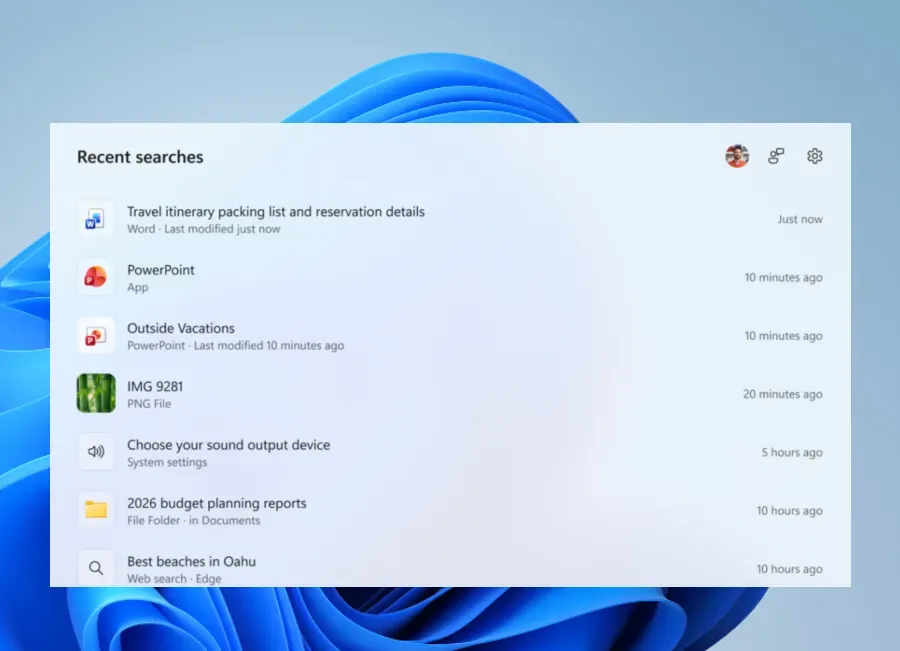
Microsoft is rolling out a “decluttered” Windows 11 Search Box to Windows Insiders in the Experimental channel. Decision-makers should watch how this move reshapes Windows search UX, trust signals, and the broader platform debate about personalization vs. ads.
Microsoft is testing a cleaner version of Windows 11 search, stripping recommended content and ads from the Search Box experience. In a blog post on Monday, Microsoft said it is rolling out the decluttered Search Box to Windows Insiders in the Experimental channel, as the company looks to regain trust with users and fix Windows.
The most visible change is a revamped search homescreen that, in this test, shows only your recent searches. Right now, when you open the search menu, it shows your recent searches plus distracting tiles on the right pane, including things like the image of the day, daily quizzes, trending searches, and game recommendations.
On the surface, this is just UI housekeeping. But the reason it matters is that search is one of the most high-friction entry points in any operating system. Users expect search to be fast and predictable, not like a content feed wearing a productivity mask. When search mixes personal intent (what you just typed, what you searched for yesterday) with promotions (tiles you did not ask for), it can quickly erode trust. The source’s framing is explicit: Microsoft is testing this cleanup “as the company looks to regain trust with users and fix Windows.” That is not subtle, and it is not a small bet.
If you zoom out, this is also a strategic response to the broader platform tension Microsoft, and many other platform owners, have been navigating for years. Personalization and recommendations are monetization and engagement levers. But they also create a suspicion gap: are recommendations helping the user, or are they trying to replace the user’s intent? Search is especially sensitive because it is the moment a user is asking, in the bluntest possible way, for an answer. Turning that moment into a carousel can backfire.
The rollout to Windows Insiders in the Experimental channel is telling. Insiders give Microsoft a lower-stakes environment to measure what changes land well without committing the whole installed base. Experimental builds are typically where product teams validate assumptions, collect feedback, and look for unintended consequences like slower search interactions, user confusion about what moved where, or decreased engagement metrics that might motivate reverting. The key point for executives is not that “decluttering” is inherently good or bad, but that Microsoft is willing to run the experiment in public, with a real cohort of power users and testers.
There is also a trust and governance subtext executives should recognize. Microsoft’s move is framed as repairing Windows trust with users. That kind of messaging tends to matter when a company is under persistent scrutiny, whether from regulators, lawmakers, competition-watchers, or simply from vocal users in app ecosystems. Even when regulators are not directly involved in a specific UX toggle, the direction of travel can influence how outside observers describe the company’s posture: is the platform learning to respect user control, or is it doubling down on discovery surfaces that blur advertising and utility?
Second-order implications ripple beyond Windows itself. When a platform changes search presentation, it changes developer and partner expectations, too. Search is often where users decide what app to open next, what settings to access, and what content to consume. Even a shift from a mixed homescreen to a “recent searches only” homescreen can affect how often users jump directly into certain workflows, how frequently they encounter curated content surfaces, and whether third-party experiences benefit from being discoverable or get crowded out by native tiles.
And then there is the internal competitive layer. Microsoft is not making decisions in a vacuum. Competitors across operating systems, browsers, and app ecosystems have their own versions of search, recommendations, and feed-driven discovery. If Microsoft’s test demonstrates a meaningful improvement in user sentiment and perceived control, it gives other product teams a blueprint: minimize promotional noise at the moment of search intent. If it hurts discovery or engagement, Microsoft can learn exactly how much “decluttered” users will tolerate without losing the benefits of recommendations.
For leaders at other tech companies, the strategic stake is simple: this is a live stress test of the “personalization vs. trust” tradeoff in one of the most sensitive parts of the user journey. Microsoft is effectively asking: what happens when we strip the search menu back to recent intent? For the boardroom, the question is whether user trust behaves like a one-way cost when monetization layers creep into core workflows. For product leadership inside Windows, the question is even more operational: can Microsoft reduce distraction without sacrificing usefulness, discoverability, or the metrics that typically justify recommendation surfaces in the first place.
In the meantime, the most concrete takeaway from Monday’s update is the change itself. A revamped search homescreen that shows only your recent searches, tested in the Experimental channel for Windows Insiders. It is a clean signal that Microsoft believes the current blend of recent queries and right-pane tiles has become a problem worth fixing.
This story's Key Insights and Take-aways are locked.
Create a free account to unlock Executive Actions for one credit.
Register to UnlockAlways free for Executives Club members. Join the Club
More in Technology

Google quietly links your phone number to every Android account on your SIM
Adding a SIM now ties your phone number to all Google accounts - and future accounts inherit it. Here's the security and privacy stakes.

Hijacker AI 'Skynet mode' runs 100,000 attack steps against exposed models
Symantec caught a criminal AI agent that borrows other models, steals data, and mines crypto; the only relief is no confirmed victims yet.

Nvidia's AI-financier shift faces its first big test as neoclouds stumble
A rout in neocloud stocks is forcing investors to weigh Nvidia's hidden exposure as both supplier and lender to the AI buildout.