
Microsoft weighs canceling Blade and closing Arkane as Xbox brands studios under reset
If rumors hold, late 2027 launch slips, budgets tighten, and Arkane could be sold or shut with broader layoffs looming.
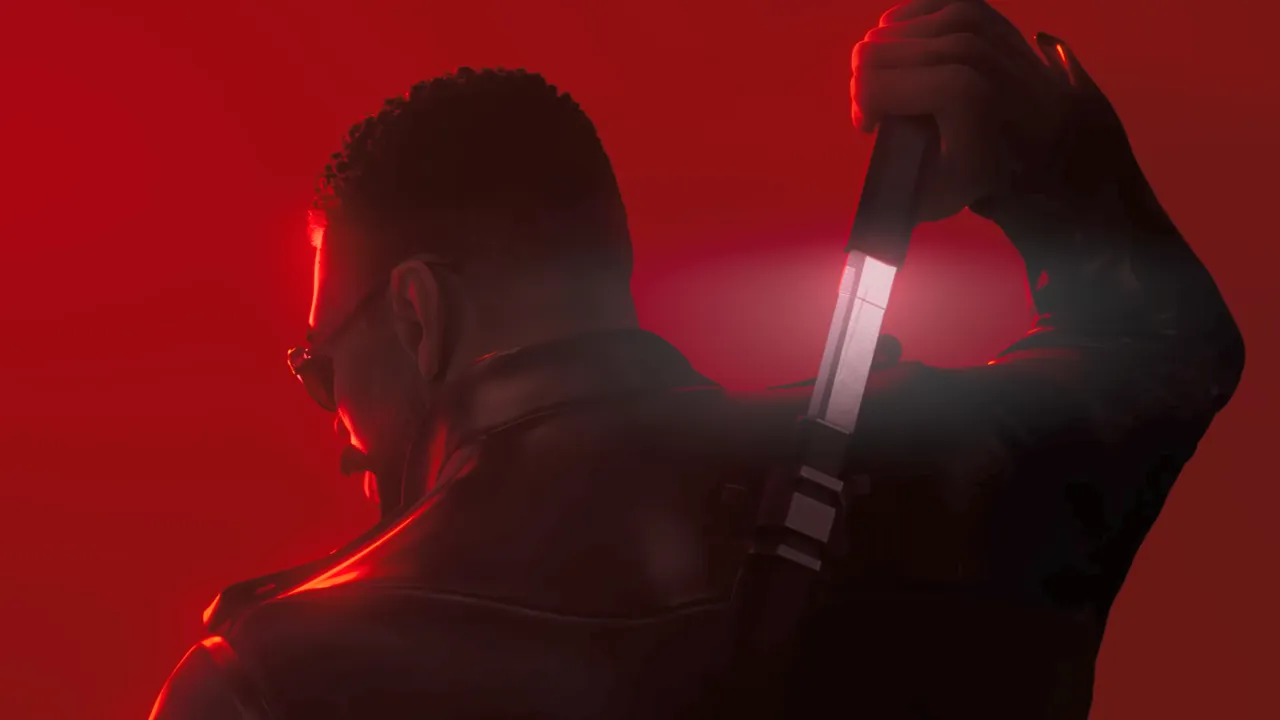
Microsoft is reportedly considering canceling Marvel's Blade and shutting down Arkane, a studio tied to the team behind Deathloop. For decision-makers, the move signals how Xbox’s broader financial “reset” could translate into studio exits, dealmaking, and job risk across the publishing ecosystem.
Microsoft is reportedly considering canceling Marvel’s Blade and shutting down Arkane, one of the Xbox Game Studios developers allegedly on the chopping block. The reporting centers on a specific Blade problem: its planned late 2026 release window was delayed internally to late 2027, and the project went over budget. The combination matters. Release slips hurt pipeline predictability. Budget overruns directly strain the spreadsheets leadership is now chasing.
According to The Verge, Arkane is one of five studios Microsoft is considering closing. Blade, specifically, was announced in December 2023 with a reveal trailer, but IGN notes it has not shown up again since. That silence is not just fan frustration. It becomes a corporate risk when timelines lengthen and costs rise, especially if management is trying to hit improved accountability in gaming.
So what happens to Arkane? The Verge also suggests Arkane may be sold rather than closed. That detail is a hinge point for executives. A sale can reduce immediate headcount reductions while still extracting value or consolidating operations. It can also be a pressure tactic during internal reviews, since studios can become bargaining chips rather than brand-building engines. IGN connects the possibility to the same pattern seen in other Microsoft gaming cases, naming Compulsion Games, Double Fine, Ninja Theory, and more recently Undead Labs, as companies reportedly going through similar processes.
The timeline is also a big deal. IGN says the process could take some time, and even if studios are spun off, they may not avoid layoffs. That is the second-order reality behind “spin-off” narratives. Separating a studio from a parent does not automatically erase restructuring pressures. It can, in practice, relocate uncertainty onto new owners, new budgets, or a thinner team built around a single title with a longer odds window.
This Blade-early-warning layer is hitting while Xbox’s broader labor and performance story is already loud. IGN reports it has asked Microsoft for comment about the layoffs and studio closure reports and the company has not yet responded. IGN also says it asked Marvel Games about the status of Blade and received no response.
The optics are messy because Arkane’s name is tied to recent credibility. IGN reminds readers that Bethesda Game Studios head Todd Howard said he recently saw what the Deathloop team at Arkane Lyon was working on and was impressed. Howard teased, "I'm not at liberty to say when [we'll see more]," and added, "I saw some stuff just yesterday [on May 21] and the folks at Arkane [Studios, the developers] are doing a really, really great job." That quote lands differently in the middle of cancellation rumors. It suggests creative work is still happening, even as corporate review teams move to contain risk.
The current anxiety also traces back to audience-facing signals that preceded the reports. Fans reportedly first began to fear the worst after Blade was a no-show at the 2026 Xbox Games Showcase. And Blade is not the only Xbox game under threat, according to the same coverage. There is fresh concern for State of Decay 3 and its developer Undead Labs, and additional worry around Psychonauts developer Double Fine, South of Midnight developer Compulsion, and Hellblade developer Ninja Theory. Those studios are also said to be in talks with Microsoft about potentially buying themselves out.
Behind the scenes, the incentive structure appears to be a “reset” aimed at tightening profit discipline. IGN points to Xbox CEO Asha Sharma’s “reset” memo, widely treated as a signal that Microsoft planned big layoffs and studio closures. In the memo, Sharma revealed that Microsoft’s gaming business has a 3% accountability margin (described as an assumed profit margin), down year-on-year. She also said, "Excluding Activision Blizzard King, over the past five years, we have spent over $20 billion on ongoing investments in our content, platform, and hardware subsidy, but our annual revenue has declined nearly half a billion during that time. Going forward, this cannot continue."
That memo helps explain why a project like Blade can become vulnerable even if the team has talent. Overruns and delays translate into a portfolio problem. As one analyst told IGN, "the studios most exposed are brilliant for prestige and rotten for the spreadsheet." The companies singled out in the reporting, like Compulsion, Double Fine, and Ninja Theory, are described as having struggled for commercial success in recent years. That framing is the uncomfortable bridge between creative identity and financial outcomes.
If leadership is actively acting, the structure around Xbox seems to be changing in parallel. IGN notes The Game Business reported that Xbox Game Studios boss Craig Duncan stepped down, and it connects this to broader news of potential studio closures. Bloomberg’s Jason Schreier warned of a “bloodbath” at Xbox. Separately, unionized Xbox workers called for immediate bargaining following layoff reports, holding a press conference accusing management of paying “for executives' failures.” Microsoft’s spokesperson told IGN it will continue to negotiate with the CWA to reach agreements across Xbox, adding: "We respect the right of our team members to make their voices heard," and "We have a long track record of good faith partnership with labor organizations... We are continuing to negotiate in good faith with the CWA to reach agreements across Xbox."
This is also not Microsoft’s first swing. IGN reminds readers that Microsoft cut 9,000 staff in July 2025, including in gaming. It says the cuts canceled titles including Rare’s Everwild and shut down studios such as Perfect Dark developer The Initiative. In May 2024, Microsoft also closed Bethesda studios including Arkane Austin and Tango Gameworks, which developed Hi-Fi Rush and The Evil Within. The Blade developer is described as the surviving Arkane studio based in Lyon, France, meaning Arkane as an organization may not be the only casualty risk, but it is directly implicated.
Finally, there is the brand-level uncertainty. IGN reports a recent claim that Sharma is speeding up development on new The Elder Scrolls, Fallout, and Halo games as she prepares to hit the reset button. It also references The Information via Reuters, saying sources indicated Microsoft hadn’t ruled out turning the Xbox brand into a wholly-owned subsidiary, and that it could be operated as a joint venture or even sold. If Xbox’s ownership and operating model are in flux, studio restructuring becomes easier to justify and harder to predict.
For boards, founders, and investors watching this ecosystem, the takeaway is straightforward: the “studio” story is really a portfolio capital allocation story. Blade’s delayed late 2026 window to late 2027 and its budget overrun are exactly the kind of measurable triggers that can override internal enthusiasm. Whether Arkane is closed or sold, the underlying signal is that studios with prestige but weak commercial math are now being force-matched to financial targets. And if you build in gaming, you feel this not as headlines, but as timelines, funding decisions, and the quiet moment your project stops being a dream and starts being a variance report.
This story's Key Insights and Take-aways are locked.
Create a free account to unlock Executive Actions for one credit.
Register to UnlockAlways free for Executives Club members. Join the Club
More in Business
Comcast shares jump 25% as it plans to split NBCUniversal and Sky
The tax-free spin-off could reshape focus, funding, and competition across media and tech for years.

Bungie cuts most Destiny 2 staff as Sony says Marathon still matters
Herman Hulst confirms layoffs affecting most Destiny and some Marathon teams after Bungie admits Destiny fell short.

SK Hynix jumps 11% after seeking up to $29.4B in Nasdaq listing
The chip giant filed for a Nasdaq listing plan that could raise $29.4 billion, instantly reshaping investor expectations.