
Minecraft lands on Nintendo Switch 2 later this year, no date yet
What this announcement means for Nintendo, Microsoft, and game publishers planning their next platform bets.
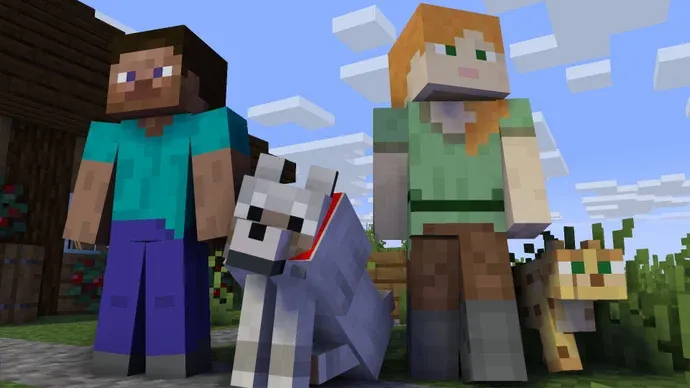
Eurogamer reports that Minecraft is coming to Nintendo Switch 2 later this year, but the outlet notes no specific release date has been announced. For decision-makers, this signals a major new distribution and revenue channel is being positioned for launch window attention without locking in timing.
Minecraft is coming to Nintendo Switch 2 later this year, according to Eurogamer, with no specific release date announced. That missing date matters more than it sounds. When a platform still has an open calendar slot, publishers and platform holders are not just shipping content, they are competing for mindshare during a launch window that can decide which games become “the” early identity of the console.
In practical terms, this means Minecraft, one of the most recognizable game brands on Earth, is preparing to follow Nintendo’s next-generation hardware into a fresh install base. Eurogamer’s phrasing is straightforward: the game is coming “later this year,” and there is “no specific release date” yet. So the first question for operators is not “will it happen?” It is “when, relative to the platform’s momentum, and how do we plan around a launch that is real but not time-stamped?”
To understand why executives should care, zoom out for a second. Major franchises give platforms credibility, but they also reshape the competitive map. A game like Minecraft is not merely another title on a storefront. It is a system of retention loops, community creation, and long-running engagement. When it arrives on a new Nintendo console generation, it can become a gravity well that pulls other studios to the platform, advertisers to the category, and accessory partners to the ecosystem. The knock-on effect is that early platform years are often won or lost on perceived momentum, and a headline brand can accelerate that perception.
There is also a second-order planning problem created by “no specific release date.” Launch planning in games is usually a chain reaction: marketing calendars, retail commitments, localization schedules, QA cycles, and partnerships all depend on time. If the only publicly confirmed timing is “later this year,” finance teams and publishing teams have to keep optionality while still making real bets. That is not a comfortable place to be. It forces scenario planning. For example, teams may have to decide how aggressively to schedule cross-promotions, what store merchandising windows to target, and how much spend to commit without clarity on the exact week.
Regulatory and platform policy may not be the headline of this story, but it still affects the “later this year” reality. Console platform ecosystems tend to involve certification processes, store and update guidelines, and technical compliance requirements. Even without naming any specific rule from the source, it is reasonable to say these steps are typically non-trivial. That makes the lack of a date even more meaningful: it implies that either the final readiness timeline is not locked, or public communication is being held until closer to completion. Either way, for executives, the operational subtext is that shipping on a new platform has dependencies that can shift.
For Microsoft, Minecraft arriving on Nintendo Switch 2 reinforces a multi-platform strategy that targets reach, not exclusivity. For Nintendo, landing Minecraft is a signal to consumers and partners that the successor console is not arriving empty-handed. That dynamic can also influence negotiations across the broader industry. If one major platform brings in a tentpole without an exact date, other publishers may feel pressure to secure their own commitments, then time announcements to align with whatever “later this year” becomes in the market. In other words, the uncertainty can create urgency.
And for peers, this is a reminder that “launch year” messaging can be as important as launch year engineering. Boards and investors often ask, “Are we getting distribution into the places where users will actually be?” Minecraft’s move provides an answer for Nintendo’s next generation: at least one global franchise is preparing to meet players where they go. But the open release date is the unanswered part of the question. It leaves room for competitors to steal attention during the first weeks after the console’s ramp, and it also leaves room for Nintendo and partners to shape a narrative once the exact timing lands.
So the strategic stakes are simple. If you are a CEO, CFO, or board member overseeing publishing, platform partnerships, or studio roadmaps, you need to treat this as a platform signal and a scheduling challenge at the same time. Minecraft is coming, later this year. The date is not yet specified. That combination means the market is already moving, but the calendar is still being negotiated. The organizations that plan for both possibilities will be the ones that capture the early momentum rather than chase it after the fact.
This story's Key Insights and Take-aways are locked.
Create a free account to unlock Executive Actions for one credit.
Register to UnlockAlways free for Executives Club members. Join the Club
More in Entertainment

Christopher Nolan’s “The Odyssey” posts his biggest Tuesday haul, surpassing “The Dark Knight’s” record
The film’s Tuesday breakout reframes Nolan’s box-office ceiling and forces competitors to rethink timing, budgets, and release strategy.

Kacey Musgraves cancels Aug. 20, 29, Sept. 2 Middle of Nowhere shows
Ticketmaster emails are telling fans refunds are coming, while the tour still starts Aug. 21 in Chicago.

Billie Joe Armstrong launches Epiphone Les Paul Junior and Marshall 1959BJA signature gear
Two limited releases turn decades of Green Day’s tone into branded hardware, including Marshall’s first artist amp in 14 years.