
MIT research says ozone-depleting harm was detectable in the 1950s, with modern tools
A new MIT-led study asks whether today’s science could have spotted CFC ozone loss decades earlier than 1974.
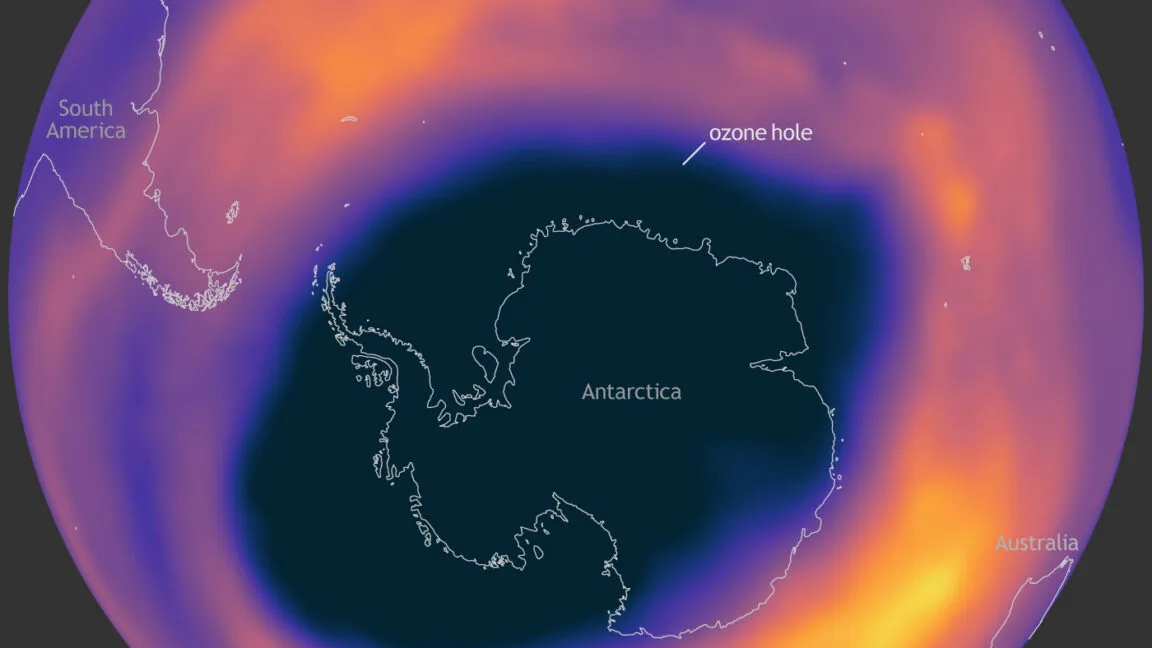
Jian Guan of MIT leads a new study using modern scientific tools to ask how early ozone-depleting effects from CFCs could have been detected. The implication for decision-makers: the “early warning” gap may have been a tools-and-data issue, not only a policy-timing issue.
It turns out the ozone crisis may not have been a surprise of physics. A new study led by Jian Guan at MIT asks a what-if question with a very grown-up punch: could scientists have detected ozone loss even earlier than they did, using today’s scientific tools?
Here is the timeline the world actually lived through. Researchers discovered in 1974 that chlorofluorocarbons (CFCs), once common in aerosol cans and refrigerant loops, could destroy ozone in the atmosphere. Then, within just a few years, bans on CFCs began to roll out based on projected consequences. In 1985, a seasonal ozone “hole” over Antarctica pushed things along even faster, and in 1987 an international agreement was signed to phase out CFCs everywhere.
The common-sense takeaway people usually draw from this story is positive: the ban worked, the ozone hole growth reversed, and the world coordinated quickly enough to matter. But the MIT-led study is not arguing the response was a failure. Instead, it is challenging a different comfort. It asks whether the world could have moved even earlier if scientists had the ability to identify the problem with the instrumentation and analytical approaches we have now.
That distinction matters because it shifts the conversation from blame to capability. If today’s tools could have spotted ozone depletion in the 1950s, then the bottleneck was not necessarily whether policymakers understood the stakes. It could have been whether scientists had the evidence sharp enough, early enough, and confidently enough to signal risk before CFCs were widely phased in across everyday products.
From a governance and boardroom perspective, it is the same pattern you see in other risk domains: early detection changes incentives. Once a problem is framed as “we can project what might happen,” regulators can act, but only if uncertainty does not paralyze decision-making. In the ozone case, bans on CFCs began within a few years after the 1974 discovery, explicitly “based on the projected consequences.” That is a key phrase. It means action was taken while the evidence was still partly inferential. The MIT study suggests that with modern tools, that action might not have needed to wait for the later milestones, like the 1985 Antarctic ozone hole.
Then there is the media and politics of timing. The seasonal ozone “hole” discovered over Antarctica in 1985 acted like a pressure valve. It made the invisible measurable in a way that accelerated the timeline. By 1987, the international agreement to phase out CFCs everywhere followed. In other words, the story is not just chemistry. It is also momentum. Major policy shifts often require a moment when risk becomes undeniable. The question Jian Guan and colleagues raise is whether scientific tools could have made that moment earlier, before the crisis had to reach Antarctica to get attention.
Second-order implications spill into how organizations build early-warning systems. Even when leaders believe in prevention, budgets and attention are finite. If modern tools can reveal harm earlier in time, then the costs of waiting are not linear. The longer a hazardous technology is in widespread use, the harder the eventual transition becomes. The ozone narrative is often framed as a clean regulatory win, but this “could have been spotted in the 1950s” angle suggests something more nuanced: better detection could reduce how much harm accrues before policy catches up.
For executives and investors, the relevance is straightforward. Environmental and health risks are not always discovered at the moment a technology is introduced. They show up after measurement catches up, after models improve, after the right datasets exist, and sometimes after a visible event forces scrutiny. The ozone case shows how quickly action can happen once the right scientific signal lands. The MIT study asks whether that signal could have arrived earlier if the tools had been available. That is a governance question as much as a scientific one.
So the strategic stake for decision-makers is this: treat detection capability like infrastructure, not like an academic luxury. When your industry depends on long-lived chemicals, complex systems, or global externalities, “we will measure it later” can be a costly philosophy. The ozone layer is not just a scientific topic. It is a reminder that the difference between a manageable crisis and a delayed response can be as small as the availability of the right tools, applied to the right data, early enough to change the trajectory.
This story's Key Insights and Take-aways are locked.
Create a free account to unlock Executive Actions for one credit.
Register to UnlockAlways free for Executives Club members. Join the Club
More in Science

Alaska's 1,580-foot tsunami had warning signs. Scientists just found them.
Rapid glacier retreat, heavy rainfall, and thousands of tiny tremors preceded Alaska's 1,580-foot tsunami, a warning for every coastal community in a warming world.

The rare mutation that lets high-risk brains dodge Alzheimer's
Scientists found a natural defense against protein buildup, opening a new path to preventive treatments.

3,000 steps a day may halve Alzheimer's decline, study finds
New research links a modest daily walk to less tau buildup and nearly half the cognitive and functional decline, even for those with early signs.