

Miyamoto questioned using Mario in Splatoon, then demanded Nintendo be strict with new characters
Famitsu reveals Shigeru Miyamoto’s real test: whether a new character can work globally without leaning on legacy.
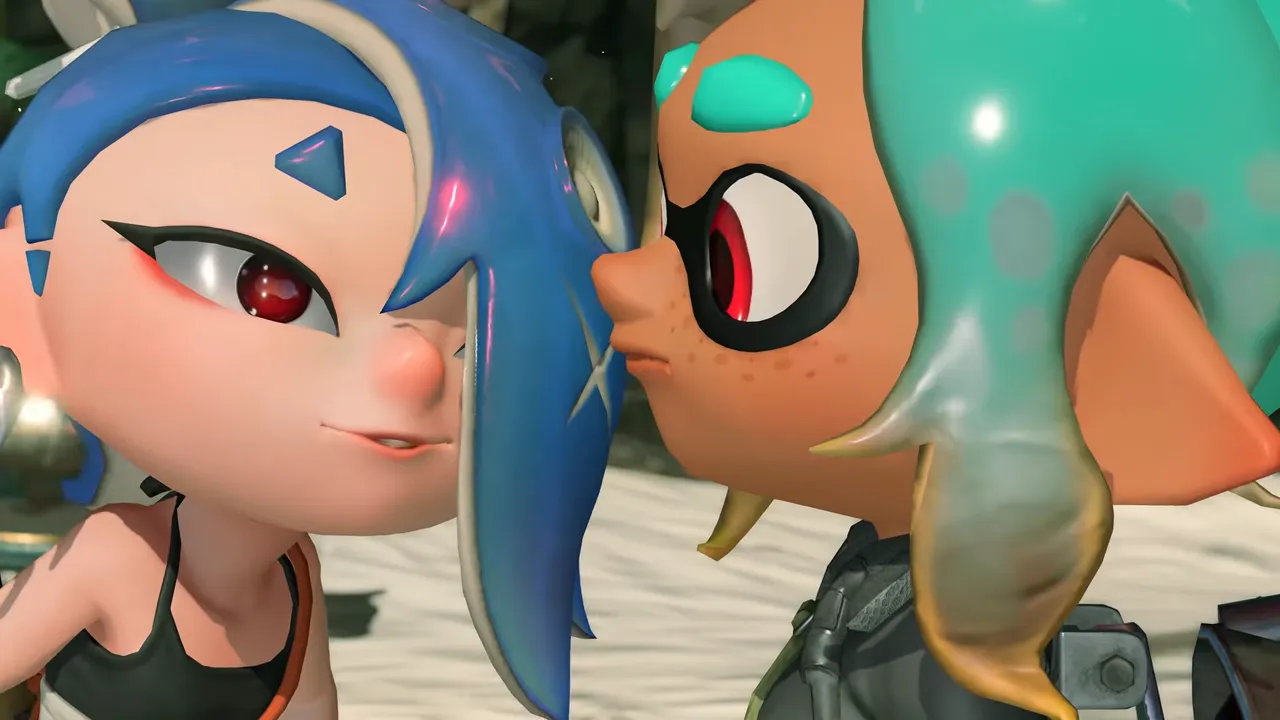
Shigeru Miyamoto told Famitsu, via Nintendo Everything, that Nintendo needs to be strict when judging whether new characters will really work globally, and that during Splatoon development Nintendo even considered using Mario. The consequence for decision-makers: Nintendo is framing character innovation as a high-standards governance problem, not a “try stuff” culture.
Shigeru Miyamoto, Nintendo’s legendary creator, said something that cuts straight through game-industry comfort zones. During Splatoon’s development, he recalled times when the team wondered, “If the characters are going to be like this, wouldn’t it be better to just use Mario?” Then, once they built the prototype for the Inklings they have now, they realized, “With these, there’s no need to use Mario.”
That moment matters because it frames character creation at Nintendo as a decision with consequences, not an act of pure inspiration. Miyamoto said it’s “good to create new characters,” but Nintendo has to be “strict in judging whether they’ll really work globally.” In other words: Nintendo wants new IP, but it does not want “new” that only survives inside a niche or reads like a thin remix of an older franchise.
If you have spent the last decade watching Nintendo teams take risks, you know the tension Miyamoto is pointing at. Nintendo has repeatedly faced criticism for leaning on legacy series. The background context is simple: when your brand is built on famous mascots and recognizable worlds, the easiest move is to reuse them. But reusing characters has a flip side. It can slow the emergence of truly fresh franchises, leaving the company vulnerable to “same-y” fatigue even when individual games are excellent. Miyamoto is acknowledging that reality while also defending Nintendo’s record, pointing to recent attempts to bring something new. He even references Codename S.T.E.A.M.? as an example of something different.
And then, he puts Splatoon at the center of the lesson. He notes that Splatoon has proven the “sauce is still there,” and has become one of Nintendo’s premier franchises. The source describes Splatoon’s impact in a very concrete way: it has continued as a major property in the span of 11 years. In business terms, that longevity is hard evidence that Nintendo’s character risk was not a one-off science experiment. It also sets up why Miyamoto cares about global fit. The Inklings are not just a fun idea; they’re a character system Nintendo can scale across regions.
Miyamoto’s stricter framing starts to look like a governance system. He ties it to the long gap between completely new foundational concepts. Aside from Nintendogs, he says the last new franchise he was listed as coming up with the original concept for was Pikmin in 2001. He then says, “It’s been 25 years since I arrived at Pikmin, which was the result of my own pursuit of a globally appealing character, so we need to be more proactive to create new ones.” That sentence does two things at once: it explains his own mindset and it justifies a broader shift. Being “more proactive” signals a deliberate change in how Nintendo approaches the pipeline of new identities. It is not just about having ideas. It is about creating characters with an international “default setting.”
Importantly, Miyamoto is not positioning himself as the engine for that pipeline. He says, “I’ll leave that to the younger generation,” which he did with Splatoon. That matters because it implies the organization is trying to avoid bottlenecking creativity around one person, even one person as influential as Miyamoto. In a studio environment, handing the reins to newer creators can create two risks: inconsistency and dilution. His “strict” global judging comment suggests Nintendo’s internal check is meant to reduce both risks. You can take creative swings. You just have to clear the bar that determines whether the swing can travel.
There is also an uncomfortable second-order implication for any company balancing legacy and innovation: when you are strict about judging global potential, you may end up protecting the brand by avoiding certain kinds of experiments. Miyamoto admits that Nintendo has, at times, leaned on pre-existing characters in a way that “almost feel like they belong to a different franchise.” He gives Wario Master of Disguise as an example of that “out-there” behavior. That admission is effectively a warning label: if new characters are judged too loosely, you end up with mismatched vibes. If they are judged too strictly, you risk never landing on new mascots that can carry the next era.
Finally, he addresses a related criticism about Nintendo’s current strategy. He says Nintendo has been pumping out “a lot of remakes,” pointing out that Ocarina of Time is approaching. He also offers a rationale that most people stopped playing the original games within 5 years anyway. For decision-makers, that comment is useful even if you disagree with it, because it shows how Nintendo’s leadership thinks about attention cycles. Remakes can be a stabilization tactic while new character bets mature. Strict evaluation can coexist with remixing, but the organization still needs new IP to prevent the long-term runway from shrinking.
So what should peers take from Miyamoto’s Splatoon confession? If you are an executive trying to manage growth without killing your brand, his core principle reads like a playbook: “create new characters,” but judge whether they will work globally, and be willing to test the painful question of whether you should have just used the old mascot. Nintendo’s realization with the Inklings suggests the company’s best innovations come when the team is honest enough to consider replacement, then brave enough to commit once the prototype proves it has its own identity.
This story's Key Insights and Take-aways are locked.
Create a free account to unlock Executive Actions for one credit.
Register to UnlockAlways free for Executives Club members. Join the Club
More in Entertainment

12TB Steam 'teraleak' goes beyond Valve: GTA 3, Mafia 2 prototypes exposed
A 12-terabyte dump of Steam data reveals prototypes and builds of third-party classics like GTA 3 and Mafia 2, plus unreleased Valve content, rewriting game history.

LinkedIn's romance problem: 1 in 4 workers say dating on it is fair game
A new survey shows a quarter of U.S. employees treat the professional network as fair game for romance, even as LinkedIn bans it and removes hundreds of thousands of offending posts.

Enhypen's first No. 1 album breaks K-pop's Billboard 200 streak
The K-pop group's 98,000-unit debut tops the chart while Dolly Parton's catalog reentry shows how death reshapes streaming.