

MLS has a World Cup window; investors doubt the premium from stadiums and the Messi effect
The league needs a fast proof point to justify soaring valuations, because global rivals are still the benchmark.

Major League Soccer (MLS) is leaning on a potential World Cup boost as team valuations rise, driven by new stadiums and the Messi effect. For decision-makers, the consequence is a tight validation timeline: investors may only tolerate the premium if results show up quickly.
MLS is banking on a World Cup boost as team valuations rise on two visible catalysts: new stadiums and what people have been calling the Messi effect. But investors are not fully on board with the size of the premium MLS teams are starting to trade at versus their global soccer rivals. In other words, MLS has a short window to prove that the “new” is not just shiny, but valuable.
The core tension is simple. Valuations can climb quickly when the product gets a spotlight. In MLS’s case, new stadiums change the economics and the fan experience at the same time. And the Messi effect matters because star power tends to accelerate interest, media attention, and commercial leverage. Yet a premium valuation is only durable if it can be defended with more than momentum, especially when investors are comparing MLS to established global systems where soccer has deeper historical scale.
To understand why the market is impatient, it helps to remember how sports valuations typically get justified. Buyers and public-market investors want predictable revenue streams, not just spikes. Stadium deals can help create more stable event and venue-related economics, and they can also support ancillary revenue categories like premium seating, hospitality, and sponsorship integration. But those benefits take time to compound. When investors move valuations upward before the full compounding shows up on the income statement, the burden shifts to management: prove that the audience growth and brand lift translate into durable cash flows.
The “World Cup boost” angle raises the stakes further. Global tournaments do two things at once. They expand the attention economy and they raise the perceived ceiling for brands affiliated with the sport. For a league like MLS, that is an opportunity to convert international curiosity into domestic and sponsor commitments. But it is also a reckoning moment for credibility. If the boost fails to carry through, investors may conclude that the uplift was episodic, tied to the tournament spotlight rather than structural demand.
Then there is the comparison problem. The source frames MLS’s premium versus global soccer rivals, which implies that investors are not evaluating MLS in isolation. They are measuring it against the international baseline: leagues where talent pipelines, broadcasting value, and long-run fan loyalty have matured over decades. That matters because MLS’s growth story depends on convincing capital allocators that MLS is not merely “catching up,” but competing at a different tier. A narrow window means the proof needs to be legible to outsiders, not just impressive to existing supporters.
Regulatory and governance dynamics also matter, even if the source does not dive into specific rules. Soccer and sports investing sit at the intersection of labor structure, league governance, and the commercial rights environment. When investors assess leagues, they often look for mechanisms that reduce uncertainty: clarity around team operations, player movement, revenue sharing, and how new capital can be deployed reliably. Stadium rollouts can be capital-intensive, and if the market decides the return is slower than expected, sentiment can tighten quickly. That is why the “narrow window” phrase is doing heavy lifting here. It signals that the market is watching for tangible evidence, not just branding.
The second-order implication for executives and boards is that strategy and messaging have to sync. If valuations are being supported by visible drivers like stadiums and star-driven attention, the board agenda has to make sure those drivers flow into measurable outcomes: retention of viewers, conversion to sponsorship dollars, and consistency beyond peak global moments. If investors feel the premium is not earned, the cost of capital can rise. That can change what teams decide to fund next, from incremental stadium upgrades to marketing investments to roster-building decisions.
For peers considering similar growth plays, the MLS story is a reminder that sports branding is not self-financing. Attention can buy time, but it does not eliminate diligence. The league’s task is to turn the World Cup spotlight into a repeatable commercial engine, so the premium becomes less about hype and more about fundamentals. Investors do not need perfection. They need proof, soon.
This story's Key Insights and Take-aways are locked.
Create a free account to unlock Executive Actions for one credit.
Register to UnlockAlways free for Executives Club members. Join the Club
More in Business

Uber buys Delivery Hero for nearly $15B, vaulting to top food delivery outside China
The deal doubles Uber's dual-services footprint and pushes a ride-and-eats bundling play into 50 more markets.

Epic and Google drop settlement bid, forcing rival Android app stores by July 22
Google told the court it is ready to carry third-party app stores starting Wednesday, July 22.
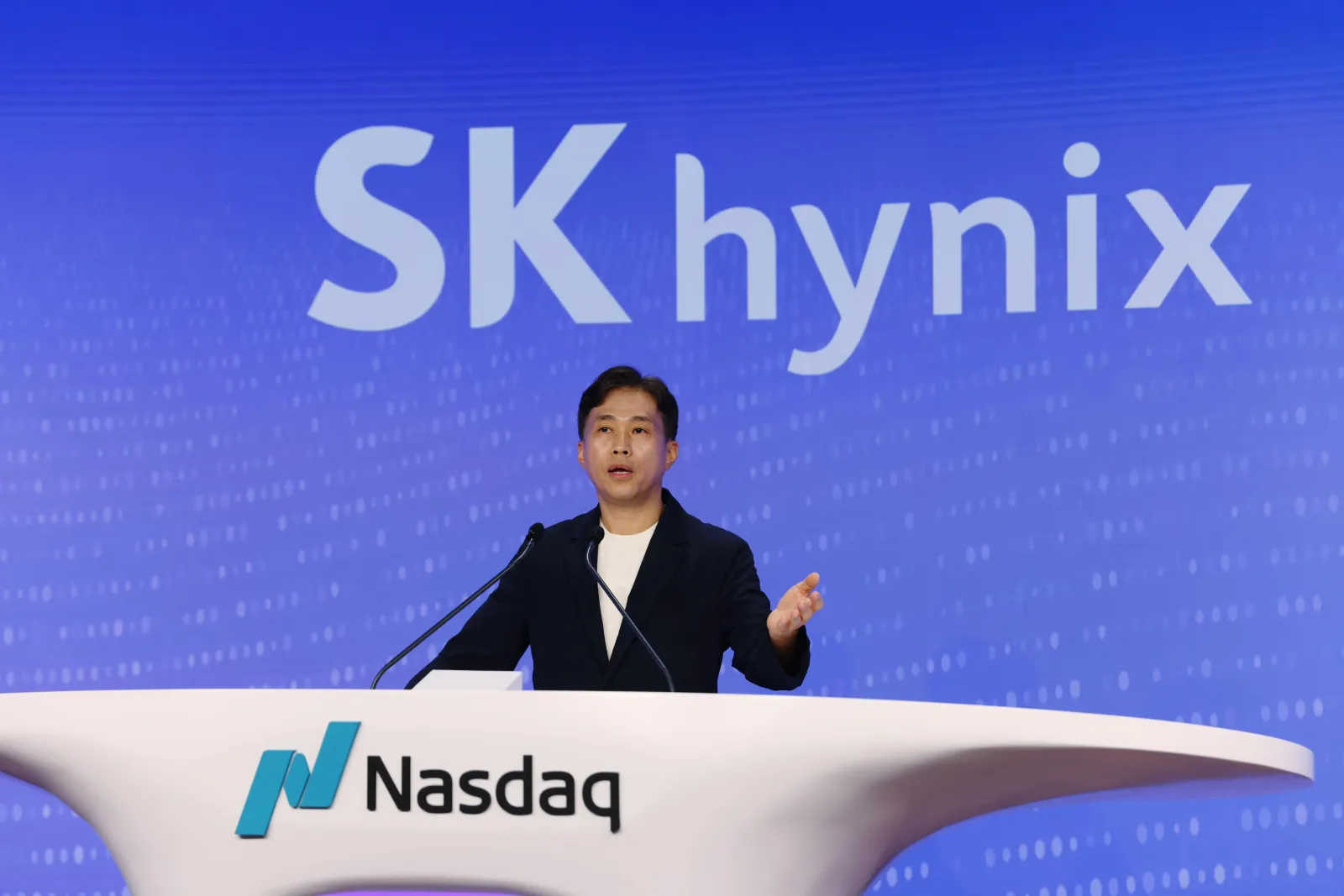
SK Hynix opens at $170, raises $26.5B, and tops foreign IPO records
In Friday's Wall Street debut, SK Hynix turns AI RAM demand into a $26.5B fundraising moment that rewrites comps.