
MLS launches star-studded World Cup ad campaign with “Thanks World, We’ll Take It From Here.”
The league is betting on World Cup fever with a punchy, gratitude-to-action tagline designed to convert attention into attention.
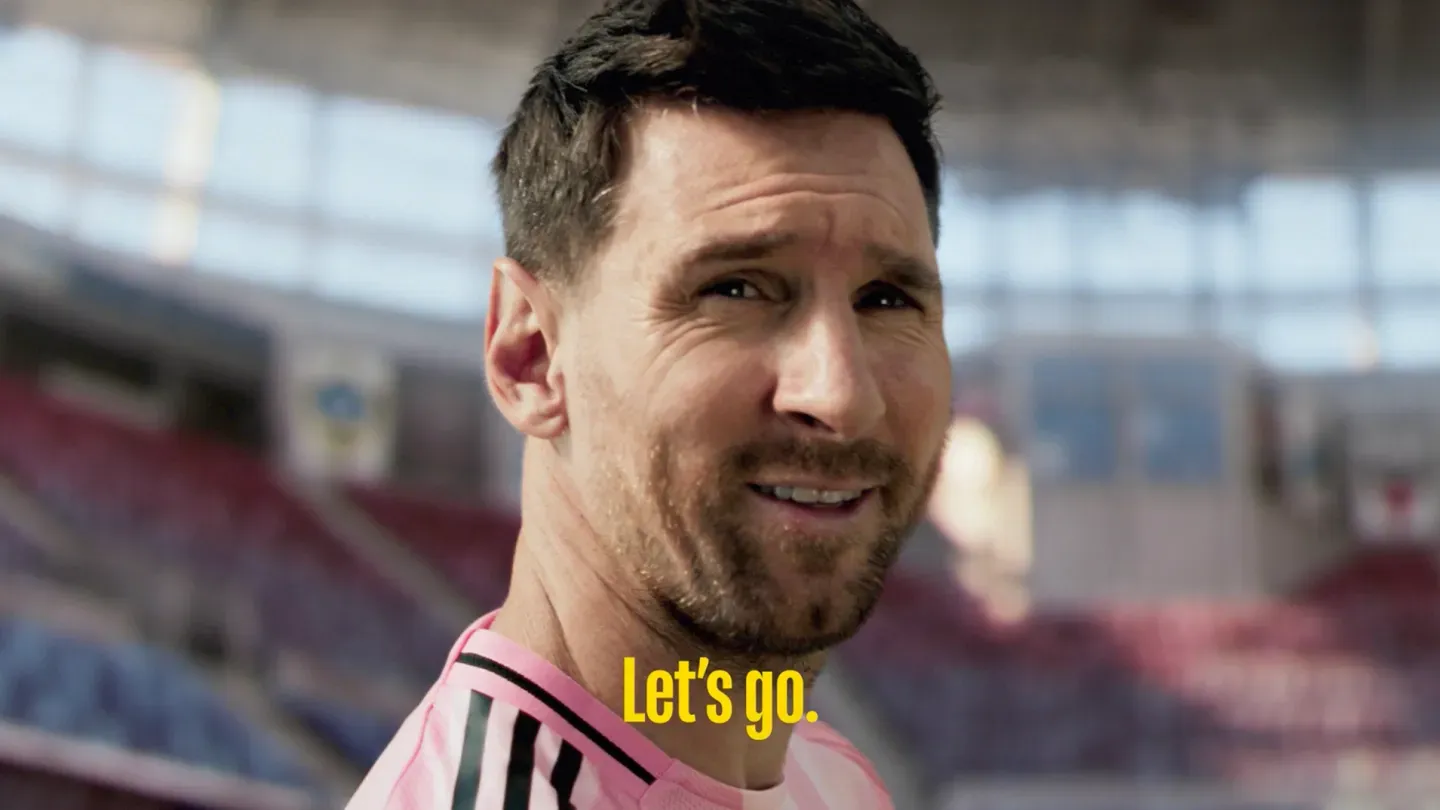
Major League Soccer is rolling out a star-studded ad campaign built around the tagline “Thanks World, We’ll Take It From Here.” For decision-makers, the move signals how MLS plans to monetize global tournament attention after the hype wave crests.
Major League Soccer is betting on World Cup fever with a star-studded ad campaign, anchored by a simple line: “Thanks World, We’ll Take It From Here.” That tagline matters because it frames the entire pitch in two steps. First, it acknowledges the moment the sport is borrowing from the biggest global stage. Second, it claims what happens next, which is where leagues typically try to turn casual viewers into paying customers, repeat viewers, and long-term fans.
The campaign headline itself is the business thesis: MLS is not trying to “introduce” soccer from scratch. It is trying to convert a temporary spike in awareness into durable interest. World Cups create something rare, even in sports: mass attention that spills across borders and demographics. The hard part is what comes after the final whistle. MLS is essentially saying, thanks for the attention, now keep watching. In a crowded media landscape where sports rights are increasingly expensive and fan attention is notoriously fickle, that conversion problem is the whole game.
To understand why this is a big deal, you have to zoom out from the creative and look at incentives. When a global tournament is on, casual viewers are suddenly open to discovery. Platforms and advertisers also see a once-every-four-years opportunity to reach people who normally might not watch the sport at all. But those audiences have short attention spans and even shorter memory. Leagues like MLS want to lock in the “first contact” window before it closes. A campaign that rides World Cup fever is designed to appear at the exact moment the sport feels culturally relevant to people who are not already soccer diehards.
The “star-studded” angle adds another layer. Celebrity involvement is usually about reach and credibility. In plain terms, big names help compress the effort required to get people to notice and care. For an executive team, that means the campaign is not just a brand play. It is a demand-generation mechanism. If the creative is effective, MLS benefits in multiple funnels at once: higher visibility for matches, more sign-ups for digital products, stronger sponsorship attention, and better leverage when negotiating future partnerships. In sports media, the ability to claim increased interest and measurable engagement often turns into real bargaining power.
There is also a structural reason MLS is leaning on a moment like the World Cup. Soccer is international by nature, while MLS has spent years building local identity and scaling market-by-market. During tournaments, viewers compare leagues, styles of play, and teams almost automatically. That creates an opportunity for MLS to “own” a particular narrative, such as accessibility, entertainment value, or the quality of competition. Even without changing anything on the pitch, the league can shape how the league is perceived in that discovery phase.
From a decision-maker perspective, the risk is obvious: if attention is not converted quickly, the campaign becomes a nice-looking expense with limited ROI. That is why the tagline is direct. “Thanks World” signals you are not asking audiences to pretend they are new to the sport. The second clause, “We’ll Take It From Here,” is the bridge to MLS itself. It is a conversion message disguised as gratitude, and it sets expectations for what happens next. If MLS can follow through with accessible scheduling, compelling content, and clear pathways to watch, the campaign can compound. If not, the audience drift is brutal.
Regulatory and rights dynamics are part of the background, even when the news is about advertising. Sports leagues operate within frameworks that govern broadcasting, sponsorship categories, and local and international rights deals. During big tournaments, those boundaries get extra complicated because multiple stakeholders are simultaneously competing for eyeballs. That makes timing even more critical. A campaign that launches around the tournament is not just competing with other sports marketing. It is competing with the media ecosystem that surrounds the tournament, including the incentives of broadcasters, platforms, and advertisers seeking maximum reach.
Finally, the strategic stake for executives across sports and entertainment is simple: the attention economy does not reward leagues for showing up. It rewards leagues for capturing the attention wave at the moment it peaks and then giving audiences a reason to stick around. MLS is making that bet with a star-studded campaign and a tagline that tries to turn World Cup appreciation into an MLS “next step.” For boards and leadership teams, the question is not whether people will notice the campaign. It is whether MLS can translate global curiosity into ongoing demand when the spotlight moves on.
This story's Key Insights and Take-aways are locked.
Create a free account to unlock Executive Actions for one credit.
Register to UnlockAlways free for Executives Club members. Join the Club
More in Entertainment

12TB Steam 'teraleak' goes beyond Valve: GTA 3, Mafia 2 prototypes exposed
A 12-terabyte dump of Steam data reveals prototypes and builds of third-party classics like GTA 3 and Mafia 2, plus unreleased Valve content, rewriting game history.

LinkedIn's romance problem: 1 in 4 workers say dating on it is fair game
A new survey shows a quarter of U.S. employees treat the professional network as fair game for romance, even as LinkedIn bans it and removes hundreds of thousands of offending posts.

Enhypen's first No. 1 album breaks K-pop's Billboard 200 streak
The K-pop group's 98,000-unit debut tops the chart while Dolly Parton's catalog reentry shows how death reshapes streaming.