

Moolenaar and Whitesides want Trump to block US purchases of YMTC and CXMT memory
A letter urges tighter curbs, aiming to stop “state-subsidized” Chinese chips from relieving today’s RAM shortages.
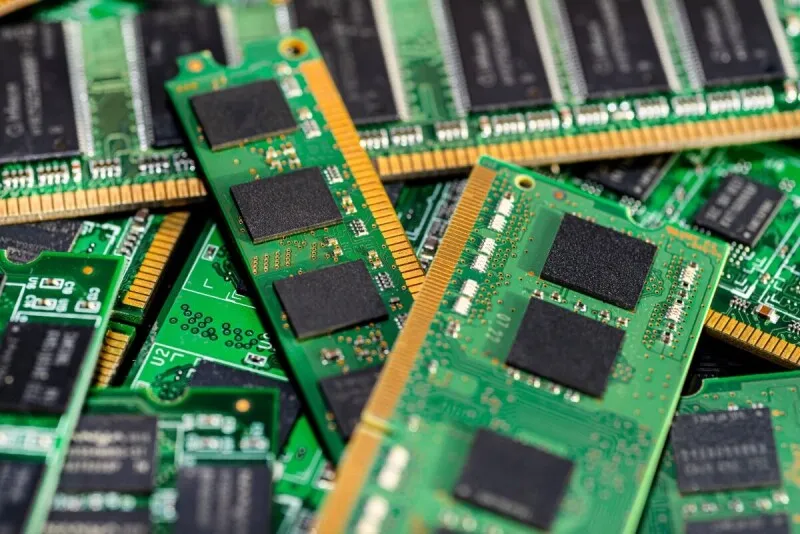
Reps. John Moolenaar and George Whitesides pushed the Trump administration to tighten export and procurement controls on Chinese memory makers YMTC and CXMT. Their request could limit US company access to a potential supply pressure valve when prices are expected to stay high through at least 2028.
Two US lawmakers want to shut a potential lifeline for memory buyers. In a letter made public Thursday, Representatives John Moolenaar (R-MI) and George Whitesides (D-CA) urged the Trump administration to tighten restrictions so US persons and US-incorporated entities cannot procure memory components from China’s YMTC and CXMT, among other listed parties.
That matters because YMTC and CXMT are the two up-and-coming Chinese memory vendors that some big buyers have reportedly started qualifying as alternatives. The companies are relative newcomers in a market historically dominated by American and South Korean players like Micron, SK Hynix, and Samsung. CXMT makes DRAM for devices including desktops, laptops, smartphones, and servers. YMTC makes NAND flash used for storage applications. But amid surging memory prices, large PC manufacturers including Apple, Dell, and HP have reportedly begun qualifying the two companies’ memory for use in their products, which is exactly the “relief” the lawmakers say would come at the wrong strategic cost.
The letter frames the issue as a tradeoff between supply stability and national-security risk. Moolenaar and Whitesides argue that purchases by US companies would “undermine Western memory makers” and subsidize the People’s Liberation Army. Their underlying theory is that memory is a commodity built to common specs, so if prices fall and volume becomes available, customers can switch suppliers relatively easily. In other words: you do not need a new chip architecture or a brand-new platform. You need a good price and availability, and memory procurement can follow the economics.
So the lawmakers’ proposed fix is to close what they see as a loophole. Unlike logic chips such as CPUs and GPUs, memory is manufactured to a relatively common spec. That commoditization cuts both ways. It means US buyers can qualify a new source faster than they might for a complex compute component, but it also means Chinese memory exports could be used to drive down average selling prices. The lawmakers contend China could subsidize memory exports until those lower prices erase profitability for US and allied memory makers.
They specifically call for an executive order or agency directive prohibiting US entities from procuring memory components from YMTC, CXMT, or any entity designated on the Bureau of Industry and Security’s BIS Entity List or the Department of Defense’s Section 1260H list. The letter’s logic is that export controls mostly stop US companies from exporting American technology like chipmaking equipment to listed parties, but they do not stop US buyers from purchasing the chips themselves. That distinction has been enough to allow engagement in the current system, and the lawmakers want to remove it.
The regulatory background is not abstract. CXMT has been designated by the Department of Defense as a Chinese Military Company under its Section 1260H list. YMTC is subject to US export restrictions under the BIS Entity List. Even though those frameworks were designed around technology transfer and export activity, the gap appears to be procurement. The source reports that the Financial Times said late last month Apple asked the Trump administration for its blessing before engaging with either company. That request is consistent with the idea that buyers see a shortage-driven need, but they still need regulatory cover to do it.
This is also a timing problem. Building new semiconductor capacity, especially memory wafer fabs, is slow. The lawmakers argue that the answer to high memory prices should be expanded manufacturing capacity rather than dependence on “subsidized Chinese chips.” They note that memory manufacturers including Micron, Samsung, and SK Hynix are working to expand capacity, but getting from new fabs to volume production typically takes four or more years. Because of that construction and ramp cycle, the source says memory prices are expected to remain high through at least 2028.
That long runway is where the second-order implications hit executives hardest. If US procurement is tightened against YMTC and CXMT, OEMs like Apple, Dell, and HP may have fewer “qualified” substitutes during a multi-year pricing squeeze. Boards and CFOs will also have to pressure-test supply risk alongside margin risk, since commodity-like switching does not help if the policy disables the switch. Meanwhile, US and allied memory makers get an argument for protecting their manufacturing base, but they still face the clock: new capacity takes years, and the market is not waiting for permits and wafer ramps.
At its core, this is a policy bid to prevent what the lawmakers view as subsidized price suppression from reshaping the memory supply chain. For decision-makers, the question is simple and uncomfortable: when the market needs relief now, how much friction can regulators add before shortages and high prices outlast the fix?
This story's Key Insights and Take-aways are locked.
Create a free account to unlock Executive Actions for one credit.
Register to UnlockAlways free for Executives Club members. Join the Club
More in Business

Uber buys Delivery Hero for nearly $15B, vaulting to top food delivery outside China
The deal doubles Uber's dual-services footprint and pushes a ride-and-eats bundling play into 50 more markets.

Epic and Google drop settlement bid, forcing rival Android app stores by July 22
Google told the court it is ready to carry third-party app stores starting Wednesday, July 22.
SK Hynix opens at $170, raises $26.5B, and tops foreign IPO records
In Friday's Wall Street debut, SK Hynix turns AI RAM demand into a $26.5B fundraising moment that rewrites comps.