

Moon bases don’t need “more training,” simulations say. They need the right crew size
Agent-based modeling finds six astronauts and biweekly resupply maximize mission success probability.
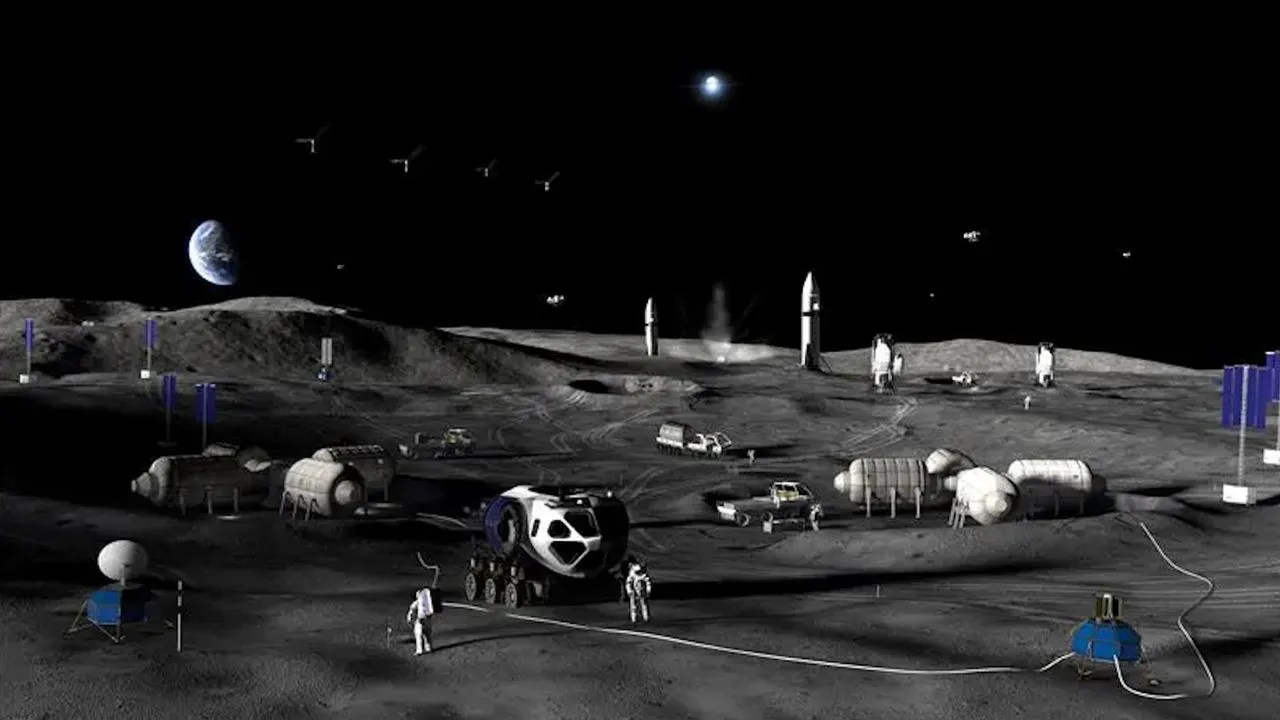
Anamaria Berea of George Mason University, leading a PLOS ONE study published in May, used agent-based simulations to test moon base staffing and resupply schedules. For NASA and other deep-space planners, the consequence is clear: mission design variables can matter as much as, or more than, psychology-focused training.
NASA moon base staffing is getting a surprising rethink: a new PLOS ONE study suggests mission success hinges less on simply training astronauts harder, and more on getting the mission system designed around human teamwork and constraints. Lead investigator Anamaria Berea, a computational social scientist at George Mason University (GMU), told Space.com via email that the study aimed to identify “specific conditions” for mission success and any “red flags” that might undermine it.
So what did the simulations actually land on? In the model’s highest-probability scenario, six astronauts work on the moon at a time, with fresh supplies coming from Earth every two weeks. The “worst-case scenario” in the study flips that staffing and logistics, modeling four astronauts on the moon, only one month between resupply windows, and moderate to high adverse environmental probabilities.
To understand why staffing numbers show up so forcefully, you have to know what kind of modeling this study used. Rather than classic data-driven AI that learns patterns from labeled examples, the team leaned on agent-based models. As Berea explained, agent-based modeling uses a dataset to “understand emergent phenomena that don’t have one single cause or direct cause,” which is a fancy way of saying it can capture how groups behave together under pressure, not just how individuals perform in isolation. The work is grounded in a simple but brutal reality: deep-space missions are isolated, confined environments (ICE), where humans must work at high standards in dangerous conditions with limited long-distance support.
The simulation design matters because it bakes in the two things most likely to break productivity over time: constraints and uncertainty. The researchers considered scenarios that varied mission duration, the number of resident astronauts, and resupply frequency. In an “initial case,” the assumed mission duration was three months. There was a single resupply run at Month 2 bringing food, water, air, and a fresh group of astronauts. Using a Monte Carlo simulation, the model estimated a productivity rate of about 20% against expected tasks, which the authors noted is “acceptable for a typical manufacturing process.” But the catch is equally important: that productivity estimate does not include unexpected disruptions that may crop up during the mission. The authors therefore interpret the low task completion rate as a signal that, on average, teams could struggle with psychological stressors and environmental disruptions.
This is where the study connects to how NASA already thinks about productivity on orbit. NASA tracks crew work with a metric called “utilization,” which largely refers to crew time and the number of scientific investigations performed during an increment or expedition. As of 2014, the ISS program suggested ideal utilization should be 35 hours per crew per week when three people work on the U.S. side, and 68.5 hours when four or more are present. NASA’s Office of the Inspector General (OIG) later reported that the agency generally met or exceeded those goals, hitting a high of 120 average hours per week devoted to research from October 2019 to April 2020.
But utilization is not “free time.” The OIG also notes that from March 2022 through March 2023, utilization was near 90 hours per week, even as the number of scientific investigations increased. The report includes a realistic detail that matters for boards and program leaders: disruptions happen. The ISS has faced emergency ammonia leaks requiring spacewalks, the 9/11 disaster, and shelter-in-place moments during brief contingencies like space debris passing within a few miles of the station. Even when everything is going well, utilization still depends on the mission’s reality, because not all crew time can be used for utilization. The station requires maintenance like cleaning, and astronauts need daily sleep, meals, and downtime.
The OIG report also surfaces a risk that sounds like it belongs in an operating plan, not a research paper: “lack of redundancy” in key supply items to the ISS. As just one example, SpaceX Crew Dragon capsules and Roscosmos Soyuz spacecraft are described as the only two vehicles that bring astronauts to the station right now. The OIG warns that limited redundancy and capabilities in cargo and crew transportation increase the risk to NASA’s ability to bring critical supplies, science, and crew in a way that maintains safe operations and full utilization.
Now swap the ISS mindset for the moon base mindset the new study models. The researchers point out that training can’t eliminate the human factor in long-duration deep-space missions. Berea said people can be “very, very well trained,” but for these missions there will always be a human factor. In their results, the “best ways to overcome” adverse effects were not framed as adding more training alone, but as fine-tuning mission duration, resupply frequency, contingency plans for accidents and unforeseen conditions, and the team size sweet spot where people interact productively instead of getting stuck in the extremes.
Second-order implications for decision-makers are hard to ignore. If productivity collapses in a modeled scenario with fewer astronauts and longer resupply gaps, then staffing is not just a staffing chart. It becomes a system constraint tied to resupply logistics, contingency planning, and how reliably a mission can maintain utilization-like performance under pressure. In the real world, program managers answer to cost, schedule, and risk, while oversight bodies track whether the plan can sustain operations. This study suggests the board-level question for future lunar programs might be less “did we train enough?” and more “did we design the mission so the team can actually execute?”
This story's Key Insights and Take-aways are locked.
Create a free account to unlock Executive Actions for one credit.
Register to UnlockAlways free for Executives Club members. Join the Club
More in Science

Alaska's 1,580-foot tsunami had warning signs. Scientists just found them.
Rapid glacier retreat, heavy rainfall, and thousands of tiny tremors preceded Alaska's 1,580-foot tsunami, a warning for every coastal community in a warming world.

The rare mutation that lets high-risk brains dodge Alzheimer's
Scientists found a natural defense against protein buildup, opening a new path to preventive treatments.

3,000 steps a day may halve Alzheimer's decline, study finds
New research links a modest daily walk to less tau buildup and nearly half the cognitive and functional decline, even for those with early signs.