

Moonshot AI drops freely available Kimi model, narrowing the US lead
A public, free Chinese AI model forces US tech buyers and regulators to re-evaluate speed, cost, and security assumptions.

Moonshot AI, part of China's AI push, unveiled a freely available Kimi artificial intelligence model. The release signals narrowing performance gaps with cutting-edge US offerings and raises new competitive and regulatory pressure for decision-makers.
Moonshot AI just unveiled a freely available artificial intelligence model called Kimi, and it immediately changes the competitive math for anyone watching the US AI lead. The model is open for use without the usual paywall dynamics that often keep cutting-edge capabilities out of reach. In other words, this is not a quiet demo for a small circle. It is a product-like move, publicly available, aimed at compressing the distance between Chinese deployments and the newest US systems.
For executives, the key fact is the combination: Moonshot AI’s Kimi model is freely available, yet it is positioned as “cutting-edge,” which That matters because the “gap” in AI competition is not only about raw research. It is also about adoption speed, developer access, and the ability to experiment. When a strong model lands freely, it lowers the friction for teams to test it in workflows, integrate it into prototypes, and build on it. The result is faster learning cycles, more real-world feedback, and wider usage before rivals can respond with comparable distribution.
To understand why this feels like a threat instead of a curiosity, look at how AI markets usually scale. The winners are typically the systems that can be accessed quickly by engineers and product teams, not only the systems that win benchmarks in isolation. A free model acts like a distribution lever. It turns “who is best?” into “who is easiest to use?” and then “who is already embedded in our pipeline?” That shift can happen quickly when competitors release tools that teams can adopt right away.
This release also lands in a world where regulatory scrutiny around AI is rising, not settling. While the source emphasizes competition and availability, the broader context is that regulators in different jurisdictions are increasingly concerned with how AI systems are deployed, who has access, and what risks come with scale. Freely available models add a new compliance challenge for firms that want to adopt them, because the availability does not automatically come with the same governance package companies are used to negotiating with enterprise vendors. Decision-makers end up doing more internal work: vendor risk assessments, data handling reviews, and model monitoring plans. Even if a model is “good,” adoption still depends on whether it can be operated safely inside an organization.
There is also a capital and incentives angle, especially for the boards and investors who track AI as both a technology race and a commercialization race. A freely available release can be interpreted in multiple ways: a push for mindshare, an effort to speed diffusion, or an attempt to get more feedback while competitors focus on gated offerings. Any of those strategies can compound over time. More adoption can translate into more tooling, more fine-tuning, and more user expectations, which can raise switching costs for customers. In competitive industries, switching costs are everything, because they turn a short-term performance edge into a longer-term advantage.
For US tech companies and the enterprises that buy from them, the second-order implication is not just about model quality. It is about pricing power and roadmap pressure. If a rival can offer a capable model for free, buyers start comparing not only outputs, but also total cost of experimentation. That changes how product teams justify spend, how procurement teams negotiate, and how IT leaders evaluate alternatives. Even organizations that do not use the free model directly may adjust their evaluation process, demanding faster iteration timelines and clearer risk controls.
And for executives more broadly, the strategic stake is simple: when a competitor publicly narrows the gap while widening access, the race shifts from who can build the best system to who can deliver advantage fastest at scale. Moonshot AI’s Kimi move is a reminder that AI leadership is not only about the lab. It is also about packaging, distribution, and the ability to make “cutting-edge” capabilities accessible enough that they start shaping decisions today. If US firms respond slowly, they risk ceding early adoption and the ecosystem gravity that comes with it.
This story's Key Insights and Take-aways are locked.
Create a free account to unlock Executive Actions for one credit.
Register to UnlockAlways free for Executives Club members. Join the Club
More in Business

Uber buys Delivery Hero for nearly $15B, vaulting to top food delivery outside China
The deal doubles Uber's dual-services footprint and pushes a ride-and-eats bundling play into 50 more markets.

Epic and Google drop settlement bid, forcing rival Android app stores by July 22
Google told the court it is ready to carry third-party app stores starting Wednesday, July 22.
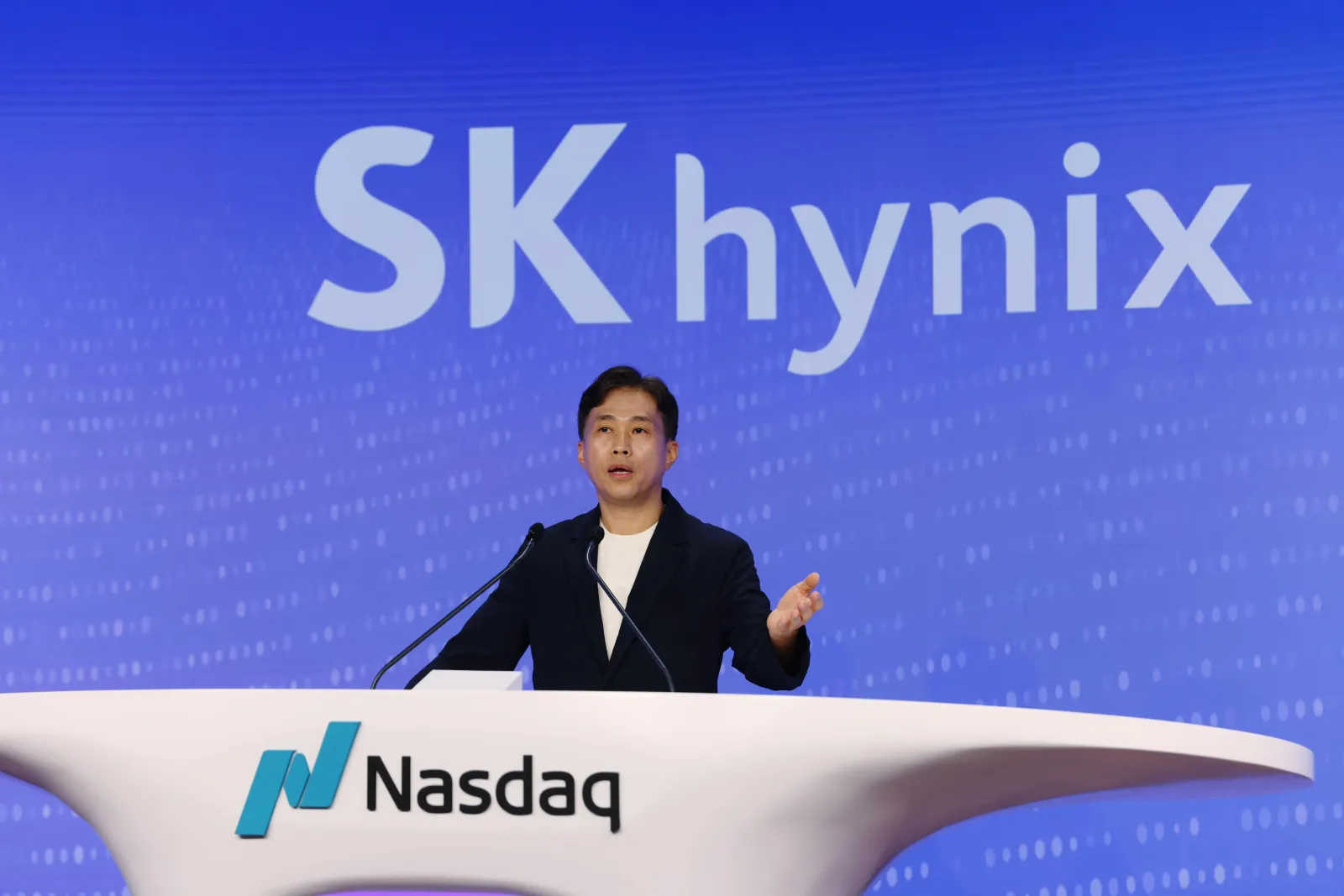
SK Hynix opens at $170, raises $26.5B, and tops foreign IPO records
In Friday's Wall Street debut, SK Hynix turns AI RAM demand into a $26.5B fundraising moment that rewrites comps.