

Moonshot AI ships Kimi update and sparks fears of “full AI communism”
The new Kimi release reignites a political debate about centralized AI access and what it could mean for global regulation.
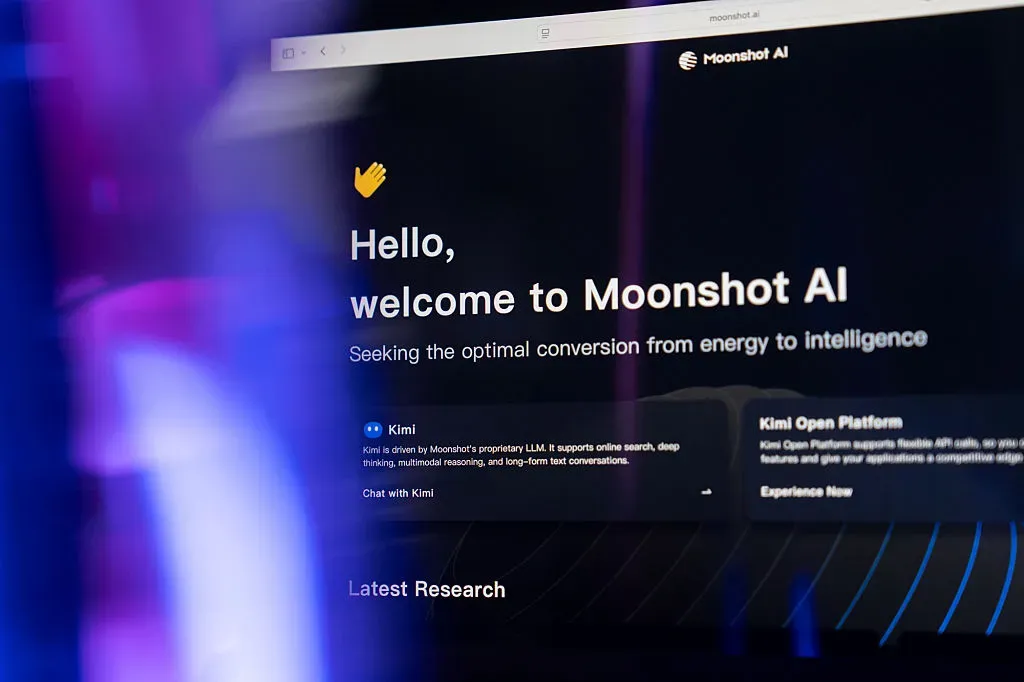
Chinese company Moonshot AI released a new version of its Kimi model this week. The update triggered renewed concern, including the phrase “full AI communism,” with potential consequences for how decision-makers view AI policy and competitive risk.
Moonshot AI has released a new version of its Kimi model this week, and it immediately did something most model releases do not: it sparked a high-noise political framing. Alongside the usual technical chatter, some observers pointed to what they called “full AI communism,” a phrase that signals a worry about AI availability being centralized and controlled in ways that reshape power dynamics, not just user experiences.
For executives, the key part is not the meme. It is the direction of attention. A model update is typically evaluated on performance, cost, and deployment timelines. This one also dragged the product into the policy conversation, which can change procurement decisions, partnerships, and even the risk profile a board assigns to certain vendors. If regulators and geopolitical stakeholders start viewing a capability as part of a broader centralized strategy, the compliance burden and commercial friction tend to rise. In short: the market got a model update and, at the same time, a framing battle.
To understand why that matters, it helps to remember how AI governance debates usually evolve. When AI systems scale, governments do not just ask “Can it do X?” They ask “Who controls it, how it is distributed, and what incentives shape its behavior?” Centralization can be framed as efficiency and national capability. It can also be framed as constraint and dependency. The fact that Moonshot AI’s Kimi update is now being linked to “full AI communism” suggests at least some commenters think the distribution model, not just the technical outputs, is part of the story.
This matters for boards and leadership teams because political narratives can become regulatory pathways. When a capability is repeatedly associated with a political doctrine, even if the phrase is rhetorical, it increases the odds that lawmakers and regulators treat the underlying companies and ecosystems as strategic subjects. That can show up as tighter scrutiny on licensing, data handling, cross-border partnerships, security reviews, model reporting requirements, or constraints on who can use what, where, and under what conditions. None of that is guaranteed from a single release. But executives do not operate on guarantees. They operate on probabilities, and probability rises when attention is already elevated.
There is also a competitive implication that is easy to miss if you only look at model benchmarks. If the market starts interpreting Chinese AI progress through an ideological lens, other vendors face a different kind of demand pressure. Enterprise buyers may over-index on vendor “stance” and “posture,” not because the buyer wants politics, but because compliance teams and legal departments translate political risk into procurement guardrails. Meanwhile, partnerships between AI providers and local ecosystems can become conditional. Even if a model performs well, the vendor can be treated as a higher-risk counterpart if regulators or customers believe the company is tied to a centralized control strategy.
And then there is the internal company angle. Moonshot AI is releasing a new Kimi version, which signals active iteration and product momentum. In fast-moving model markets, velocity is a competitive weapon. But velocity is also a stress test for governance. Every new release can surface questions about safety mitigations, access controls, auditability, and deployment constraints. If the discourse around the update is already politically charged, the company may need to spend more time managing external narratives alongside technical maturity. That is a real cost, measured in engineering attention, communications bandwidth, and legal review cycles.
For peers in similar roles, the strategic stake is straightforward. You are not only competing on capability. You are competing on legitimacy, risk perception, and regulatory readiness. When an AI upgrade triggers alarmist framing like “full AI communism,” it can quickly cascade into board-level risk conversations: Do we depend on vendors that may be treated as strategic instruments? Do we need stronger contract protections, clearer compliance attestations, or alternate sourcing? Are our customers prepared for politicized scrutiny? Those are board questions, not dev-tool questions.
Moonshot AI’s Kimi update, then, is more than a software release. It is a signal that model releases are now landing in a broader arena where distribution, control, and geopolitical narratives can matter as much as performance. Decision-makers should treat that as an input to how they evaluate vendors and design go-to-market and compliance strategies, especially when international attention turns a product milestone into a policy storyline.
This story's Key Insights and Take-aways are locked.
Create a free account to unlock Executive Actions for one credit.
Register to UnlockAlways free for Executives Club members. Join the Club
More in Technology

Auto over-the-air tech expands attack surface, analysts warn
As cars get more software updates, cybersecurity risk rises. Here is what boards should worry about next.

Waymo resumes San Francisco service after one-hour pause tied to a power outage
Waymo’s San Francisco service restarted after a one-hour halt, reigniting attention on reliability risks for robotaxis.

ZTE’s NaviX Ultra, the AI-agent smartphone, sold out in hours at Shanghai’s World AI Conference
A Nubia phone built around ByteDance’s Doubao agent puts voice-first automation on hardware, forcing rivals to respond fast.