
Waymo resumes San Francisco service after one-hour pause tied to a power outage
Waymo’s San Francisco service restarted after a one-hour halt, reigniting attention on reliability risks for robotaxis.
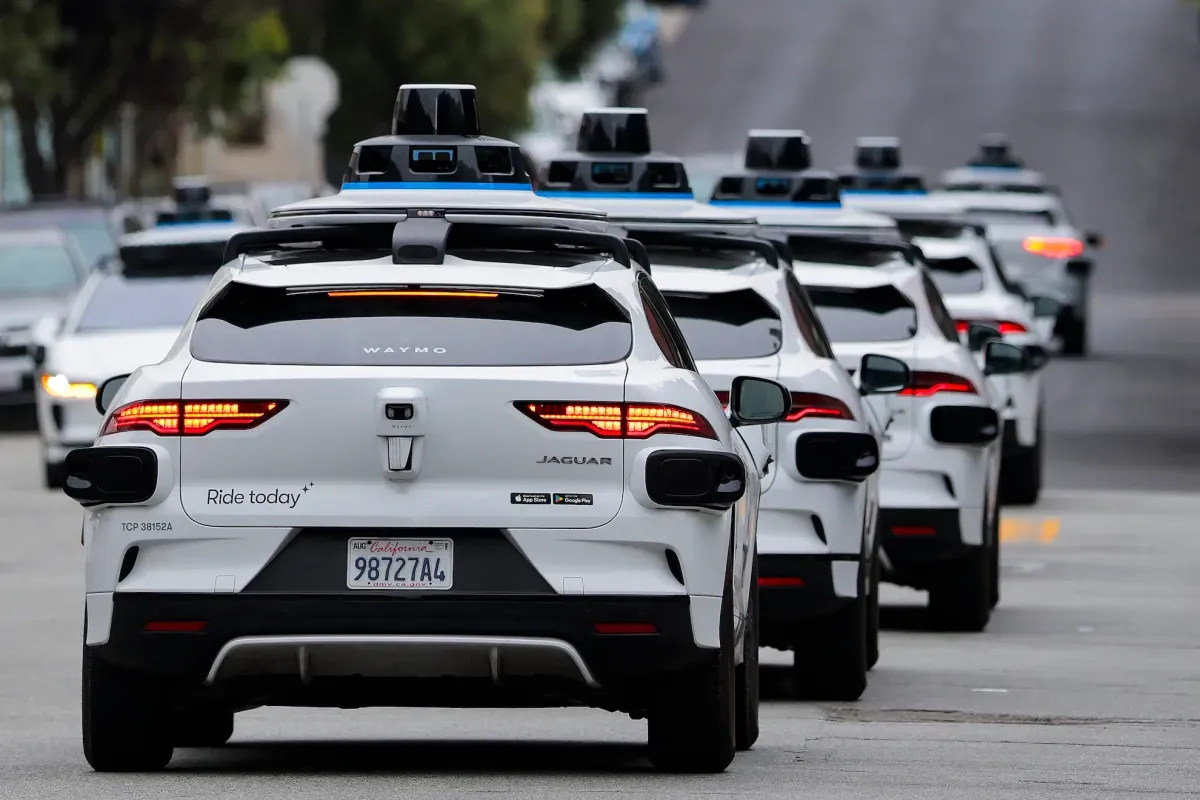
Waymo said its San Francisco service resumed after a one-hour pause. The incident highlights how power disruptions can quickly ripple into autonomous-vehicle operations and customer trust.
Waymo says its San Francisco service has resumed after an hour-long pause. The pause followed a disruption tied to power outages, which mattered enough to stop service and then restart it shortly afterward.
For decision-makers, the key question is not “did it restart?” It is “what does a one-hour operational stop mean for reliability, uptime expectations, and the public and regulatory narrative that forms around robotaxi deployments.” In autonomous mobility, downtime is not a minor inconvenience. It becomes a signal about system maturity, infrastructure dependency, and the robustness of fail-safes.
This isn’t the first time power outages have caused issues for Waymo. That repeated pattern is where the exec-level stakes get real. If incidents of this kind keep surfacing, regulators and cities will look for evidence that the company can handle not just vehicle software edge cases, but also the real-world fragility of the physical world it relies on, including computing, communications, and power delivery.
There is also a commercial angle that boards tend to care about. Reliability problems, even temporary ones, affect the perceived quality of the service. For a robotaxi operator, the service experience is the product. When service pauses, riders see it as disruption. Partners see it as risk. And internal teams see it as an operational burden that competes with product and expansion work.
Autonomous vehicle operations are fundamentally a stack problem. The vehicle itself is only one part. Services like Waymo’s depend on back-end systems, connectivity, fleet coordination, and infrastructure that can be impacted by external events. Power outages are a clean example of that dependency: they can trigger knock-on effects across the stack even if the vehicle control logic is intact. That is why an “hour pause” is more than a timestamp. It is an indicator of how quickly the system transitions from operational readiness to non-operational status, and then back again.
From a regulatory perspective, the incident likely lands in the category of operational robustness. In many jurisdictions, regulators and city stakeholders care about safety controls, incident reporting, and the ability to maintain service under adverse conditions. Even when an outage is external, the operator still owns the outcome for riders and the operational footprint in the service area. If power outages are recurring triggers for service issues, that can shape the kinds of questions regulators ask: What safeguards exist? How quickly does service resume? How are impacts communicated? What monitoring is in place?
For Waymo and peers, this also feeds into how trust is built. Robotaxis are still earning their right to be boring, meaning dependable. A pause followed by a resumption can be framed positively as “the system recovered.” But the repetition matters. If power-outage-linked interruptions remain a recurring theme, executives must treat resilience as a core competency, not a background engineering task.
Finally, this incident is a reminder to anyone scaling autonomous services that “deployment” is not just launching in a city. It is operating in the messy conditions of real infrastructure. A one-hour pause may sound short, but in a sector that lives or dies on uptime credibility, even short disruptions can influence public perception and the regulatory conversation. For boards and senior leadership teams, the strategic stakes are straightforward: show customers, regulators, and partners that outages do not merely cause stoppages, but also lead to measurable improvements in how the service detects, mitigates, and recovers from them.
This story's Key Insights and Take-aways are locked.
Create a free account to unlock Executive Actions for one credit.
Register to UnlockAlways free for Executives Club members. Join the Club
More in Technology

Google quietly links your phone number to every Android account on your SIM
Adding a SIM now ties your phone number to all Google accounts - and future accounts inherit it. Here's the security and privacy stakes.

Hijacker AI 'Skynet mode' runs 100,000 attack steps against exposed models
Symantec caught a criminal AI agent that borrows other models, steals data, and mines crypto; the only relief is no confirmed victims yet.

Nvidia's AI-financier shift faces its first big test as neoclouds stumble
A rout in neocloud stocks is forcing investors to weigh Nvidia's hidden exposure as both supplier and lender to the AI buildout.