

Moonshot’s Kimi K3 tops Arena coding tests, challenging Claude and ChatGPT at half the price
A Carnegie Mellon PhD-turned-Pink Floyd fan’s K3 release pressures U.S. model makers on performance and margin.
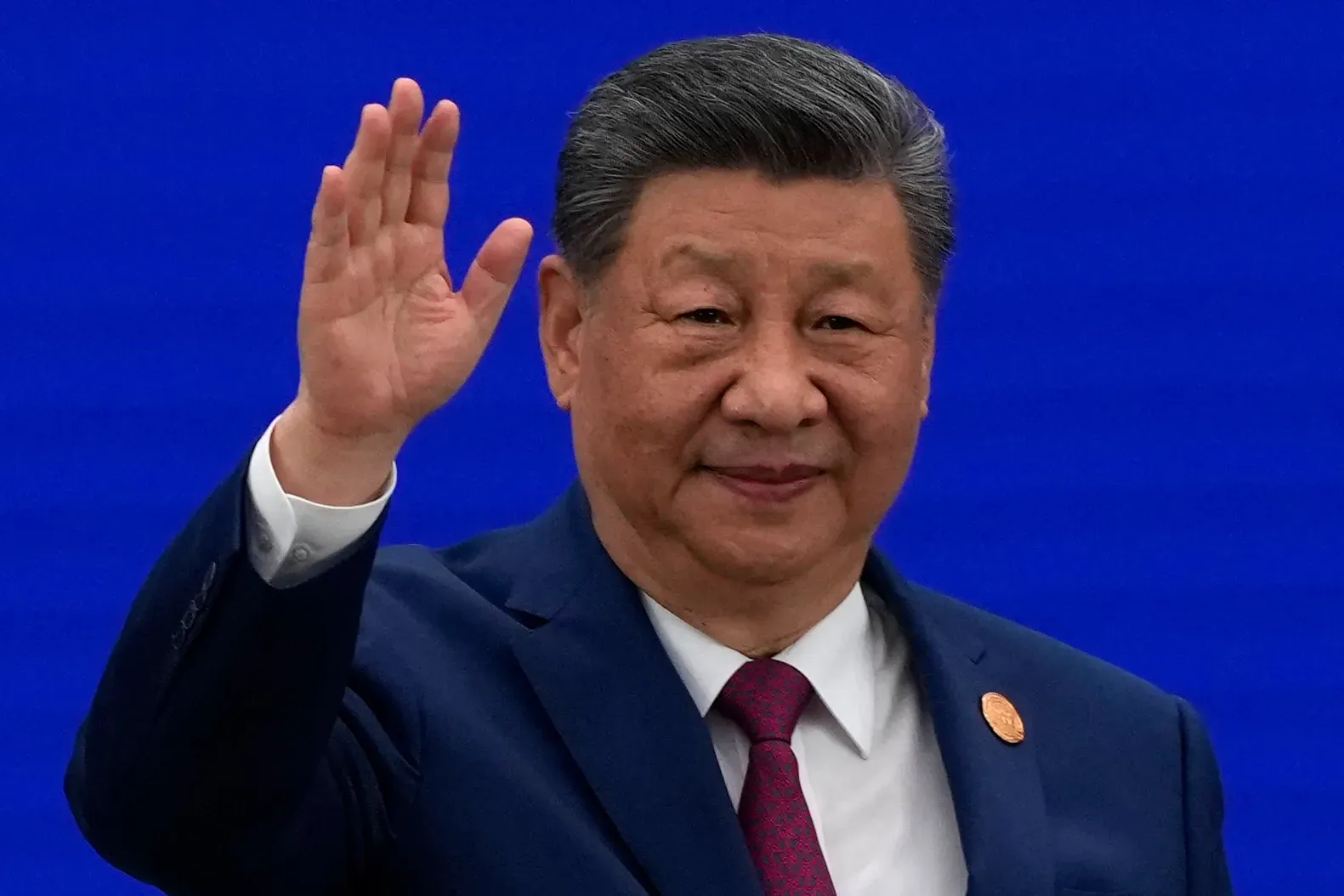
Moonshot, run by CEO Yang Zhilin, released its Kimi K3 model and it topped Arena’s front-end coding capability ranking, drawing comparisons to Claude and ChatGPT. For decision-makers, the signal is clear: China’s open-model pipeline is compressing U.S. pricing and forcing new defensibility debates.
Moonshot’s Kimi K3 just landed, and it is already showing up as a serious contender in one of the most practical AI arenas: coding help. In Arena’s ranking of “front-end coding capability,” Kimi K3 topped the charts, a metric the evaluator uses to gauge how well a large language model performs on front-end coding tasks. More results were still rolling in, and co-founder and CEO Anastasios Angelopoulos said K3 was “at the top of the pack” as additional results arrived.
If you are an executive watching AI margins, this is not a feel-good headline. Arena’s coding benchmark is a proxy for how quickly developers can ship, and it matters because coding tools are where AI increasingly turns into recurring revenue and lower time-to-productivity. The Fortune report frames K3 as catching up to the best versions of Anthropic’s Claude and OpenAI’s ChatGPT, and it backs the market tension with a cost angle too: Bank of America research analysts said the price to use K3 is half as expensive as OpenAI’s high-performing GPT-5.6 Sol model.
This is happening in a moment where U.S.-China AI rivalry is no longer theoretical. American-led restrictions have blocked China from accessing some of the world’s most advanced technologies, and China is responding by building domestic know-how. The report notes that K3’s unveiling came shortly before Chinese President Xi Jinping’s opening address Friday to the nation’s annual World Artificial Intelligence Conference in Shanghai. Xi said “The development of artificial intelligence should not be a solo performance by any single country but rather a symphony of global cooperation,” underscoring that China is positioning AI progress as both strategic capability and international narrative.
K3 is also following another recent China release that already got developer attention. Last month, Zhipu (Z.ai) unveiled its GLM-5.2 flagship model, and it is described as widely used by software developers worldwide. Developers reportedly say it can perform work almost as well as top U.S. models at a lower price. Put those together and you get a pattern: not just better demos, but models that arrive with ecosystem momentum, meaning they get tested, integrated, and compared in real workflows.
The competitive story is getting louder partly because these releases are wrapped in “open-source” framing. Proponents argue that open-source practices make key components of AI technology accessible, letting anyone examine, modify, and build on them, which can accelerate innovation. Critics counter that making powerful models publicly accessible can create safety and security dangers. Between those poles sits the practical business question executives care about: when performance gets close and pricing undercuts, how do closed-model companies defend both their tech and their revenue?
There is also a regulatory and competitive accusations layer that can affect partnerships, procurement, and public policy posture. The Fortune report says U.S. politicians and major U.S. AI companies including Anthropic and OpenAI have accused Chinese AI models of illicit “distillation” to extract technologies, claims Beijing says are “groundless.” In February, Anthropic accused DeepSeek, Moonshot, and MiniMax of running campaigns to “illicitly extract Claude’s capabilities to improve their own models” via distillation. Anthropic’s framing is specific: distillation can be legitimate, but it becomes a problem when competitors use it to acquire powerful capabilities “in a fraction of the time, and at a fraction of the cost” of developing independently.
But the distillation debate is not a one-way narrative. The report includes evidence that open-model ecosystems can also influence U.S. product strategies. San Francisco-based Anysphere, maker of Cursor, acknowledged that one of its top products was based on Moonshot’s K2.5 model. That is a concrete reminder that the “open-source” signal is not just about public ideology; it is about supply-chain-like dependencies for tooling.
Second-order, this release also ties into the hardware stack question. During the conference, Huawei showcased a new AI computing system called the Atlas 950 SuperPoD, which the report frames as a signal that China is amassing the domestic hardware it needs despite U.S. restrictions on imports from chipmakers like Nvidia. Moonshot has not said what hardware it used to build K3, but the report notes Moonshot is a partner with Huawei. In other words, this is not only a model story. It is also a “who controls compute” story, and that affects timelines, cost curves, and scalability.
On top of the performance and cost pressure, there is a broader market volatility theme. The hype around K3 is compared to the market-shaking panic that followed Chinese startup DeepSeek’s new model release in early 2025, though not everyone finds the reaction justified. Tech analyst Patrick Moorhead called the response to K3 an “overreaction shockingly similar” to DeepSeek’s release last year. He argued it could be good for parts of the broader AI industry but poses a revenue challenge to Anthropic and OpenAI.
For executives, the strategic stakes are straightforward and uncomfortable: if Arena’s coding results keep landing at the top, and if pricing stays at “half” versus leading U.S. offerings, boards will push for new defensibility that is more than incremental model quality. You will need defensible differentiation in reliability, developer experience, distribution, and total cost of ownership, because open releases can turn benchmarking into a competitive drumbeat. And if K3 truly keeps “rolling in” more top-of-pack evidence, the question for U.S. AI leaders becomes less “Can we compete?” and more “How do we keep our margins and mindshare when the gap keeps closing?”
This story's Key Insights and Take-aways are locked.
Create a free account to unlock Executive Actions for one credit.
Register to UnlockAlways free for Executives Club members. Join the Club
More in Business

Uber buys Delivery Hero for nearly $15B, vaulting to top food delivery outside China
The deal doubles Uber's dual-services footprint and pushes a ride-and-eats bundling play into 50 more markets.

Epic and Google drop settlement bid, forcing rival Android app stores by July 22
Google told the court it is ready to carry third-party app stores starting Wednesday, July 22.
SK Hynix opens at $170, raises $26.5B, and tops foreign IPO records
In Friday's Wall Street debut, SK Hynix turns AI RAM demand into a $26.5B fundraising moment that rewrites comps.