
Moore Air Base screwworm plant misses until November 2027, risking wider cattle spread
Sterile flies are the main weapon, but the big Texas output is a year away, forcing producers into costly containment now.
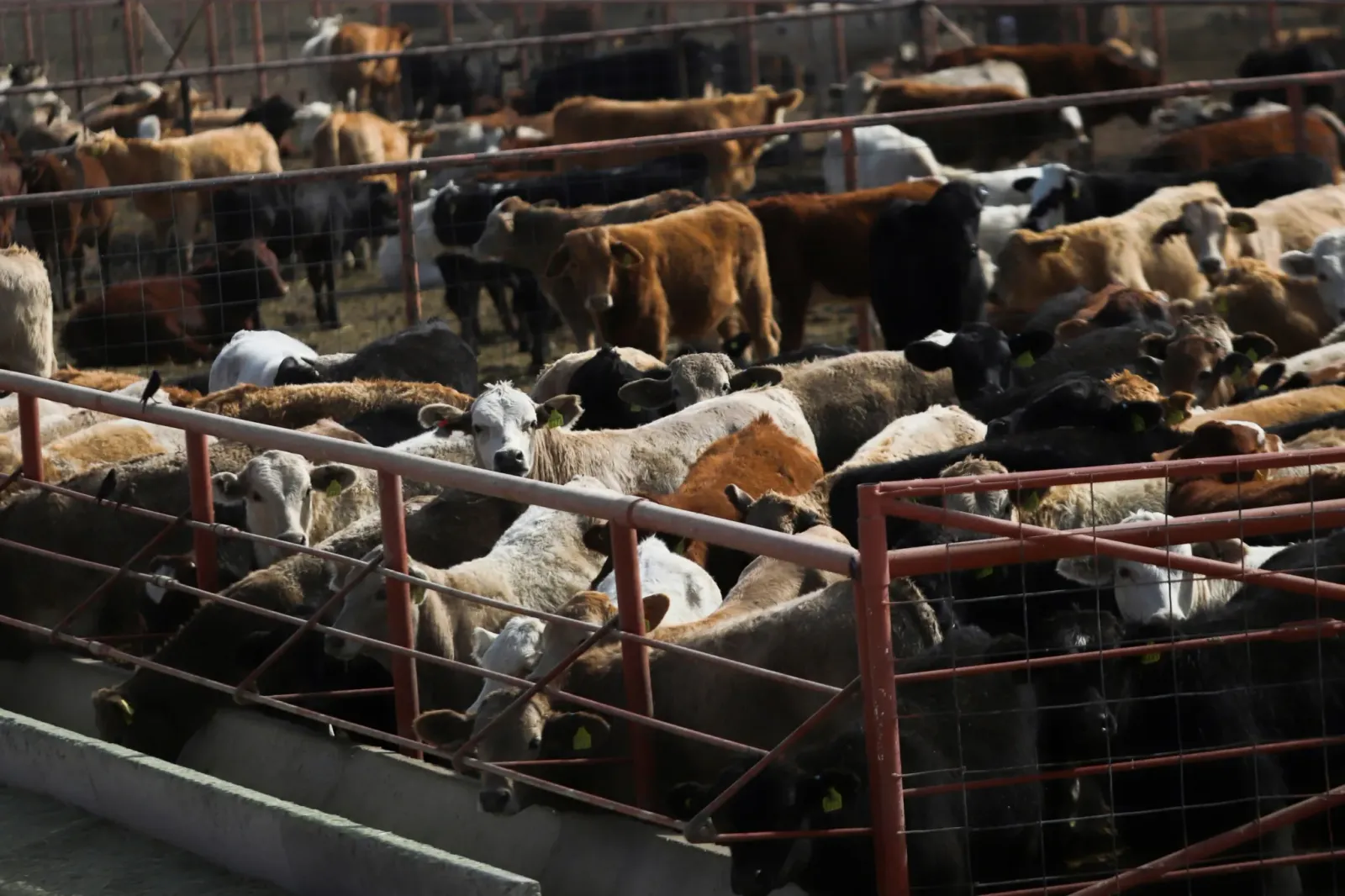
A sterile-fly facility under construction at Moore Air Base in Texas will not reach its initial goal of 100 million flies a week until November 2027. Until then, the New World screwworm outbreak is confined to six Texas cattle, but the supply gap could make containment harder and more expensive.
The US sterile fly plan against the New World screwworm just hit a brutal reality check: the Moore Air Base facility is not expected to reach its initial goal of 100 million sterile flies a week until November 2027. That is more than a year away from showing meaningful results, even as the parasite has already advanced across Mexico for more than a year and reached the US earlier this month.
Right now, the screwworm threat is small on paper, detected in six cattle in Texas, where the US is also a top producer. But Texas and the wider beef industry are operating in a fragile moment. Drought and high production costs have already culled the nation’s herd to a 75-year low, meaning the margin for anything that slows rebuilding, raises monitoring costs, or complicates treatment is thin. The outbreak also matters because the cases are the first in US livestock since an outbreak five decades ago in Texas, which was eradicated a decade later with help from sterile flies. In other words, the US has done this before, but it is not going to have the full “done-before” toolkit on schedule this time.
So what is the plan, and why does the timeline sting? The screwworm is a fly whose larvae infest the wounds of warm-blooded animals. The core suppression strategy is sterile fly production: facilities sterilize screwworm pupae with radiation, then release male sterile flies to mate with wild females. Because the resulting eggs are unfertilized and females typically mate only once, the cycle breaks and new screwworm flies do not get born. Without that kind of suppression, the reproductive potential is ugly fast. A female fly could lay more than 3,000 eggs over a lifespan of two to four weeks, according to Lee Haines, an associate research professor of biological sciences at the University of Notre Dame.
The US is already spending in parallel, but the math still looks tight. A facility in Panama is currently the only operational sterile fly production site in North America, making and dispersing 100 million insects a week, according to the US Department of Agriculture. Another plant in Metapa, Mexico, could as much as double overall output when it comes online as early as this summer. The biggest hopes are centered on the larger production facility under construction at Moore Air Base in Texas. It will not reach its initial goal of 100 million flies a week until November 2027, and ramping up to full capacity of 300 million flies will take even longer. The implication is straightforward: until those Texas volumes arrive, the US response is likely to be “fractional” relative to what containment and eradication would ideally require.
Federal officials are not ignoring the gap. Agriculture Secretary Brooke Rollins said on the sidelines of a Senate hearing Wednesday that the US “not going to be able to eradicate it until we’ve got the couple hundred million more flies coming in, but we will be able to contain it.” She added she does not “have a good enough sense yet” of how far screwworm might spread in the meantime, saying, “I want to give it maybe a month and watch and see what happens.” Other analysts are basically converging on the same theme, just with different emphasis. Glynn Tonsor, a professor of agricultural economics at Kansas State University, said the preemptive investments are “probably already mitigating some of that risk.” But Arlan Suderman, chief commodities economist at StoneX Group, warned the US will probably be “handicapped for a while” in dispersing the sterile males needed for a truly effective combat effort. “We really need that plant in southern Texas. That takes time,” he said.
This is where the second-order effects show up for executives, not just epidemiologists. When sterile fly capacity is constrained, producers absorb the indirect cost burden: monitoring and treating animals, which can be expensive and labor-intensive, especially “over what could ultimately be a really prolonged period of time,” said Derek Foster, an associate professor of ruminant medicine at North Carolina State University. Applying treatments across entire herds “gets really challenging from an expense approach,” Foster added. And that cost is not abstract. It can push cattle prices even higher and discourage rebuilding the US cattle herd. The ripple is already visible upstream and downstream: the prolonged supply crunch has left beef processors operating at losses and sent consumer beef prices soaring to records.
There is also a policy and strategy fight brewing underneath the technical response. Texas Agriculture Commissioner Sid Miller criticized the USDA’s approach, calling for a targeted bait system that attracts and kills female flies before they can reproduce, alongside sterile fly releases. Miller compared the current 100 million flies a week output to “squeezing the middle of the balloon,” warning that shifting quantity from the Mexican border toward Texas leaves another swath uncovered. USDA Under Secretary Scott Hutchins said earlier this month the agency agrees lure-and-kill technology matters, but is not using the bait system Miller suggested because it uses a “very indiscriminate attractant that brings in literally every fly within an area.”
Meanwhile, the regulatory playbook is expanding. The US Food and Drug Administration issued conditional approval for several drugs, and Rollins said some supplies from the USDA’s National Veterinary Stockpile have been flown to Texas. Justin Welsh, Merck Animal Health’s executive director of US livestock technical services, said the availability of the company’s product is “very complete” and that it has been replenishing inventories for distributor partners “literally daily.” On the defensive side of the timeline, the USDA is trying to operationalize the battle narrative publicly, framing it as a sterile flies versus screwworm “Main Event” in an X post on Friday: “One enters to reproduce. One enters to end the bloodline... One mission. One goal. Knockout New World screwworm!”
Senators are also pressing for acceleration. In a Thursday letter, US senators asked Rollins to accelerate sterile fly production, including by exploring the USDA’s reach under the Defense Production Act. They also called for additional hiring and for assurances that plans to relocate much of the USDA’s workforce out of Washington will not disrupt the screwworm response.
For decision-makers in adjacent sectors, the takeaway is not just that a plant is late. It is that containment is being forced to carry the weight of a strategy that depends on scale. When the “main weapon” is capped by a construction schedule, markets, staffing, and operating models downstream do not wait. If you are running a supply chain, investing in agriculture-adjacent capacity, financing processors, or governing commodity exposure, this is a live stress test: how fast can you absorb monitoring and treatment costs, how quickly can you rebuild trust in eradication, and how much leverage do you have when the biological clock runs faster than the factory clock?
This story's Key Insights and Take-aways are locked.
Create a free account to unlock Executive Actions for one credit.
Register to UnlockAlways free for Executives Club members. Join the Club
More in Business

Mena construction CPMI slips 12% in April 2026, but execution momentum rebounds to 1.01
GlobalData’s April CPMI shows resilience masking pre-execution caution, with conflict risk surfacing unevenly by country and sector.

JPMorgan’s Alex Yao says China’s “hundred-model” AI war now bets on enterprise value
The battleground shifted from benchmarks to business value, as consolidation reduces the number of globally competitive AI players.

De Beers backs GIA’s 30% Tracr stake to fight lab-grown diamonds
A new traceability system aims to lock down provenance as lab-grown pricing pressure reshapes natural diamond demand.