

Morocco torch Netherlands 3-2 on penalties after Diop’s late equalizer
Yassine Bounou saves Crysencio Summerville, sending the Atlas Lions to face Canada in Houston.
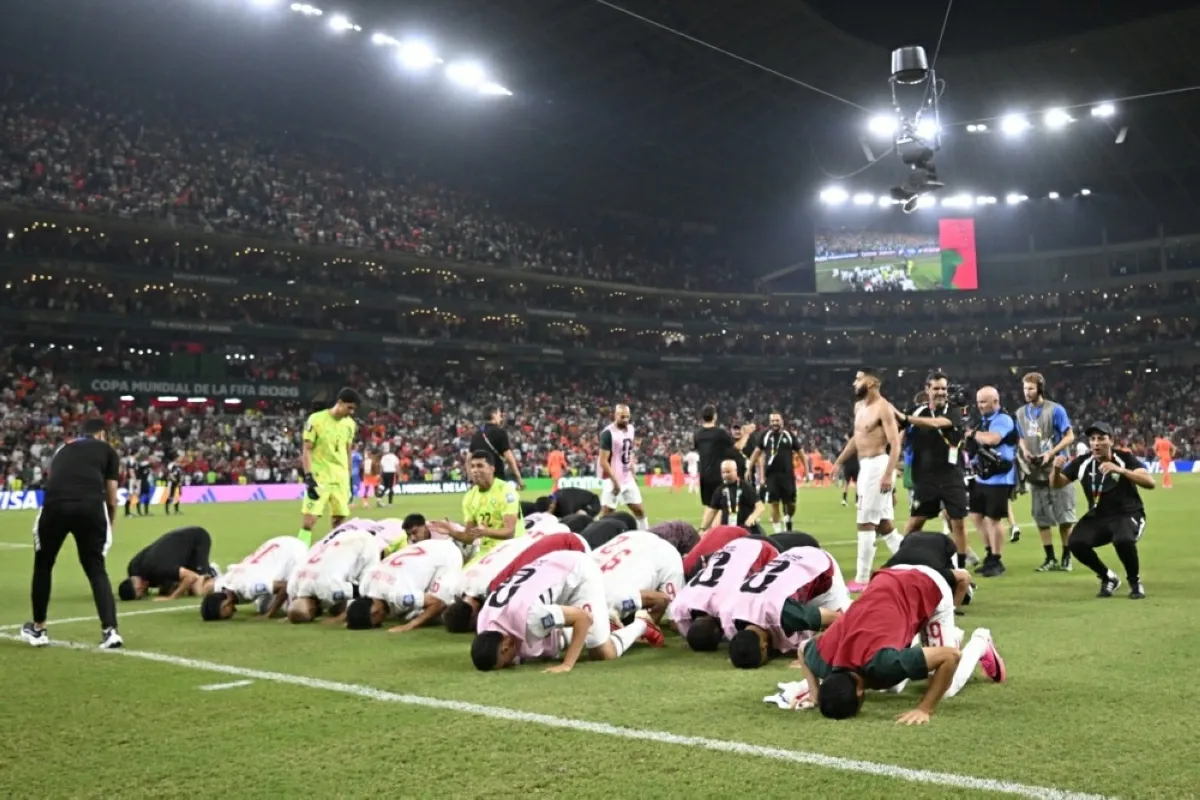
Morocco beat the Netherlands 3-2 on penalties after a 1-1 draw, then rode Yassine Bounou’s decisive stop in the shootout. The result pushes Morocco to the World Cup quarterfinals against Canada, while handing the Netherlands their earliest World Cup exit.
GUADALUPE, Mexico - Morocco booked their place in the World Cup quarterfinals with a 3-2 penalty shootout win over the Netherlands after a 1-1 draw on Monday night. The plot twist came late, when Issa Diop hauled Morocco level in first-half stoppage time, forcing extra time and then penalties.
In the shootout, goalkeeper Yassine Bounou delivered the moment that decided everything. He saved Crysencio Summerville’s spot kick, then Ismael Saibari calmly slotted the winning penalty into the bottom-left corner to send Morocco through 3-2 on penalties and end the Netherlands’ run far sooner than expected.
Morocco now turns its attention to Canada on Saturday in Houston for a place in the semifinals. That next opponent matters because knockout football is a pure incentives game: one mistake becomes a round-trip flight home, and one goalkeeper spell can swing an entire tournament. Morocco’s staff and players just proved they can respond instantly when momentum looks like it is leaving. They fell behind early enough to feel “game management” turn into “survival mode,” then reasserted control with an equalizer that arrived in the exact window where teams usually scramble, not score.
The Netherlands, meanwhile, entered the match with a track record that created its own kind of pressure. The defeat marks their earliest World Cup exit. The Dutch had reached at least the Round of 16 in each of their previous 11 World Cup appearances, including a quarterfinal run in 2022. When an organization has a streak like that, expectations become institutional. Players carry it, fans amplify it, and the internal debate shifts from “can we get out of the group” to “we should be able to go far.” Monday night ended that confidence with a single night that started to unravel at 72 minutes.
Cody Gakpo broke the deadlock in the 72nd minute, and the Dutch bench erupted around him after he scored. The emotional tone around that goal is part of the story too: Gakpo and his partner, Noa van der Bij, recently announced the loss of their unborn child. That context does not change the scoreboard, but it changes the weight. It helps explain why, even when you get the lead, you can still feel the match tightening like a knot as time runs out.
Morocco refused to fold. They found the dramatic equalizer in first-half stoppage time through Issa Diop. Chemsdine Talbi delivered a looping cross into the penalty area, and Diop powered a header beyond Bart Verbruggen to force extra time. From there, the additional 30 minutes failed to produce a decisive chance for either side, so the entire contest compressed into 10-foot mental math, five kicks at a time.
The penalty sequence had its own momentum swings. Morocco recovered after falling behind early in the shootout when Verbruggen failed to keep out Soufiane Rahimi’s penalty, with the ball crossing the line after deflecting off the goalkeeper’s leg. In a format this thin, tiny variables become outcomes. Then Bounou produced the decisive save by diving to his left to deny Summerville. Saibari sealed victory from the spot by calmly slotting the winning penalty into the bottom-left corner.
For executives, investors, and boards who watch performance under pressure, this match is a reminder that high-stakes systems reward preparation and responsiveness, not just talent. Morocco’s “respond quickly after falling behind” behavior is the same kind of discipline that shows up in resilient organizations during volatile quarters. The Netherlands had the advantage, and the match even opened with a goal at 72 minutes. But the late equalizer and the keeper’s decisive save show how quickly a well-positioned plan can become irrelevant when the environment flips from playmaking to precision under stress.
There is also tournament-level context worth noting: it was the second match of the tournament to be decided by a penalty shootout, after Paraguay eliminated Germany earlier on Monday. In other words, this World Cup has started to reward whoever handles uncertainty best, not whoever avoids risk the longest.
Strategically, Morocco’s next step is Canada in Houston for a spot in the semifinals. And for peers across sports and business, the takeaway is blunt: streaks end, leads evaporate, and the “who has the ball last” narrative gets replaced by “who can execute the next two moments perfectly.”
This story's Key Insights and Take-aways are locked.
Create a free account to unlock Executive Actions for one credit.
Register to UnlockAlways free for Executives Club members. Join the Club
More in Business

Comcast shares jump 25% as it plans to split NBCUniversal and Sky
The tax-free spin-off could reshape focus, funding, and competition across media and tech for years.

Bungie cuts most Destiny 2 staff as Sony says Marathon still matters
Herman Hulst confirms layoffs affecting most Destiny and some Marathon teams after Bungie admits Destiny fell short.

SK Hynix jumps 11% after seeking up to $29.4B in Nasdaq listing
The chip giant filed for a Nasdaq listing plan that could raise $29.4 billion, instantly reshaping investor expectations.