

Mouse brains start as a “full slate,” then prune fast after birth
A Nature Communications study in mice links early hippocampal overwiring to fuzzy infant memory, then precision gains with maturity.
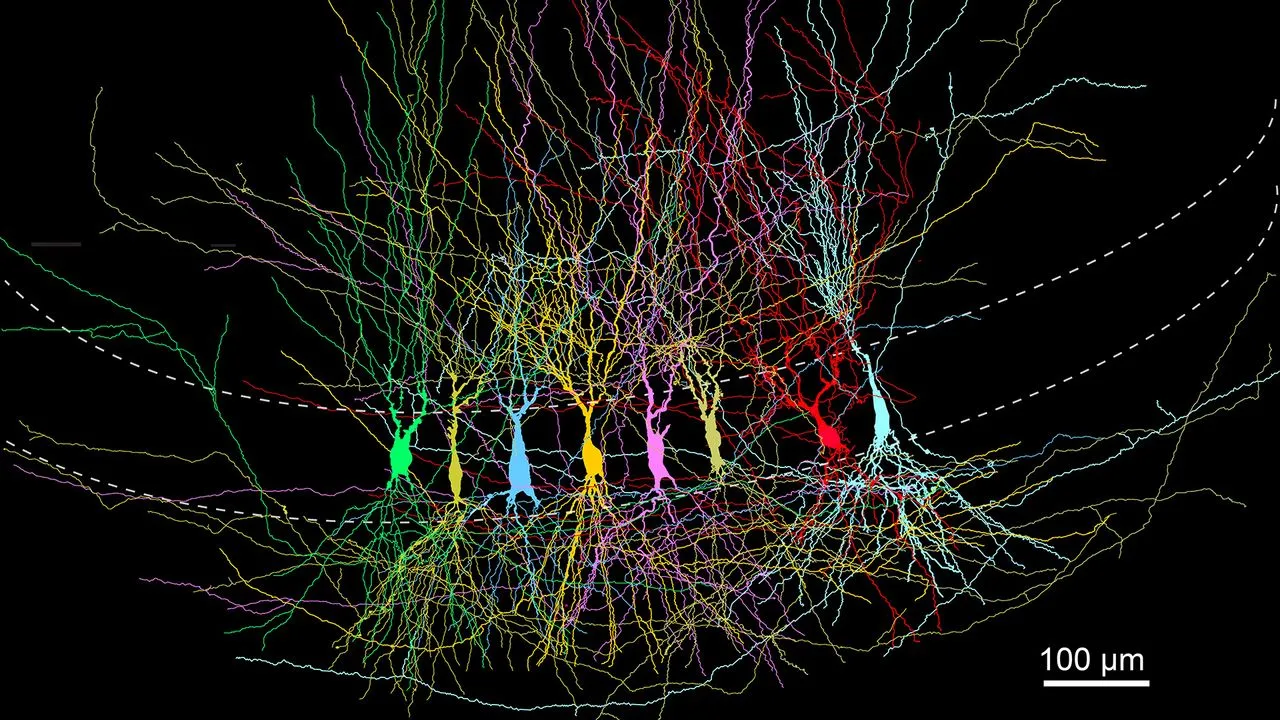
Researchers published in Nature Communications a mouse study showing early hippocampal networks (CA3) are densely wired right after birth, then pruned into more structured connectivity by adolescence. For decision-makers tracking brain research pipelines, the work reframes “blank slate” assumptions about memory and points to circuit-level plasticity timing as a key lever.
Here is the neuroscience plot twist: the memory hub in a young brain is not a blank slate. In a mouse study published in April in Nature Communications, researchers report that the hippocampus begins life densely wired and hyperconnected, with connections pruned as the brain matures. The result is a circuit that starts out very excitable and less precise, which may help explain why humans remember so little from infancy.
The study zooms in on cornu ammonis 3, or CA3, a seahorse-shaped memory center region that plays a central role in storing and recalling memories. CA3 is known for plasticity, meaning its neurons continuously strengthen and weaken their connections, effectively shifting what the network encodes. To see how wiring changes over time, the team examined mouse brain tissue collected shortly after birth, during adolescence, and during adulthood. They found early in life, hippocampal networks are densely wired, with many neurons “hyperconnected” in a seemingly random pattern. As the brain matures, these haphazard networks become sparser yet more structured as connections are pruned, with significant connectivity declines by adolescence.
That timeline matters because it challenges a long-standing neuroscience question: does the brain start as a blank slate and build memories by adding connections through experience, or does it arrive prewired with built-in connectivity? The authors conclude the data do not support the blank slate, or “tabula rasa,” idea for CA3. Study co-author Peter Jonas, a neuroscientist at the Institute of Science and Technology Austria, said in the reporting: “We find, in a nutshell, that the system is not a tabula rasa, as we thought originally, where you can just write information and then at some point, this information fills the system.” He added that instead it “starts out as a tabula plena [full slate] and then becomes more sparser and specifically connected.”
If you are trying to translate this into plain English, think of it like early Wi-Fi. At first, signals are everywhere and overlapping, meaning connections can form quickly. But the network is messy. In the study, the early CA3 network is not just anatomically dense. Functionally, it is also easier to activate. The researchers suggest that in very young mice, a single input could cause a neuron to fire, while in mature networks neurons typically require multiple inputs to fire. That shift from “one input can flip the switch” to “multiple inputs are needed” is a precision upgrade. It is also the kind of mechanism that can turn raw experience into stable, distinct memories.
Here is the cost of that early, highly connected setup: when neurons are activated too easily, different experiences can trigger overlapping patterns of activity. If the overlap becomes too great, the brain may struggle to distinguish one memory from another. The paper’s logic is that instead of forming distinct networks, it may generate broader, less-specific memories. The article links this to behavioral observations in rodent studies: young animals can learn to fear an area of a cage where they received a mild shock and then freeze when they return. But unlike adults, who freeze at that exact location, young animals also show this response in similar environments. In other words, the memory may exist, but it is not precisely anchored.
As mice mature, the CA3 network becomes sparser and more organized. Pruning refines the once-dense web of connections. Neurons become more selective, require multiple inputs to fire, and the network translates into more distinct, separate networks that support specific and stable memories. That is where the work ties back to the headline stake for humans: in regard to the inability to recall early childhood, the study suggests it may be that the earliest memories are too poorly defined to be retained in the long term.
What drives wiring before birth is the next question, and the study does not treat it like a settled debate. Jonas suggested the dense early connectivity may come from a genetically programmed developmental process, with experience refining the wiring after birth. Importantly, the findings do not rule out prenatal experiences leaving lasting traces in the brain. But Hauður Freyja Ólafsdóttir, an assistant professor at the Donders Institute for Brain, Cognition and Behaviour at Radboud University in the Netherlands, told Live Science that she thinks those early forms of learning rely on different neural systems than mature hippocampal circuits. She said, “I’m not disputing that they’re there and that they have influence... They leave a trace, let’s say, in our brain and probably in our psychology even.” Still, those traces may not resemble the detailed memories formed later in life.
So what is the broader implication, beyond the biology? For executives and boards watching the mental health, neurotech, education science, or cognitive therapeutics landscape, this paper is a reminder that memory is not just “what happened.” It is also when the circuit was wired and how precise the network was at the time. If CA3 transitions from a “full slate” to more specific connectivity during development, then interventions, training, or therapeutic timing could matter in ways that are easy to overlook. The article even ends with a mechanistic rationale: if the brain began as a blank slate, neurons might be too sparsely connected to find each other, making early communication difficult; starting overconnected ensures necessary wiring is already in place. The strategic stakes for peers: your roadmap for products or research in memory and development will look very different if the limiting factor is not learning ability alone, but circuit precision and pruning timing.
This story's Key Insights and Take-aways are locked.
Create a free account to unlock Executive Actions for one credit.
Register to UnlockAlways free for Executives Club members. Join the Club
More in Science

Alaska's 1,580-foot tsunami had warning signs. Scientists just found them.
Rapid glacier retreat, heavy rainfall, and thousands of tiny tremors preceded Alaska's 1,580-foot tsunami, a warning for every coastal community in a warming world.

The rare mutation that lets high-risk brains dodge Alzheimer's
Scientists found a natural defense against protein buildup, opening a new path to preventive treatments.

3,000 steps a day may halve Alzheimer's decline, study finds
New research links a modest daily walk to less tau buildup and nearly half the cognitive and functional decline, even for those with early signs.