
mRNA injection cuts chromosome-number errors in older human eggs with missing key protein
A common age-related egg problem may be easier to reduce when cells are helped to make the missing protein.
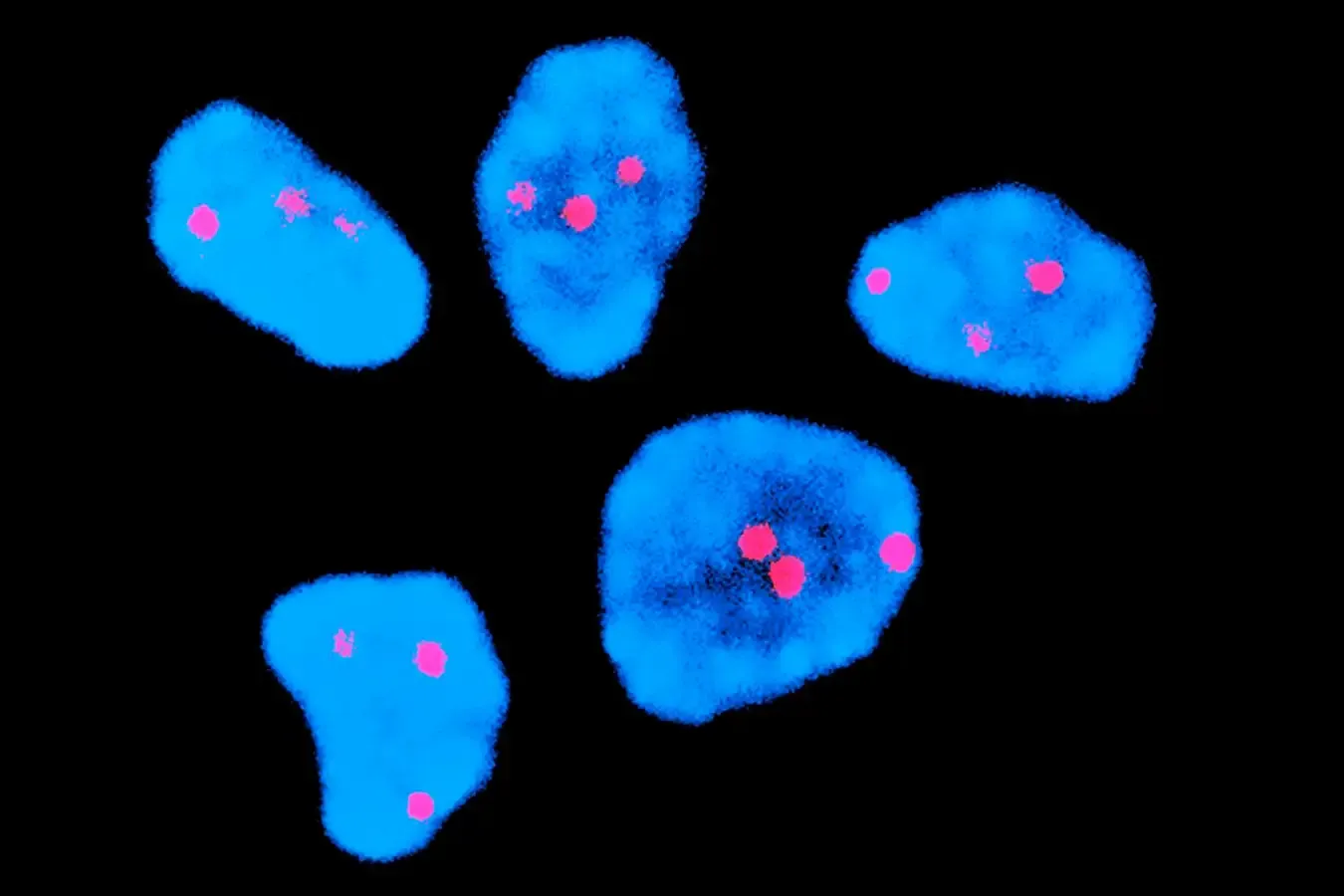
Researchers report that egg cells missing a key protein are more likely to end up with the wrong number of chromosomes, but an mRNA injection that helps the cells produce the protein reduces the risk. The finding matters for investors and biotech leaders tracking tools aimed at improving fertility outcomes while navigating intense ethical and regulatory scrutiny.
Older egg cells have a reputation for being tricky. Not because of anything “mystical,” but because cell division math can go wrong: eggs can end up with the wrong number of chromosomes, a problem tied to age-related infertility and higher risks in pregnancy. In this New Scientist report, the core plot is unusually precise. Egg cells that are missing a key protein are more likely to produce chromosome-number errors. Then comes the intervention: inject the cells with mRNA that helps them make the missing protein, and the problem is reduced.
That matters because it turns a broad, age-associated risk into something more mechanistic and, at least in principle, modifiable. The chain of causality in the report is clear: missing protein leads to more wrong chromosome counts, and restoring the ability to produce the protein via an mRNA injection reduces the errors. For decision-makers watching fertility and reproductive biotech, that is the kind of evidence that can move a program from “interesting biology” toward “actionable platform,” at least as far as the underlying science goes.
Zoom out and you see why this is strategically juicy. Fertility markets are shaped by outcomes, and outcomes are measured in terms patients care about. But the path to clinical translation is rarely straightforward. Treatments and interventions around human eggs and reproduction are not evaluated like standard drugs for metabolic conditions. They run into extra scrutiny because they touch gametes, early development, and potential implications for future generations. That means the early questions are often not “does it work in a dish?” but also “what exactly is being changed, how targeted is it, and what safety thresholds must be met before regulators even consider a clinical step?” This report, by focusing on a specific missing protein and a specific mRNA-based rescue, points to an approach that could be argued as more targeted than broad or undefined interventions.
It also lands in the broader mRNA conversation. Over the past few years, mRNA has become a familiar tool for delivering instructions to cells, and companies have expanded the narrative from vaccines to other biology. Fertility is one of the areas where platform technology meets high-stakes human outcomes. The second-order question for boards is whether mRNA delivery can be tuned enough for sensitive cell types and whether the biological “fix” is robust. Here, the report suggests a partial reversal of a specific error pathway. That does not automatically mean clinical success, but it does provide a concrete proof point that the cell’s missing protein is not just correlated with error risk. The missing protein is positioned as a driver, and supplying the instructions to make it reduces the problem.
Now, think about incentives inside companies pursuing reproductive or gamete-adjacent programs. Programs often struggle with two pressures: scientific risk and regulatory risk. Scientific risk is about whether the observed effect survives beyond the initial experimental setup. Regulatory risk is about whether the intervention can be classified, assessed, and approved in a way that matches its mechanism. Evidence that ties error reduction to a definable molecular defect is, practically speaking, easier to evaluate. It offers a clearer hypothesis to test, clearer endpoints to track, and a more defensible story for oversight bodies that ask “what is the mechanism and how do you know what changed?” In an mRNA context, regulators will also want to understand delivery, persistence, and the behavior of the treated cells, not just the immediate reduction in chromosome-number errors.
There is also an investment and portfolio implication here. Fertility companies and platform biotech investors often look for differentiated mechanisms, not just incremental improvements. A mechanism involving a missing key protein and a targeted mRNA injection is inherently differentiating compared with more general approaches. If later studies confirm the effect size and identify boundaries, this could help some teams justify funding with a “why us” narrative. But boards should also remember that the source report only establishes that the mRNA injection reduces the risk relative to cells missing the protein. It does not, on its face, guarantee broad applicability across all age-related egg problems or all biological backgrounds.
Strategically, the stakes for peers are straightforward: reproductive biotech is a crowded field where differentiation is hard to prove. This report highlights a path that is not just about treating symptoms, but about reducing a specific cellular error process. If the idea holds up under further validation, it could strengthen the competitive position of teams working on mRNA-enabled fertility interventions or adjacent genetic and molecular correction platforms. For executive teams, that means tracking the next layer of evidence closely: replication, safety considerations, and how the intervention performs in systems closer to clinical realities.
In short, the headline is the story. Egg cells missing a key protein face higher chromosome-number error risk, but an mRNA injection that helps those cells make the protein reduces the problem. That combination of mechanistic clarity and actionable intervention is exactly what the field needs to keep pushing from biology into outcomes, even as the regulatory and ethical bar stays high.
This story's Key Insights and Take-aways are locked.
Create a free account to unlock Executive Actions for one credit.
Register to UnlockAlways free for Executives Club members. Join the Club
More in Science

Alaska's 1,580-foot tsunami had warning signs. Scientists just found them.
Rapid glacier retreat, heavy rainfall, and thousands of tiny tremors preceded Alaska's 1,580-foot tsunami, a warning for every coastal community in a warming world.

The rare mutation that lets high-risk brains dodge Alzheimer's
Scientists found a natural defense against protein buildup, opening a new path to preventive treatments.

3,000 steps a day may halve Alzheimer's decline, study finds
New research links a modest daily walk to less tau buildup and nearly half the cognitive and functional decline, even for those with early signs.