
MSI’s Claw 8 EX AI+ adds real wins over Legion Go in cooling and ergonomics
ZDNet’s hands-on test says MSI’s new Windows handheld outperforms the Legion Go where it matters daily.
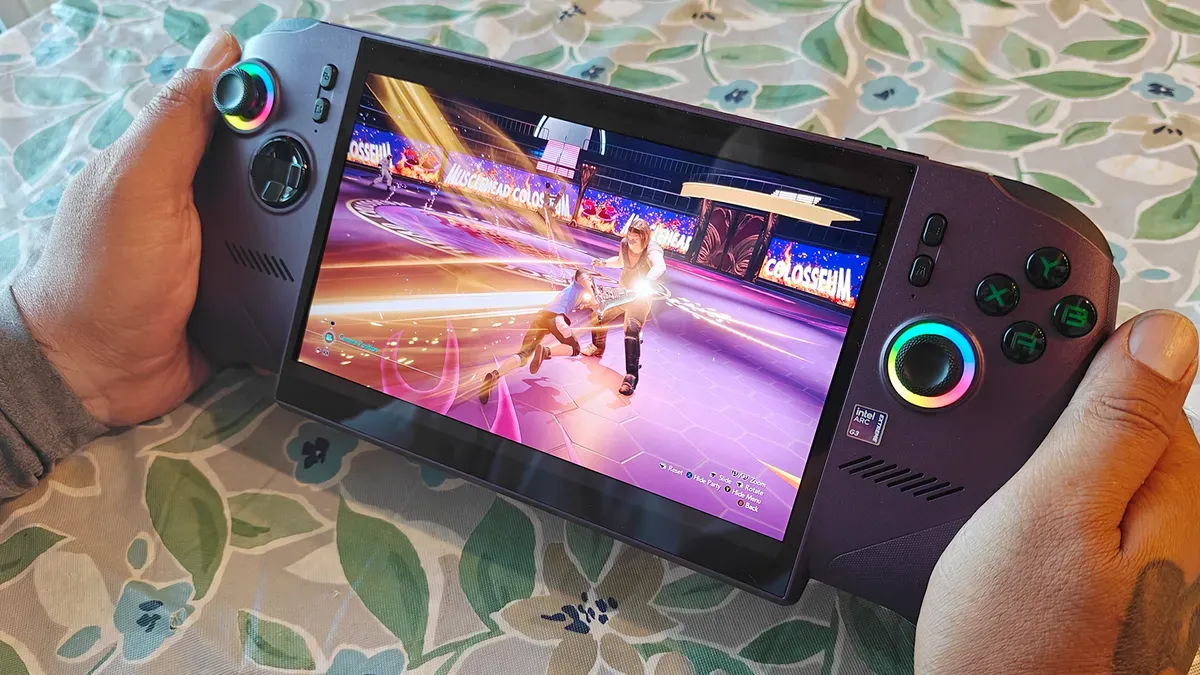
ZDNet tested MSI's Claw 8 EX AI+ Windows handheld PC and found it a worthy sequel. The consequence for decision-makers is clear: handheld PCs are starting to differentiate on everyday usability, not just raw benchmarks.
MSI’s Claw 8 EX AI+ is not just another Windows handheld refresh. In ZDNet’s hands-on test, the sequel beats the Legion Go “in a major way,” specifically by delivering stronger performance, better ergonomics, and cooling that is described as “highly effective.” In other words, the story here is not only horsepower on a chart. It is whether the device stays comfortable, throttles less, and plays nicely for the hours you actually spend holding it.
ZDNet’s testing frames the Claw 8 EX AI+ as a “worthy sequel,” and that phrasing matters. It signals MSI is iterating on what users feel, not just what reviewers measure. The report credits the device with stronger performance, improved ergonomics, and cooling that does the job. Taken together, that is a direct counterpoint to a common handheld-PC tradeoff: more demanding workloads can turn into heat and noise, or into throttling that quietly erases those headline specs. ZDNet’s conclusion is that MSI is addressing those pain points, and doing so well enough to claim a meaningful edge over the Legion Go.
Why should execs and operators care? Because Windows handheld PCs are in a phase where differentiation is shifting. Early competition was often about “Can it run it?” Now the market is moving toward “Can it run it while staying usable?” Ergonomics is not a minor detail when the whole product category depends on sustained hand comfort, thumb reach, and controller placement. Cooling is also not a cosmetic feature. It is the invisible manager of performance, deciding how consistently the device can hold speed without getting uncomfortable or unstable. If ZDNet is right, MSI is stacking the odds for consistent play sessions, which is the kind of outcome that leads to lower return rates and higher word-of-mouth.
The “sequel” angle adds another layer. Handheld PCs are typically judged year to year, but the consumer experience is cumulative: small improvements compound into a better daily product. If MSI’s Claw 8 EX AI+ genuinely improves performance and ergonomics, that suggests the engineering work is going into user-facing friction points, not just internal platform swaps. And if cooling is “highly effective,” that implies the system-level design is doing real work under load, rather than relying on optimistic thermal budgets that fail once games get heavier.
There is also a broader go-to-market implication for teams competing in Windows handhelds. The Legion Go is one of the best-known alternatives in this category, so a direct “beats the Legion Go” claim is not just a product update. It is a positioning statement. When a review site highlights cooling and ergonomics alongside performance, it is telling buyers that MSI’s product is a more complete package, not a single-spec winner. For executives, this matters because marketing around benchmarks is easy to attack. Marketing around sustained comfort and thermals is harder to disprove quickly, because it is tied to lived experience.
Regulatory background may not show up in a gaming review, but the category operates inside real compliance constraints: devices are sold with Windows requirements and must pass various safety and wireless approvals depending on region. Those processes can slow iteration, which is why platform-level improvements and cooling design decisions are often sticky once shipping. When a vendor can ship a sequel that reviewers call “worthy” with meaningful upgrades, it suggests the company managed those constraints well enough to deliver changes buyers can feel, rather than waiting for a more distant platform refresh.
Second-order implications are where this becomes board-level interesting. If MSI can “add real wins” in cooling and ergonomics, competitor responses may shift toward similar engineering priorities. That could affect component choices, thermal module designs, fan profiles, and even industrial design timelines for future models. It might also push buyers to evaluate handheld PCs like they evaluate laptops: thermals and ergonomics become baseline expectations, and performance becomes the differentiator only when it is sustained. Put simply, the center of gravity moves from peak numbers to repeatable experience.
For peers in similar roles, the strategic stake is straightforward: handheld PCs are a comfort and reliability business disguised as a tech product. ZDNet’s test suggests MSI’s Claw 8 EX AI+ is improving exactly the trio of things that decide whether a device is fun or just tolerable. If you are building, investing in, or scaling a Windows handheld strategy, the takeaway is that the next competitive edge will likely be earned in the parts buyers never fully articulate until they feel them in hand: cooling that keeps performance steady, ergonomics that reduce fatigue, and performance that shows up in practice rather than only in peak tests.
This story's Key Insights and Take-aways are locked.
Create a free account to unlock Executive Actions for one credit.
Register to UnlockAlways free for Executives Club members. Join the Club
More in Technology

Nvidia's $89B data center quarter: the 9 companies cashing in
The AI buildout is minting fortunes beyond GPUs, and memory, cloud, and cooling suppliers are riding the same wave.

Google quietly links your phone number to every Android account on your SIM
Adding a SIM now ties your phone number to all Google accounts - and future accounts inherit it. Here's the security and privacy stakes.

Hijacker AI 'Skynet mode' runs 100,000 attack steps against exposed models
Symantec caught a criminal AI agent that borrows other models, steals data, and mines crypto; the only relief is no confirmed victims yet.