
MSI's Claw 8 EX AI+ turns docking into a travel superpower
A reviewer says MSI’s handheld PC sequel nails performance, ergonomics, and cooling, with a docking setup that changes the use case.
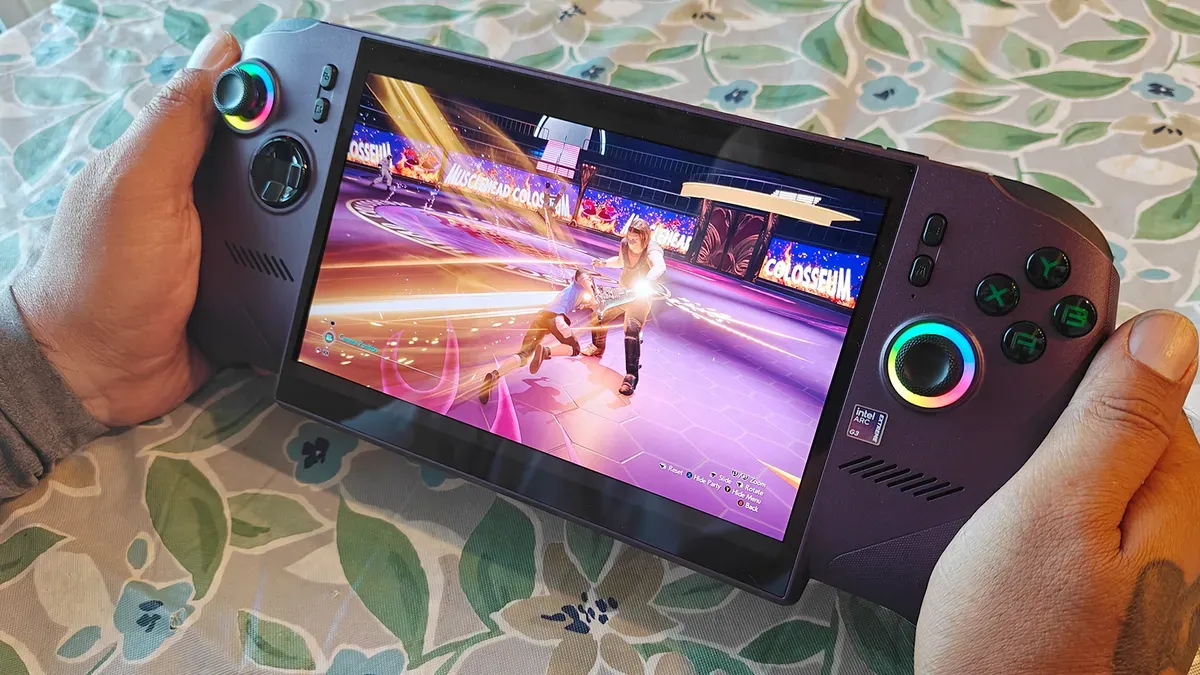
ZDNet’s hands-on look at MSI’s Claw 8 EX AI+ frames it as a stronger follow-up than its predecessor, improving performance, ergonomics, and cooling. For decision-makers watching the handheld PC market, the docking experience signals whether these devices can credibly replace travel laptops.
MSI’s Claw 8 EX AI+ is positioning itself as more than another handheld PC. In ZDNet’s trial, the docking system is the difference-maker, making the device feel like an “ideal travel companion” rather than a gadget you carry for novelty. That matters because handheld PCs live or die on a simple question: can they fit real schedules, not just demos?
ZDNet’s bottom line is that Claw 8 EX AI+ is a “worthy sequel,” specifically called out for “stronger performance, better ergonomics, and highly effective cooling.” The dock, paired with those improvements, addresses three practical friction points that usually block adoption. Performance that holds up under sustained use. Ergonomics that do not punish you after an hour in transit or at the hotel. Cooling that does not turn “portable” into “constantly throttled.” When these align, the device stops feeling like a compromise and starts feeling like a second computing tier you can actually rely on.
To understand the second-order implication here, zoom out to what handheld PCs are trying to compete against. They are not just competing with other handhelds. They are competing with the travel laptop ecosystem, including everything from airport Wi-Fi routines to document editing to meetings that require dependable thermals and stable performance. A dock is a tell because it is the bridge between two worlds: handheld convenience and desktop-like usability. If that bridge works, it changes the value proposition from “compute anywhere” to “compute anywhere, then snap into a bigger workflow.” That is the exact shift executives should look for when evaluating whether a category is moving from enthusiast to mainstream.
Cooling is a particularly important detail for decision-makers, even if the story is framed as a consumer review. Handheld devices compress the thermal budget, so sustained workloads can degrade quickly. ZDNet’s assertion that the Claw 8 EX AI+ has “highly effective cooling” suggests MSI is trying to keep performance consistent over time. That is a direct lever for user trust. In business settings, trust is often the hardest metric to buy. Users can tolerate mediocre specs. They cannot tolerate devices that slow down unpredictably during the exact moment you need them.
Ergonomics also signals a more mature product approach. Handheld PCs tend to start out as “feature complete” on paper, then get judged on how it feels to hold, type, and work. ZDNet’s note about “better ergonomics” implies MSI is iterating on the lived experience, not just raw benchmark targets. And because this is explicitly described as a travel companion scenario, ergonomics is not a cosmetic upgrade. It determines whether someone can work on the road without switching devices every 20 minutes.
Then there is the strategic role of the dock itself. A docking system can be more than a convenience accessory. It can standardize your routine, meaning you plug in the same monitor, keyboard, and power setup each time you arrive. That reduces friction for frequent travelers and, by extension, for IT teams who might otherwise face “it depends” configurations. Even for executives and investors, the dock is a product discipline signal. It shows MSI is thinking about the full system, not just the handheld. That approach tends to correlate with more sustainable category growth.
Regulatory and standards context matters here too, but in a quieter way. There is no claim in the source about new regulations, compliance changes, or policy actions. Still, the broader computing industry remains sensitive to security and device management expectations. When handheld PCs are used more like laptops, they run into the same governance questions: how devices are secured, monitored, and kept updated. A dock that makes the handheld feel like a desk-first system can increase enterprise interest, which in turn raises the bar for device management and lifecycle support. That is the kind of second-order effect that does not show up in a single benchmark, but it can determine whether procurement teams take the category seriously.
For peers watching the handheld PC space, the takeaway is clear: improvements in performance, ergonomics, and cooling are necessary, but docking can be the accelerant. ZDNet frames Claw 8 EX AI+ as a “worthy sequel,” and the travel-companion angle implies MSI is solving the adoption bottleneck most often caused by mismatch between mobility and usability. If the dock truly makes the device fit real travel rhythms, MSI is not just shipping another handheld. It is trying to earn a permanent place in a traveler’s kit.
This story's Key Insights and Take-aways are locked.
Create a free account to unlock Executive Actions for one credit.
Register to UnlockAlways free for Executives Club members. Join the Club
More in Technology

Nvidia's $89B data center quarter: the 9 companies cashing in
The AI buildout is minting fortunes beyond GPUs, and memory, cloud, and cooling suppliers are riding the same wave.

Google quietly links your phone number to every Android account on your SIM
Adding a SIM now ties your phone number to all Google accounts - and future accounts inherit it. Here's the security and privacy stakes.

Hijacker AI 'Skynet mode' runs 100,000 attack steps against exposed models
Symantec caught a criminal AI agent that borrows other models, steals data, and mines crypto; the only relief is no confirmed victims yet.