

Musicians Union sues Universal and Warner, alleging collective bargaining AI breach
American Federation of Musicians says major labels violated their deal over AI use, forcing a legal and policy reckoning.
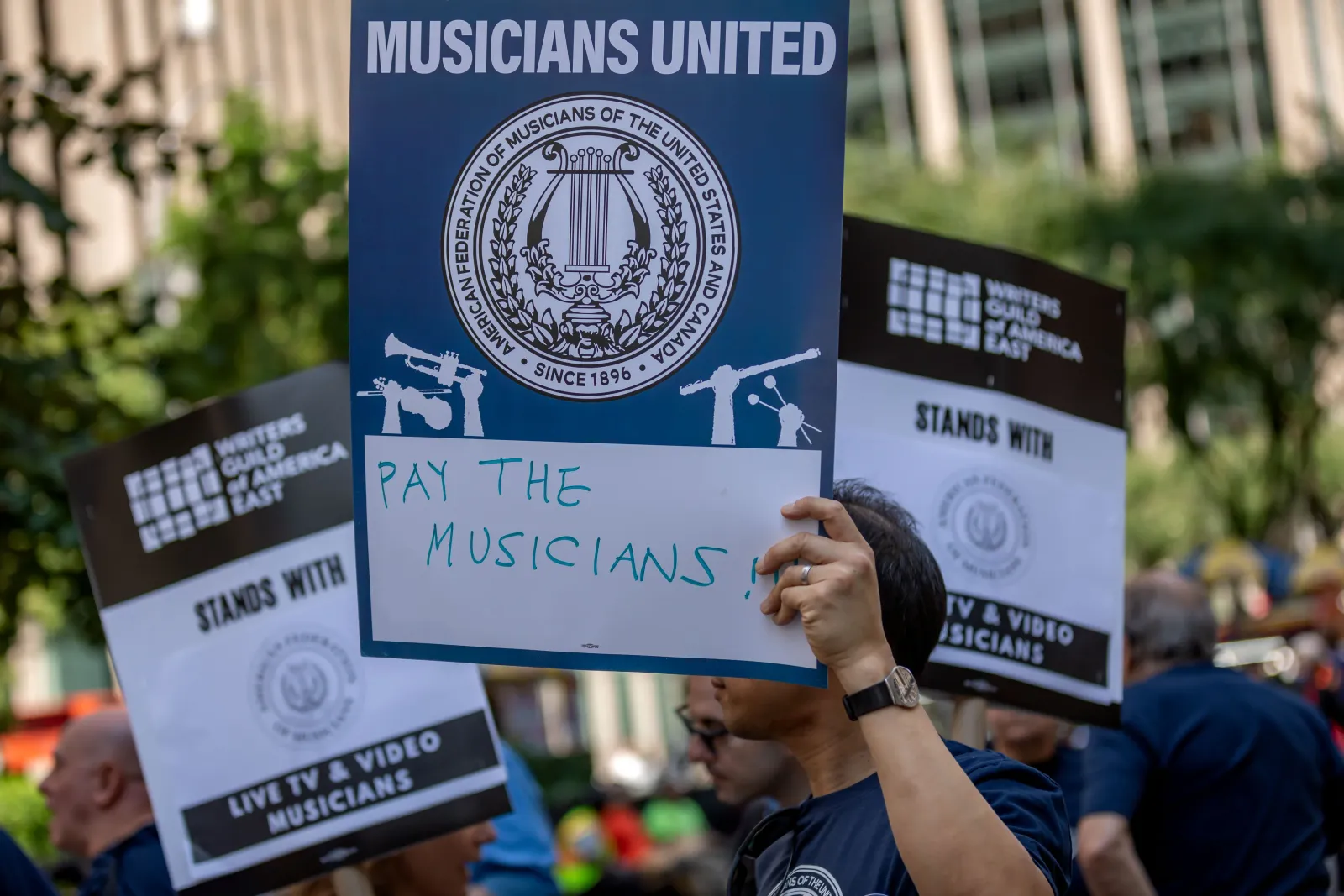
The American Federation of Musicians has filed a lawsuit against Universal and Warner, alleging they breached their collective bargaining agreement over AI use. For label executives, investors, and media platforms, the case raises immediate risk around contracts, licensing, and how AI royalties get enforced.
The American Federation of Musicians says Universal and Warner breached their collective bargaining agreement over how they are using AI. That is the core claim, and it matters because collective bargaining agreements are the glue between musicians and the music industry. When that glue is alleged to be loosened, everything around it gets pulled into court, fast.
In its filing, the American Federation of Musicians frames AI use as a contract problem, not just a technology question. The union's position is straightforward: major labels failed to follow the terms of their collective bargaining agreement. If a court accepts that framing, it could turn what has often been discussed as “the future of music” into something more immediate for executives: another enforceable set of obligations with consequences for non-compliance.
To understand why this lawsuit is such a big deal, zoom out for a second. Record labels and platforms have been racing to figure out what AI can do for production, marketing, discovery, and potentially the creation of new audio. That creates a tension that has been building across the industry. On one side, companies want flexibility to deploy new tools. On the other, performers and rights holders want guarantees that their work, identity, and compensation are handled according to agreements they negotiated, often with specific expectations baked into the deal. Collective bargaining agreements are designed to lock those expectations in place. If the union believes AI use falls outside the intended boundaries, litigation becomes the enforcement mechanism.
This is also where governance and incentives start to matter. Labels operate in a landscape of rights, revenue sharing, and contractual compliance. When a dispute alleges a breach, boards and executives do not just worry about legal fees. They worry about whether the alleged breach becomes a precedent that changes how future AI deployments are structured. In other words, the case is not only about the past actions the union points to, it is about what companies will be required to do next time they roll out AI features tied to music.
Regulatory and policy pressure adds another layer. Even when specific AI rules are still evolving, courts, regulators, and contracting parties are increasingly being asked to interpret how existing legal frameworks apply to new capabilities. Collective bargaining agreements are part of that framework. They can supply the missing “how” when laws are still catching up. If the union can show the labels violated terms that were meant to govern use of musicians' work, then AI use stops being a gray zone and becomes a matter of contract interpretation.
For decision-makers at adjacent companies, the second-order effect is clear: the lawsuit signals that unions and performer groups may be willing to treat AI not as an optional modernization, but as a contractual boundary that must be respected. Executives at other labels, production networks, and platforms will likely ask harder questions internally: Which AI uses trigger obligations under existing deals? Do current licensing and reporting processes cover AI-driven workflows? Are contract language and compliance programs still adequate when technology changes faster than negotiations.
There is also a market dynamic hidden inside the legal one. Music is a reputation business as much as it is a financial one. When a union publicly alleges breach, it can shape negotiating leverage for future agreements. Even companies that believe they did nothing wrong must spend time and attention responding, and that attention has opportunity cost. Executives who manage rights and partnerships often find that disputes like this shift the conversation away from innovation and toward risk management.
Bottom line: the American Federation of Musicians is suing Universal and Warner, claiming they breached their collective bargaining agreement over AI use. For anyone running a music-adjacent business, or investing in one, that turns AI from a strategy slide into a compliance and legal workload. The strategic stakes are simple: if the union's contract theory gains traction, the industry will have to rebuild its AI playbook around enforceable obligations, not just technical capability.
This story's Key Insights and Take-aways are locked.
Create a free account to unlock Executive Actions for one credit.
Register to UnlockAlways free for Executives Club members. Join the Club
More in Entertainment

Entertainer Russell Brand denies 7 sex charges amid accuser's 'couldn't breathe' claim
The alleged victim's account sharpens the reputational and legal stakes for Brand, his platforms, and any business tied to a public figure under criminal scrutiny.

Russell Brand's accuser 'bewildered and confused' as he denies 7 sex charges
The criminal case against the comedian is a live test of how media companies manage talent risk when serious allegations go public.

'It's a Magic Trick': Ballet Experts Say Rosalía's SNL Pose Is Impossible
Three ballet experts tell Rolling Stone Rosalía's gravity-defying SNL stillness shouldn't be possible - and why the debate is now part of the show.