

Musk confirms Tesla-SpaceX mega-merger talks, forms special committees
The billionaire CEO says both boards have formed special committees to weigh a combination that would unite the world's most valuable automaker with its dominant private rocket company.
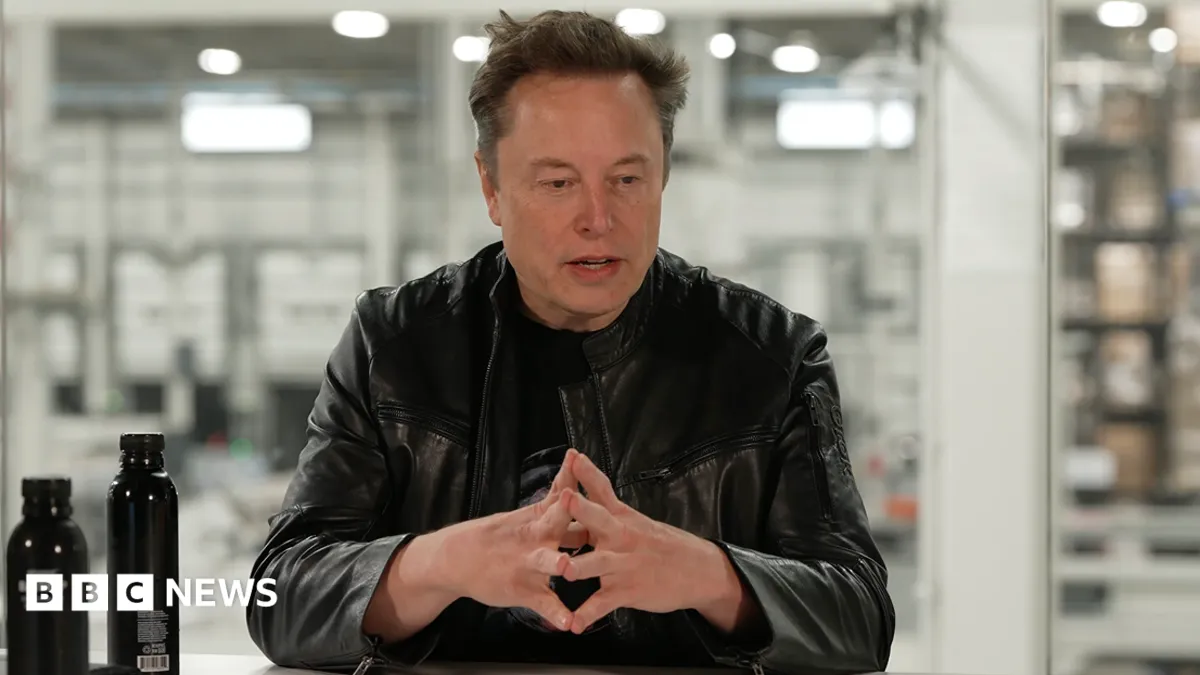
Elon Musk confirmed he is considering merging Tesla and SpaceX, saying special committees at both companies have been formed to study a possible mega-merger. For decision-makers, the move signals a governance and regulatory test of unprecedented scale, with implications for Tesla shareholders, SpaceX's private investors, and the broader auto and space industries.
Elon Musk has confirmed he is considering merging Tesla and SpaceX, saying special committees within both companies have been formed to study a possible mega-merger. The confirmation turns what has long been a speculative talking point into a formal governance process: two committees, one inside the electric-vehicle maker and one inside the rocket company, are now tasked with evaluating a combination that would unite the two most valuable pillars of Musk's business empire.
The stakes are hard to overstate. Tesla is the world's most valuable automaker by market value, a publicly traded company whose shareholders include index funds, pension funds, and retail investors who bought in on the promise of an energy transition story. SpaceX is a privately held launch and satellite giant, the dominant commercial player in orbital transportation and the operator of the Starlink broadband network, which has grown into a consumer-facing business in its own right. A merger would create a single enterprise spanning cars, energy storage, rockets, and space-based internet - a corporate structure with no obvious precedent in modern American business, and one that would instantly rank among the largest companies on earth by any measure.
For context, Musk has served as chief executive of both companies for years, a dual role that has repeatedly drawn scrutiny from corporate governance watchdogs and, at times, from Tesla's own board. The two companies already operate in adjacent technological territory - batteries, materials science, manufacturing, and artificial intelligence - and Musk has spoken publicly about sharing ideas across them. The formation of special committees is a signal that the boardrooms are taking the question seriously rather than dismissing it as another Musk musing.
The strategic logic of a merger, on paper, is straightforward. Both companies are engineering-driven, vertically integrated, and focused on manufacturing efficiency. Tesla brings mass-production capability, battery supply chains, and software and AI talent. SpaceX brings rocket engineering, satellite manufacturing, and a revenue stream from government and commercial launch contracts. Combining them could create procurement leverage, shared research and development, and a single balance sheet to fund capital-intensive projects on both sides.
But the obstacles are equally substantial. A deal of this size would face antitrust review, scrutiny from the Securities and Exchange Commission, and a shareholder vote at Tesla, where institutional investors have already shown willingness to push back on Musk's compensation and governance proposals. Pricing a private SpaceX into a public Tesla raises thorny valuation questions: what multiple do you place on a company with no public float, and how do you protect the interests of SpaceX's existing private investors, including employees with equity? There is also the question of disclosure - a public company would be required to report on the combined entity's finances in ways SpaceX has never had to, potentially exposing the economics of its government contracts and launch pricing to public view.
There is also the question of what a merged company would actually be. Tesla's mission has been framed around accelerating sustainable energy; SpaceX's around making humanity multiplanetary. A combined entity would be a conglomerate in the classic sense, and conglomerates have historically traded at a discount to their parts, as investors struggle to value disparate businesses under one roof. Musk has spent years arguing that Tesla is undervalued as a technology company; folding in a rocket business could complicate that narrative.
For executives and boards watching from the sidelines, the episode is a reminder that governance structures matter even - perhaps especially - when a founder dominates. The special committees are a mechanism to give the exploration legitimacy, to show regulators and shareholders that the question is being studied rather than dictated. Whether the merger happens or not, the process itself will set a precedent for how a founder-led empire can formally evaluate a combination that touches public and private markets at once.
Nothing is decided. The committees are exploratory, and Musk himself framed the effort as a consideration rather than a commitment. But the confirmation alone moves the conversation from hypothetical to procedural, and it gives investors, regulators, and competitors a formal process to watch. For anyone with exposure to Tesla stock, SpaceX contracts, or the broader space economy, this is a story that just became real - and the committees' findings, whenever they arrive, will be among the most closely watched corporate documents in either industry.
This story's Key Insights and Take-aways are locked.
Create a free account to unlock Executive Actions for one credit.
Register to UnlockAlways free for Executives Club members. Join the Club
More in Business
Musk barred from the room as Tesla, SpaceX boards weigh $3.5 trillion merger
The CEO of both companies is a 'conflicted party' watching independent directors negotiate a tie-up that would create a $3.5 trillion giant he would own about a third of.

Elon Musk just showcased a flying car - and it wasn't at Tesla
The Tesla CEO's latest reveal came at SpaceX, not Tesla, signaling where vertical mobility is headed.

Apple's $2,000 iPhone Duo opens preorders, taking on Samsung and Google
Apple's first foldable hits the market at a premium price, reshaping a category Samsung and Google have led.