
Musk, Luckey, Marcus pan Anthropic's 5% public benefit pledge
Tech leaders want the shares given directly to Americans, not parked in a foundation.
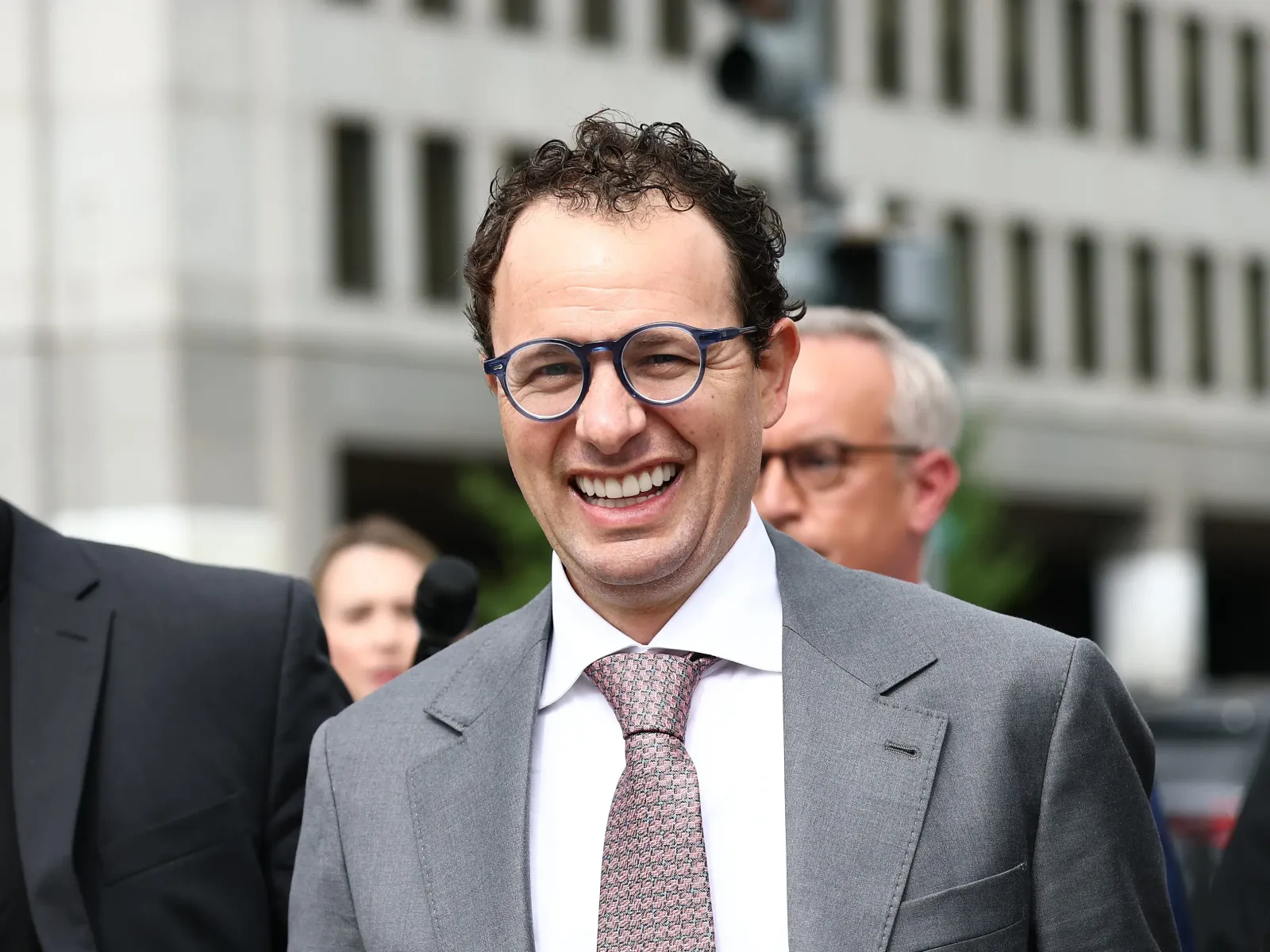
Anthropic CEO Dario Amodei announced the company will commit at least 5% of its shares to a public benefit fund, drawing immediate backlash from Elon Musk, Palmer Luckey, and Gary Marcus. The debate exposes a growing rift over how AI-generated wealth should be distributed, with critics demanding direct payouts to the public rather than foundation-controlled giving.
Elon Musk, Palmer Luckey, and Gary Marcus are not impressed by Anthropic's pledge to commit at least 5% of its shares to a 'public benefit fund.' In an X post reacting to the announcement, Musk, whose SpaceXAI competes with Anthropic, wrote, 'I recommend giving the shares directly to the public. This is what I will be doing.' Luckey, the Anduril cofounder, went further, calling the plan 'USAID 2.0' and accusing Anthropic of funneling billions out of the American economy. Marcus, the NYU professor, dismissed it as a PR gambit: 'Anthropic is playing games here... Trying to curry public favor while still holding control and resisting disclosure is annoying. And reeks of desperation.'
The pledge, announced by CEO Dario Amodei, would create a separate corporation to hold the shares and make donations. But the details are thin, and the backlash is loud. Patrick Moorhead, CEO of Moor Insights and Strategy, questioned why Anthropic doesn't simply give the money to citizens directly: 'If it's dedicated entirely the 'public benefit' why don't they just give it to the public and citizens where they can directly benefit? Seems like the public would know what to do with the money better than bureaucratic institutions.' The criticism lands at a moment when AI companies are under growing pressure to explain how the enormous wealth they are creating will be shared.
Not everyone is hostile. Brad Gerstner, CEO of Altimeter Capital, called the pledge 'an extraordinary gift' and praised Anthropic's 'philanthropic commitments.' But even he sounded a warning about 'foundation wealth concentration,' writing, 'I hope a meaningful portion of AI's wealth is a direct dividend.' That tension, between centralized philanthropy and direct distribution, is the core of the debate. Andrew Curran, a prominent AI analyst, zeroed in on a line in Anthropic's statement about 'direct distributions to specific populations,' interpreting it as a form of self-directed global UBI. He also noted that about half of Anthropic employees are donating shares into the fund, adding, 'They foresee a transformative future.'
The most pointed structural critique came from Sam Hogan Heutmaker, CEO of Inference, who dubbed the plan 'the reverse OpenAI.' His logic: Anthropic started as a C corp, raised lots of money, and now that it's successful, it's creating an 'independent' nonprofit that it and its allies control. 'It's genius,' he wrote. The comparison to OpenAI is loaded: OpenAI began as a nonprofit and later added a for-profit arm, while Anthropic appears to be moving in the opposite direction, building a charitable vehicle on top of a for-profit base. Whether that vehicle is truly independent will determine whether the pledge is seen as generosity or governance.
For executives watching from the sidelines, the episode is a case study in how quickly a well-intentioned 'public benefit' commitment can become a reputational liability. The questions are familiar: Who controls the fund? What counts as public good? And why not just hand the money to the people? Anthropic has not answered them. The company said it would create a separate corporation with the shares, but many questions about how the fund would work remain unanswered. That vagueness is exactly what critics are seizing on.
The stakes extend beyond Anthropic. Musk's own pledge to give shares directly to the public sets a benchmark that other tech founders may be measured against. If direct distribution becomes the expected norm, then foundation-based giving, however generous, will face constant scrutiny. For boards and CEOs, the lesson is to define the governance and distribution mechanics before making a splashy announcement. The backlash also highlights a broader cultural shift: the public is increasingly skeptical of concentrated wealth, even when it's wrapped in philanthropic packaging.
Anthropic's move is also a bet on the future of AI's economic footprint. By committing a slice of its equity to a public benefit fund, the company is acknowledging that AI's gains should be shared beyond shareholders. But the critics are asking a sharper question: shared with whom, and on whose terms? Luckey's complaint that the definition of 'public good' excludes the American public, and Marcus's charge that Anthropic is 'holding control and resisting disclosure,' both point to a deeper anxiety about unelected institutions wielding massive resources.
For now, the fund is a promise, not a plan. The company has not detailed how donations will be made, who will oversee them, or what 'public benefit' means in practice. As the debate unfolds, one thing is clear: the era of vague corporate do-gooding is over. Tech leaders who want to avoid the same firestorm need to answer the control question before they announce the donation. Otherwise, they'll learn what Anthropic is learning today: that a 5% pledge can generate 100% of the scrutiny.
This story's Key Insights and Take-aways are locked.
Create a free account to unlock Executive Actions for one credit.
Register to UnlockAlways free for Executives Club members. Join the Club
More in Business

Elon Musk unveils a flying car, and SpaceX helped build it
The Tesla CEO's showcase at a SpaceX facility signals a future where road and rocket engineering converge.

Apple's $2,000 iPhone Duo opens preorders, taking on Samsung and Google
Apple's first foldable hits the market at a premium price, reshaping a category Samsung and Google have led.

Pope Leo XIV, first American pope, diagnosed with lung cancer
The 71-year-old Chicago-born pontiff underwent successful surgery on his right lung, and his diagnosis raises new questions about his AI-focused papacy and the Vatican's future.