

My Cannibal Family turns theme-park sims into a “kill and cook” business model for 2027
A new theme park sim revealed at Future Games Show says the point is death, then lets you assign your victims jobs.
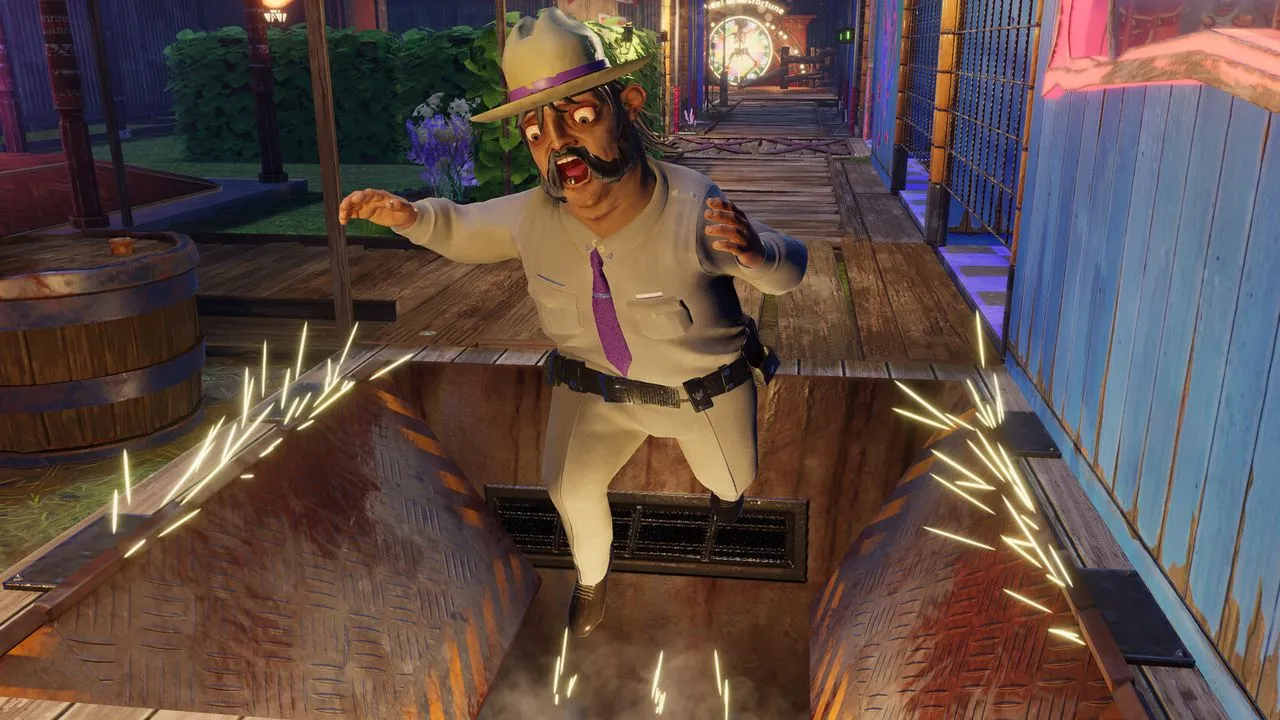
My Cannibal Family, revealed today at the Future Games Show, is a theme park sim where you lure visitors to a gruesome death so your cannibal family can feed. For decision-makers, it is a clean example of how game incentives and audience design are evolving toward explicit violence loops.
Theme park sims have traditionally asked you to keep guests alive. My Cannibal Family does the opposite, and it revealed that design philosophy today at the Future Games Show: it is “fine” if the visitors to your park die, because that is the whole point.
In the game, you start as a cannibal family member. You get whacked by the mob and stuffed into a drum of toxic goo, then emerge as a mutated monster with an appetite for living human flesh. After that, you do what any hungry creature would do: you open a theme park that exists to harvest guests. You build a maze of attractions to lure visitors in, then you kill them using deadly traps and stealth attacks, either by engineering the park for slaughter or by taking matters into your own two hands. Then, its dinner time, as your family grows.
What makes this more than just shock value is the incentive structure the developer bakes into the fantasy. The park is not only a hunting ground, it is an operations center. You gather resources and construct attractions during the day, and when night arrives, the game pivots to elimination, with traps and stealth attacks operating inside a deadly sandbox of your own creation. The “theme park” framing is doing double duty: it gives the player familiar mechanics like building and managing, while the underlying objective is closer to resource extraction. That matters in the broader theme park sim market because players who like construction and logistics often want meaningful constraints. Here, the constraint is ethical in name and violent in practice: guests are not a metric of happiness. They are raw material.
The second-order twist is how “your hungry family” is integrated into your staffing model. Your mutated family members are not passive monsters. You can assign them jobs in the park like gathering resources or taking part in the attractions. That turns what could have been a simple kill loop into a management system. You can distribute roles, which implies tradeoffs between acquisition and execution. In executive terms, it is a classic engagement mechanic: it turns the player from a one-button exterminator into a coordinator of a production line, even though the product is, frankly, human flesh.
And because game designers rarely leave good revenge fantasies unused, My Cannibal Family also includes a narrative purpose for all this. You can use your park to get revenge on the mobsters who murked you. That is important because it gives the violence an internal justification rather than leaving it as random brutality. In many games, players tolerate hard mechanics when the world makes sense and the objective feels coherent. Here, coherence comes from the chain of events: mob kills you, toxic goo mutates you, the new family eats, then you build an ecosystem that serves that appetite and resolves the score.
There is also a business and community angle baked into the feature list. The game can be played in co-op, so you can team up with friends to get killing and cooking. For studios and publishers, co-op is often a retention lever because it makes the experience social and helps players recover from failed runs. For audiences, it changes the vibe too. Instead of one person quietly managing a deadly attraction lineup, you get a shared plan for luring visitors to their gruesome death, then coordinating stealth and traps with someone else. If you are an operator thinking about engagement, that cooperative “production line” dynamic can be a powerful amplifier.
Finally, the timeline is clear enough to plan around. The deadly theme park sim comes out in 2027. That date is far out, but the reveals matter because they shape expectations now. The PC Gaming Show returns Sunday, June 7 at 12 pm PDT, and the source urges viewers to visit the show's Steam page to wishlist anticipated games and tune in for big reveals. For decision-makers, that is a reminder that marketing calendars and wishlist funnels are early battlegrounds, even when the product is years away.
Zooming out, My Cannibal Family is a case study in how game mechanics and audience framing are drifting toward explicit “in-world logic” where the player’s primary action is morally inverted compared to conventional management sims. The industry typically sells “build and protect” fantasies. This one sells “build and harvest,” while still keeping the management wrapper that sim fans like. If you are tracking where interactive entertainment is heading, the second-order question is not whether players can handle the violence, it is whether the market will keep rewarding games that turn familiar genres into darker operating systems.
This story's Key Insights and Take-aways are locked.
Create a free account to unlock Executive Actions for one credit.
Register to UnlockAlways free for Executives Club members. Join the Club
More in Entertainment

Entertainer Russell Brand denies 7 sex charges amid accuser's 'couldn't breathe' claim
The alleged victim's account sharpens the reputational and legal stakes for Brand, his platforms, and any business tied to a public figure under criminal scrutiny.

Russell Brand's accuser 'bewildered and confused' as he denies 7 sex charges
The criminal case against the comedian is a live test of how media companies manage talent risk when serious allegations go public.

'It's a Magic Trick': Ballet Experts Say Rosalía's SNL Pose Is Impossible
Three ballet experts tell Rolling Stone Rosalía's gravity-defying SNL stillness shouldn't be possible - and why the debate is now part of the show.