

Naoki Hamaguchi promises one singular ending, but choices change how you get there
Final Fantasy 7 Revelation keeps a single finale for everyone, while player choices reshape the final chapter’s emotional path.
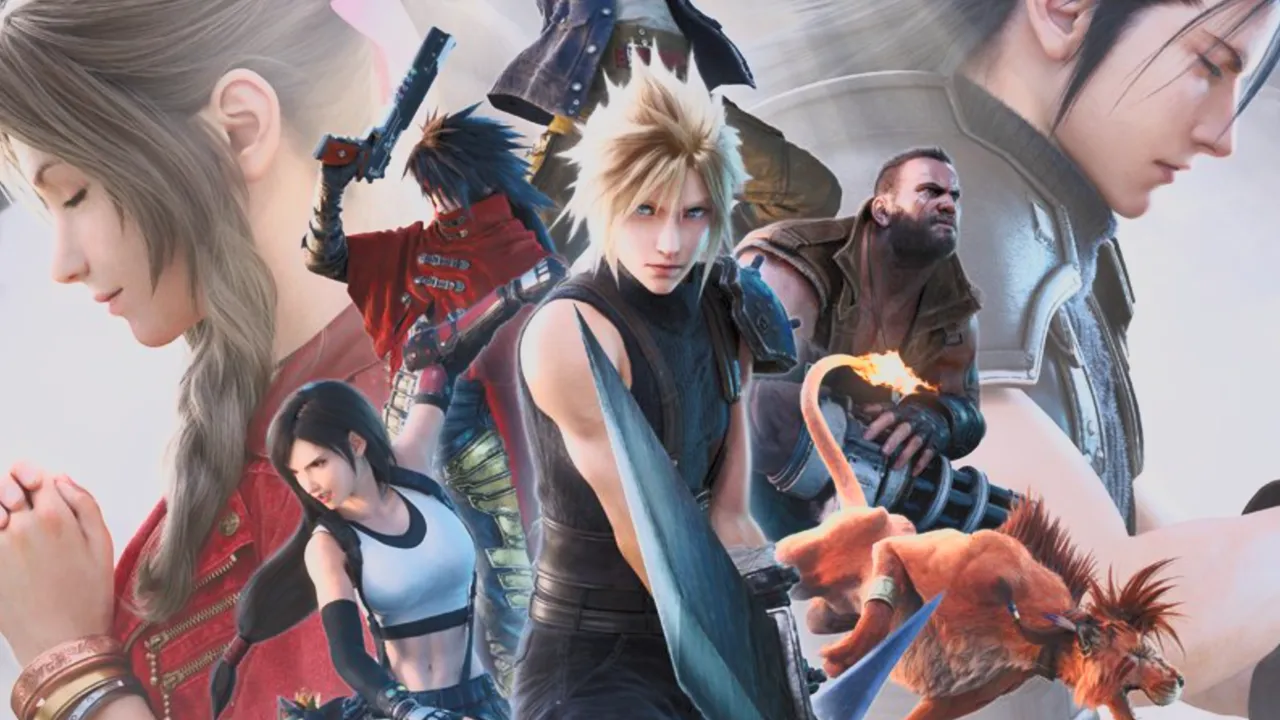
Final Fantasy 7 Revelation director Naoki Hamaguchi confirmed the remake trilogy’s finale will have a “singular ending” for everyone, while still letting players shape key story moments. For decision-makers, it is a rare blend of narrative control and user agency that has real implications for production tradeoffs and audience retention.
Final Fantasy 7 Revelation director Naoki Hamaguchi says the remake trilogy will land on one “singular ending” for everyone. The catch: Square Enix is still making the journey feel different based on player choices, so the emotional ride to the finale can vary even though the destination does not.
Hamaguchi framed the decision as a response to how fans might experience the story. He explained that the team did not want every player to have the same “singular storytelling experience,” and instead aims for each fan to have a unique experience as they head into the final battle. In his words, there “won’t be multiple endings that would change depending on the players’ choices,” but “the process of how we get there” can be different, which may mean “some players might have a different emotion” when reaching the end.
This is more than a narrative detail. It signals a deliberate design compromise between two forces that pull game teams in opposite directions: consistency and personalization. Remake and Rebirth already put Cloud in situations that require choices affecting the world around him, and Hamaguchi says Revelation returns to that player agency. The team’s goal, he suggested, was to reinforce Square Enix’s theme of “resolve,” without letting the remake saga’s final act feel like a copy-paste experience for everyone. In practice, that means some story moments are being reshaped in “approach and depth” for these characters in the final chapter. Hamaguchi even pointed to the example of player choice-driven moments, noting that instead of taking Cloud’s crush on a date at The Golden Saucer in the same straightforward way, Revelation may alter how those moments play out up to the final battle.
If you are an executive or investor, this is the kind of clarity that matters when budgets and schedules get tight. A single ending is operationally simpler than branching into genuinely different end states. It reduces the combinatorial explosion of production, QA, localization, and save-state testing. But by committing to one finale, the studio can invest in variability where it counts: the moments that “might affect the story up to the final battle” and the emotional timing of key beats. Hamaguchi’s distinction is basically a design statement: you can give players agency without multiplying the number of endings the team must fully author, animate, voice, test, and support across all platforms.
There is also an audience management layer here. Square Enix started the remake trilogy with Remake in 2020, after announcing the first chapter in June 2015. That is a long wait, and Hamaguchi explicitly acknowledged that the final moments are likely to get “a lot of attention” because many fans are “worrying - or just being curious - about how it’s going to play out in the end.” In other words, the studio is dealing with high emotional stakes from a fanbase that has already spent years waiting. A “singular ending” can act like a promise of narrative fidelity, while the choice-driven “process” variation lets Square Enix claim uniqueness without risking a messy, franchise-splitting outcome.
The scope of Revelation reinforces why this matters. The game was announced at Summer Game Fest 2026, and it is set to launch simultaneously for PC via Steam and Epic Games Store, Nintendo Switch 2, PlayStation 5, and Xbox Series X|S in spring 2027. That platform breadth makes testing and delivery discipline even more important. Even if the narrative content varies in the middle, the team still needs to converge on a stable end point that works across hardware, input methods, and performance profiles. Hamaguchi also noted that the English version of Sephiroth will be played by a new actor, and that Revelation includes additional details such as tweaked mini-games. Taken together, the studio is balancing major content decisions while still steering the player toward one definitive endgame.
For peers making platform, content, and monetization decisions, the second-order implication is straightforward: player agency is expensive, but “agency without multiple endings” can be a middle path that protects both production realities and brand expectations. It gives studios a framework for letting choices matter in ways players feel, while avoiding the long-term cost of fully divergent endings. The boardroom takeaway is that narrative strategy can be engineered into a development strategy, not just a creative one.
And for players, the promise is oddly comforting. Hamaguchi is effectively telling fans: you will get your own story experience as you approach the end, but the final chapter’s “singular ending” will still land for everyone. That combination, if executed well, could be a smartest-of-both-worlds outcome for a saga that has been in the making for years and is now sprinting toward its decade-in-the-making finale.
This story's Key Insights and Take-aways are locked.
Create a free account to unlock Executive Actions for one credit.
Register to UnlockAlways free for Executives Club members. Join the Club
More in Entertainment

Entertainer Russell Brand denies 7 sex charges amid accuser's 'couldn't breathe' claim
The alleged victim's account sharpens the reputational and legal stakes for Brand, his platforms, and any business tied to a public figure under criminal scrutiny.

Russell Brand's accuser 'bewildered and confused' as he denies 7 sex charges
The criminal case against the comedian is a live test of how media companies manage talent risk when serious allegations go public.

'It's a Magic Trick': Ballet Experts Say Rosalía's SNL Pose Is Impossible
Three ballet experts tell Rolling Stone Rosalía's gravity-defying SNL stillness shouldn't be possible - and why the debate is now part of the show.