

NASA and GE Aerospace fly a megawatt-class hybrid engine on a Saab 340B
The public Farnborough demo turns 15+ years of hybrid-electric propulsion research into flight data for fuel-saving aircraft power.
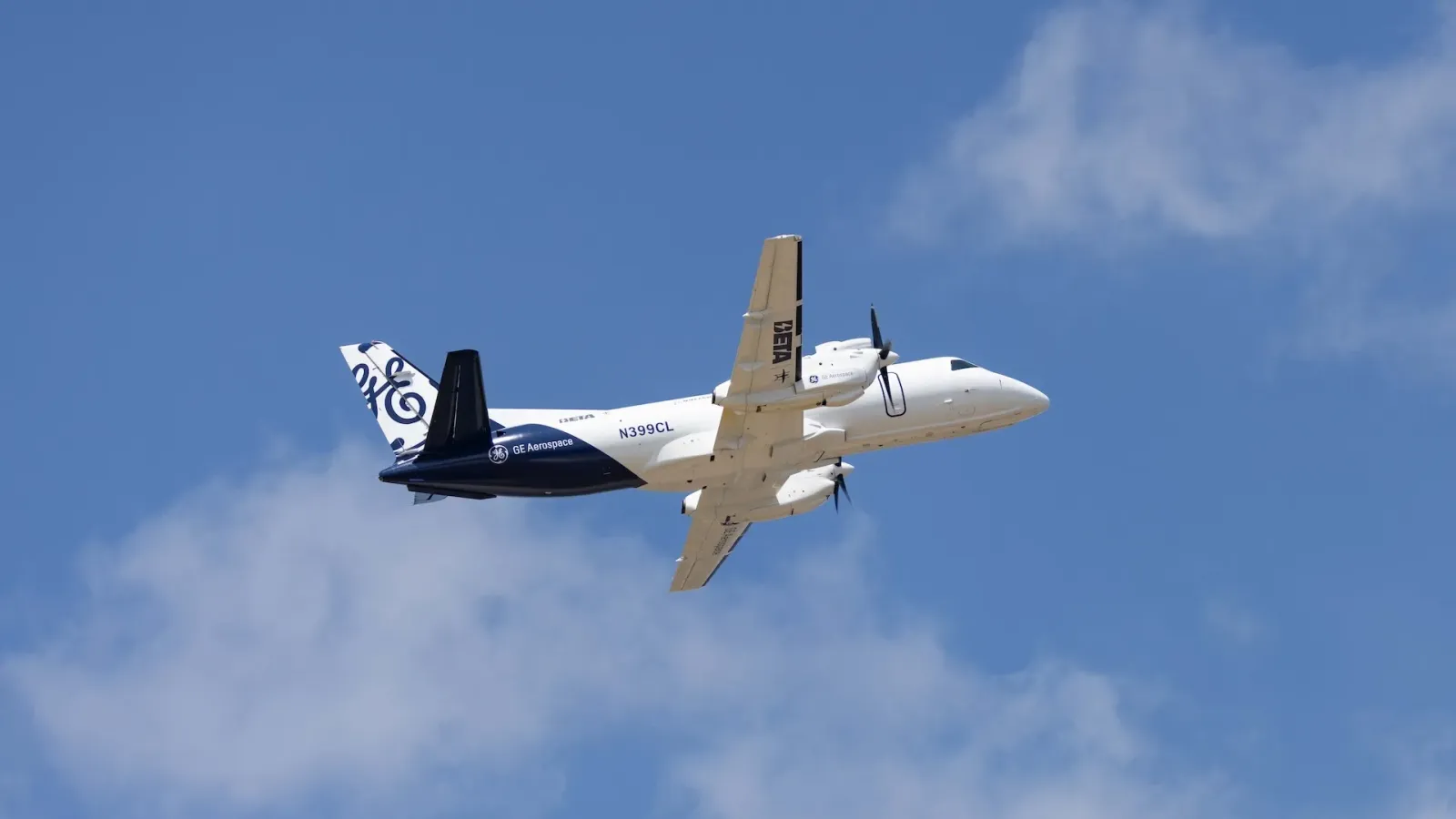
NASA and GE Aerospace demonstrated flight of a megawatt-class hybrid-electric engine mounted to a Saab 340B at the Farnborough International Air Show in the United Kingdom. For decision-makers, the test validates a pathway to lower fuel burn and airline operating costs without sacrificing performance.
NASA and GE Aerospace just pulled off a very specific kind of aerospace magic trick: they got a megawatt-class hybrid-electric engine into actual flight, not just ground testing. The system was mounted to a Saab 340B and flew at the Farnborough International Air Show in the United Kingdom, marking the public debut of an innovation designed to inform new generations of fuel-saving aircraft power systems.
This was not a science fair hover. NASA says the engine flew as part of a technology that, in recent months, achieved historic test flights and became the first hybrid electric-powered aircraft to fly above 30,000 feet. The demonstration integrates electric motors, a gas turbine, and energy storage capabilities, with the explicit goal of showing the capacity to power an aircraft around the size of a regional-class jet while reducing fuel burn and costs without sacrificing performance.
So why should executives care? Because large passenger and cargo planes live in a power reality that small drones and battery-driven aircraft do not. Those smaller systems have helped drive interest in electrified flight in recent years, but getting “massive amounts of power” from batteries alone is an engineering and economics cliff. NASA began contemplating hybrid systems more than a decade ago because using electric motors to supplement some energy for larger aircraft is the kind of challenge that sounds almost beyond reach until you start knocking down the barriers one by one.
According to NASA, the path to this Farnborough flight took about 15 years, with about seven years of preliminary research. During that earlier phase, NASA worked with small businesses and other partners to consider obstacles and potential commercial viability. The agency addressed several barriers to implementation, including power, thermal, and battery technology, plus integration across the power system, engine, and aircraft. In the industry, those are exactly the categories that can quietly kill timelines or balloon costs. Fixing them is less glamorous than flying, but it is what makes flight demonstrations worth the money.
The demonstration also stands on top of two NASA project pillars. NASA says the testing leveraged work done through its former Electrified Powertrain Flight Demonstration project and its ongoing Subsonic Vehicle Technologies and Tools project, with collaborative research that included key testing at NASA test facilities. NASA’s current support for this research runs through the Aeronautics Division within the agency’s Research and Technology Mission Directorate. That matters because it signals continuity: this is not a one-off stunt, it is the same research ecosystem being used to keep moving from concept to validated technology.
GE Aerospace and NASA did not just build and hope. NASA reports that GE Aerospace tested an integrated version of its propulsion system at NASA’s Electric Aircraft Testbed at the agency’s Neil A. Armstrong Test Facility in Sandusky, Ohio in 2022. That testing allowed the system to operate in conditions simulating 45,000 feet in altitude, which is the range where commercial single-aisle aircraft fly. Then, the team added components including electric motors, power converters, propellers, and a GE Aerospace commercial engine, followed by more ground tests and eventual flight tests.
This is where the second-order story gets interesting for boards and leadership teams. NASA describes the engine as designed to demonstrate the capacity to power an aircraft around the size of a regional-class jet, and it says the unit’s technology and designs are expected to be used to help develop future hybrid systems that could lower airline operating costs. In plain English: flight data like this can de-risk the technology path that eventually turns into procurement conversations, fleet planning, and capital allocation, especially when regulators and standards bodies start evaluating what “electrified” can actually mean at airline scale.
NASA’s leadership also framed the work in a way that is familiar to anyone funding long-cycle R&D. Laurie Grindle, director of the Aeronautics Division within NASA’s Research and Technology Mission Directorate, said: “This achievement reflects what NASA does best in aeronautics: we explore bold possibilities, validate them through rigorous research and testing, and work with industry to turn breakthrough ideas into technologies that bring real value for the American people.” Ralph Jansen, aerospace engineer at NASA’s Glenn Research Center, added: “This is the culmination of more than 15 years of work, and we did that because it’s going to have an impact for aircraft that will help reduce energy use and help U.S. companies and the public.”
For executives watching the electrification wave, the strategic stake is simple. The market has been imagining hybrid-electric power for a long time. This demonstration is one of the concrete checkpoints that turns imagination into evidence, and evidence into programs. NASA says the collaboration depended on hundreds of people across NASA centers, alongside GE Aerospace and its partner companies, spanning Electrified Powertrain Flight Demonstration and Subsonic Vehicle Technologies and Tools. If you are an investor, operator, or an operator-turned-supplier thinking about where aircraft power systems will go next, the question shifts from “Can it work?” to “What parts of this architecture will airlines and OEMs actually adopt, and how fast?”
This story's Key Insights and Take-aways are locked.
Create a free account to unlock Executive Actions for one credit.
Register to UnlockAlways free for Executives Club members. Join the Club
More in Science

Alaska's 1,580-foot tsunami had warning signs. Scientists just found them.
Rapid glacier retreat, heavy rainfall, and thousands of tiny tremors preceded Alaska's 1,580-foot tsunami, a warning for every coastal community in a warming world.

The rare mutation that lets high-risk brains dodge Alzheimer's
Scientists found a natural defense against protein buildup, opening a new path to preventive treatments.

3,000 steps a day may halve Alzheimer's decline, study finds
New research links a modest daily walk to less tau buildup and nearly half the cognitive and functional decline, even for those with early signs.