

NASA and L3Harris run cryocoupler tests for in-orbit refueling hardware
The next deep-space fueling step depends on a device that can repeatedly connect at extreme cryogenic temperatures.
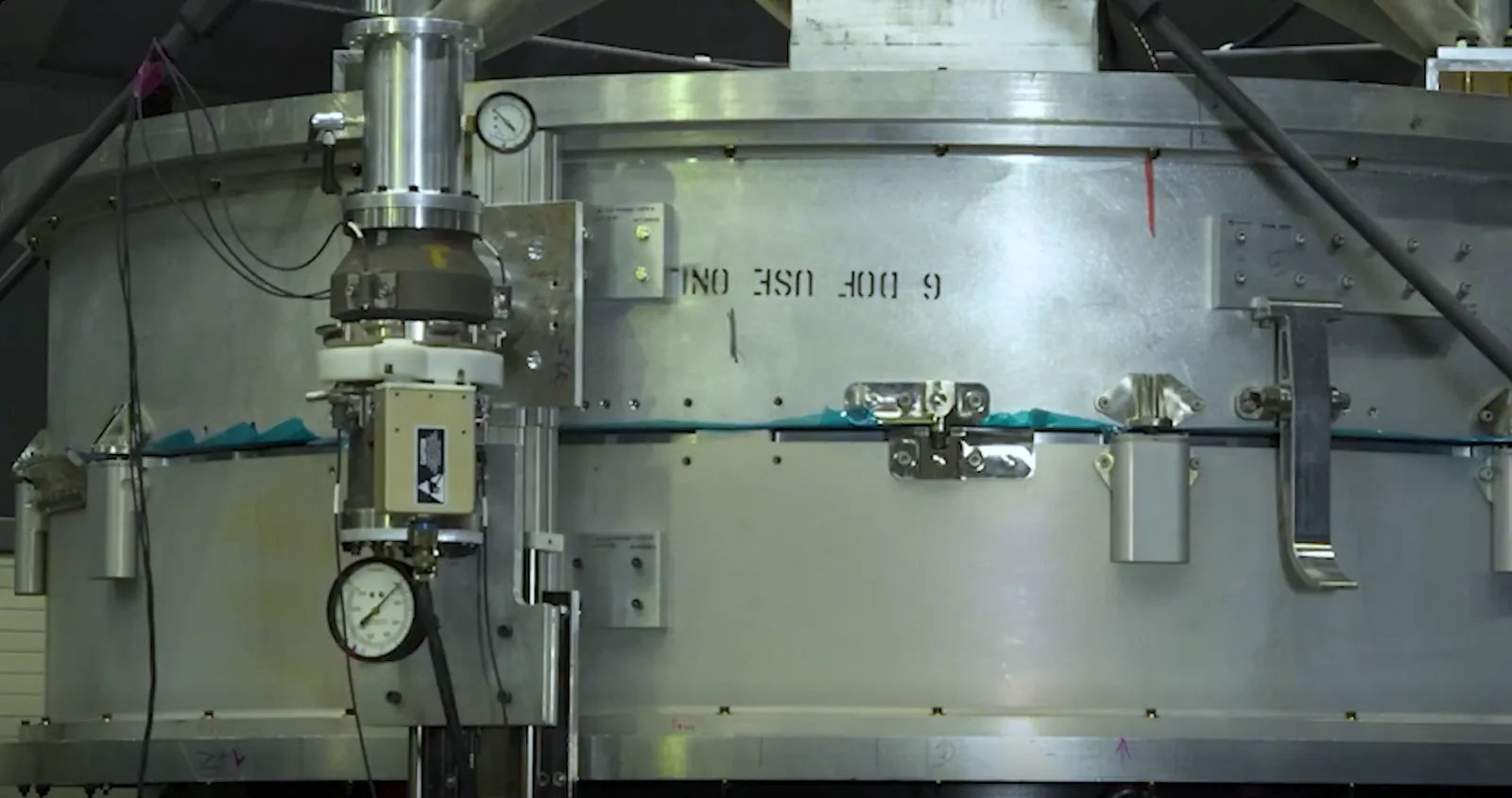
NASA's Marshall Space Flight Center, working with L3Harris, is conducting operational testing on a developmental cryocoupler for future in-orbit spacecraft refueling. The tests aim to prove the hardware can safely handle extremely cold propellants and meet performance limits for multiple connect-and-detach cycles.
NASA and L3Harris just put a key piece of future deep-space fueling hardware through operational testing: a developmental cryocoupler being developed at NASA’s Marshall Space Flight Center in Huntsville, Alabama. The goal is straightforward in concept and brutal in execution, to make in-space refueling workable by reliably transferring cryogenic fluids between spacecraft and future orbital propellant depots. And for decision-makers, that “straightforward” part matters, because without the right connector, the rest of the refueling architecture cannot scale.
NASA describes cryocouplers as the specialized “nozzle” device future missions could use to connect spacecraft to orbital propellant depots. These depots function like space “gas stations,” and cryocouplers are what would let ships refuel before pushing farther into the solar system. But the challenge is not just connecting two pieces of hardware. The coupler must move cryogenic, super-cold fluids without losing propellant or performance. Cryogenic propellants like liquid hydrogen and liquid oxygen must stay chilled to hundreds of degrees below zero Fahrenheit, and that puts strict demands on the materials, seals, and mechanisms that actually transfer the fluid.
NASA’s engineering reality check is already baked into the testing approach. The source points out that ground-based couplers like those used to fill the SLS (Space Launch System) for Artemis missions are not an option for orbiting propellant transfers. Those couplers release quickly while a rocket is launching and must be manually reconnected for the next flight. They are not designed to operate in the harsh environment of space, and they are much larger than what would be used to refill an orbiting spacecraft’s fuel tank. In other words, this is not a rebrand of existing Earth operations. It is an orbit-first re-engineering problem.
The NASA and L3Harris team recently conducted two types of tests at NASA Marshall. First, they ran liquid nitrogen at minus 321 degrees Fahrenheit through multiple connected and disconnected configurations. This was designed to observe how the coupler reacts to thermal contraction, flow, and significant temperature differences between propellant and materials. That kind of testing is the quiet gatekeeper for future mission reliability. If materials shrink, seals behave unpredictably, or flow characteristics drift when temperatures swing, you do not just risk performance. You risk the entire propellant transfer sequence.
Second, the team ran operational tests to determine the cryocoupler’s performance limits. One half of the coupler was mounted to a robotic table that could move and rotate in any direction, while the other half remained stationary above the table. That setup simulates misaligned docking, which is exactly what engineers expect to happen in real life when spacecraft and depot are not perfectly aligned. Importantly, the source notes that the cryocoupler is designed to accommodate some misalignment in case alignment is imperfect when docking.
NASA also frames these tests as early in development, which is important for how organizations should interpret the results. “These cryocouplers are very early in development, so the testing is mostly focused on basic functionality,” said Travis Belcher, cryocoupler project manager at NASA’s Marshall Space Flight Center. Belcher adds that future test campaigns will be designed for specific missions and assessed more meticulously based on each mission’s requirements. That statement is a reminder that what is being proven now is the foundation, not the final form. The “basic functionality” phase is where risk gets surfaced quickly, before it becomes expensive schedule pain later.
The source also makes the mission economics more legible. Belcher says cryocouplers being worked on can attach and detach multiple times and are fully automated, so astronauts would not have to perform a spacewalk to transfer propellant. In a world where deep-space mission planning often runs into tight tradeoffs for time, complexity, and crew workload, automation and repeatability are not just nice engineering. They are the difference between a capability that stays on a slide and one that can actually fly.
Finally, the testing is embedded in a broader NASA partnership and program structure. The cryocoupler testing was done as part of a 2022 Announcement of Collaboration Opportunity, where NASA centers provide select companies with expertise, facilities, hardware, and software at no cost. The Cryogenic Fluid Management Portfolio project, a cross-agency team based at NASA Marshall and NASA’s Glenn Research Center in Cleveland, oversees cryocoupler development. For executives tracking aerospace innovation, the implication is clear: cryogenic fluid management is moving from concept to hardware validation with real partner execution, and the bottleneck is increasingly about repeatable, automated interfaces that can survive extreme thermal and operational conditions in space.
For boards and senior leadership teams across the space ecosystem, this is the kind of progress update that changes internal priorities. In-orbit refueling is not just about propulsion or launch capacity. It is about the plumbing and the interfaces that make future mission architectures viable. NASA’s testing here is an early but necessary step toward making that capability real, and it signals where the next wave of engineering work and vendor attention is likely to concentrate.
This story's Key Insights and Take-aways are locked.
Create a free account to unlock Executive Actions for one credit.
Register to UnlockAlways free for Executives Club members. Join the Club
More in Science

University of Ottawa’s UbiMyTherapist AI reads smartwatch and earbuds to spot distress early
A new approach aims to detect emotional distress automatically, so people do not have to ask for help first.
Hayabusa2 risks a 1 km flyby of Torifune July 5
Japan's probe hunts answers on a 450-meter asteroid while testing rapid reconnaissance for planetary defense.

California Polytechnic wins NASA’s $10,000 2026 Human Lander life-support prize
Top student designs in environmental control and life support for future Artemis landers just got real money and real momentum.