
NASA chief says Blue Origin has time into 2027 after New Glenn pad blast
Jared Isaacman praised Blue Origin's cleanup after the May 28 explosion, tying the timeline to Moon missions.
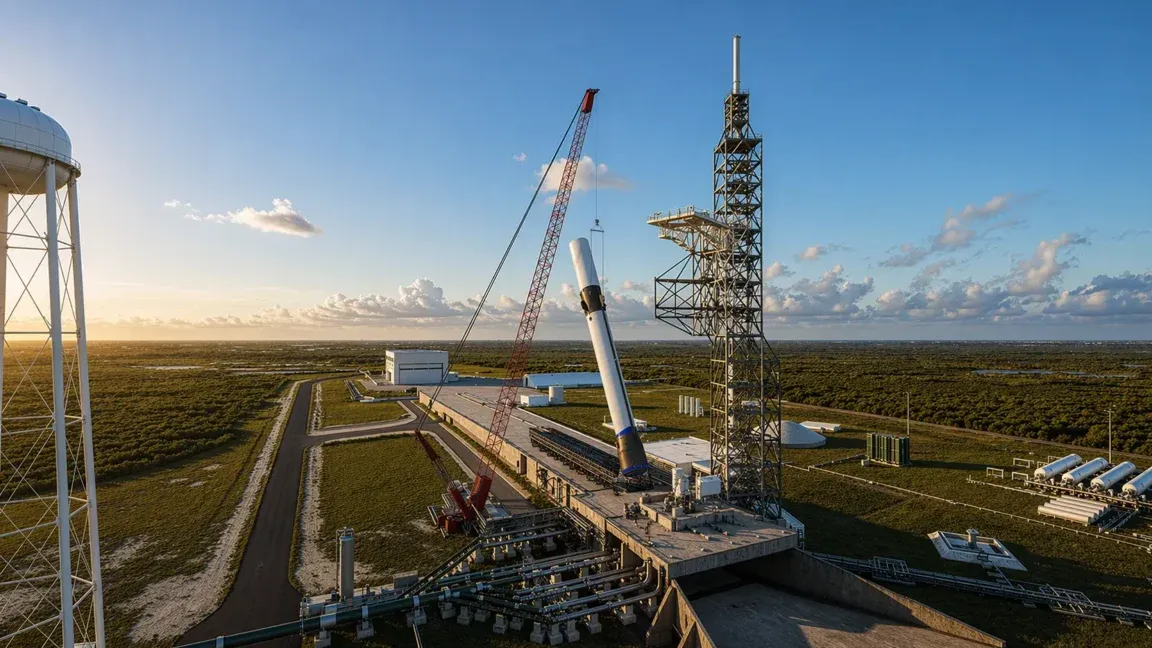
NASA Administrator Jared Isaacman said Blue Origin has been putting significant resources into cleanup of its New Glenn launch pad after a late May explosion. That assessment matters to NASA decision-makers because the schedule affects both Mk. 1 and Mk. 2 landers that are central to NASA cargo and crew plans.
NASA Administrator Jared Isaacman is publicly putting a clock on how long NASA will stay calm about Blue Origin after the New Glenn launch pad explosion. Speaking to reporters on Wednesday afternoon, Isaacman said NASA has “time into 2027 before we're getting nervous,” following the anomaly that took out New Glenn's only operational launch pad on May 28.
And in the same breath, he offered the kind of endorsement that carries weight internally: Isaacman said Blue Origin's response to the situation is “almost beyond impressive,” adding that this is “not just a NASA assessment.” The key point for decision-makers is that NASA is not treating this as a lights-out failure. It is treating it as an industrial recovery problem, and giving it a runway long enough to keep Moon mission planning moving.
So what happened, and why does it matter right now? Blue Origin's New Glenn rocket was expected to be a critical piece of NASA's lunar architecture, because NASA is counting on Blue Origin's Mk. 1 lander for dozens of cargo missions to the Moon and its Mk. 2 lander to eventually ferry people to the lunar surface. When the May 28 test firing and subsequent explosion effectively removed New Glenn's only operational launch pad, it didn't just damage hardware. It disrupted the launch pathway that NASA needs to turn its lander plans into actual, repeated missions.
Isaacman also pointed to the involvement of the US Space Force, saying officials there have been “deeply involved” in Blue Origin's planning and work since the anomaly. In practice, that signals a broader oversight posture than a typical commercial mishap. Launch sites and launch readiness are safety-critical and schedule-critical, and when the Space Force is deeply embedded in planning and execution, it usually means the compliance loop is not a paper exercise. It is the reality check that can slow or accelerate “return to flight” timelines, even when the company is already spending heavily on cleanup.
This is where incentives start to bite for both sides. NASA has a significant stake in Blue Origin's ability to recover and resume flights, because the landers in question, Mk. 1 and Mk. 2, are not abstract science projects. They represent an operational cadence. Dozens of cargo missions imply a sustained rhythm of launches, not a one-off event. And Mk. 2's stated role in ferrying people to the lunar surface turns reliability, testing, and launch infrastructure health into something beyond performance metrics. The second-order effect is that a prolonged pad outage can ripple into how NASA sequences missions, manages interfaces, and allocates risk across its broader lunar effort.
Blue Origin, meanwhile, has to balance two jobs at once: fix the immediate damage and prove, under scrutiny, that the system is back to a standard that regulators and government partners can accept. Isaacman's public praise suggests that, at least from NASA's perspective, Blue Origin has been operating with urgency and seriousness on the cleanup work since the explosion. That doesn't erase the fact of the failure, but it does influence how stakeholders interpret recovery efforts. If NASA sees credible progress, the agency is less likely to pull forward backup plans in ways that can become disruptive and expensive.
There is another reason this matters beyond NASA and Blue Origin. In launch and space transportation, timing is strategy. A missed window can raise costs, shift contract assumptions, and force customers to recalibrate. When an agency leader signals “time into 2027” before nervousness kicks in, that can stabilize planning across partners that depend on launch capacity. At the same time, it sets an expectation for milestones: everyone involved knows the clock exists, even if the tone is supportive.
For executives and boards overseeing space businesses or space-adjacent programs, the underlying lesson is less about one company and more about governance under pressure. When an operational anomaly knocks out the only working launch pad, recovery is not just engineering. It becomes a joint process involving agency stakeholders and the US Space Force. Public signals from top agency leadership can affect how regulators, partners, and internal teams think about risk, schedule recovery, and resource allocation.
Isaacman's message, therefore, lands as both reassurance and constraint. Blue Origin's cleanup and planning have earned unusual praise. NASA officials are “deeply involved” in response planning, but NASA also sees a path where the program can keep moving without panic. The stake is clear: NASA is counting on New Glenn to help deliver both Mk. 1's dozens of cargo missions and Mk. 2's human lunar ambitions, and the timeline for recovering launch capability now has a very specific ceiling in the minds of decision-makers.
This story's Key Insights and Take-aways are locked.
Create a free account to unlock Executive Actions for one credit.
Register to UnlockAlways free for Executives Club members. Join the Club
More in Business

Comcast shares jump 25% as it plans to split NBCUniversal and Sky
The tax-free spin-off could reshape focus, funding, and competition across media and tech for years.

Bungie cuts most Destiny 2 staff as Sony says Marathon still matters
Herman Hulst confirms layoffs affecting most Destiny and some Marathon teams after Bungie admits Destiny fell short.

SK Hynix jumps 11% after seeking up to $29.4B in Nasdaq listing
The chip giant filed for a Nasdaq listing plan that could raise $29.4 billion, instantly reshaping investor expectations.