

NASA decision analyst Betsy Ford turns messy Earth data into a decadal-survey planning tool
NESSIE integrates dozens of Earth-observing missions so stakeholders can see what exists now, what could change, and what NASA should prioritize next.
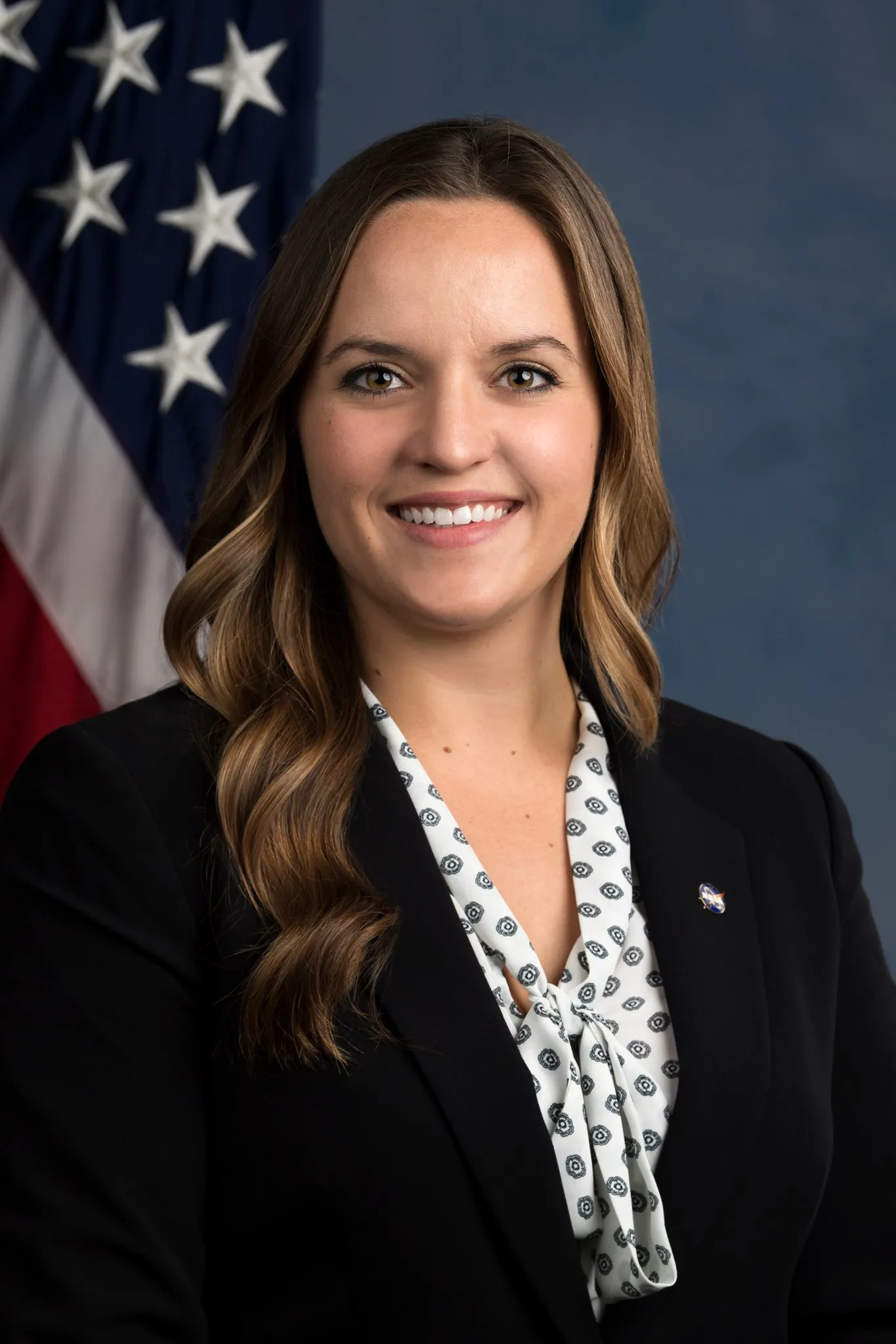
Betsy Ford, a decision analyst and Deputy Team Lead for the NASA Earth Science Strategic Integration Environment (NESSIE) team at NASA’s Langley Research Center, helps integrate information across NASA’s Earth-observing “system-of-systems.” Her work is focused on making NESSIE increasingly useful for planning, including an effort to make it available to the National Academies to inform the next decadal survey.
If you want to understand how NASA decides what Earth satellites to build, launch, and sustain, start with the least glamorous part of the space story: making sense of the data pile. NASA’s Earth-observing satellites track everything from how aerosols move through the atmosphere to how moisture descends through soil and how land cover shifts over decades. The measurements exist. The hard part is turning “hundreds of missions and data products” into something decision-makers can actually use.
That’s exactly what NESSIE is built to do, according to decision analyst Betsy Ford, who serves as Deputy Team Lead for the NASA Earth Science Strategic Integration Environment (NESSIE) team within the Systems Analysis and Concepts Directorate (SACD) at NASA’s Langley Research Center. Ford frames her job as an information integration problem across NASA’s Earth Science Division (ESD), a portfolio that evolves as missions are added or retired, capabilities change, and international partnerships shift over time. In other words: the Earth science picture is always moving, and the planning tools must keep up.
At the center of NESSIE is an information architecture challenge. There are hundreds of Earth-observing satellite missions, including NASA missions and partner missions, and each one observes specific phenomena, from cloud cover to land use. The data has always existed. But the intelligence is scattered. Ford explains that NESSIE’s main web application page includes a heat map showing which missions are addressing 34 science observables, paired with a mission timeline. Additional views can drill deeper: which instruments on which spacecraft cover a given measurement, and how international partner collaborations have evolved over the years. This is the “one place” problem solved in an interface: connect observables, missions, instruments, and partnership history so stakeholders can see coverage and gaps.
The bigger reason this matters is that NASA is not just running experiments. It is making long-range choices under uncertainty. Ford points to the backdrop of deep uncertainty in technology readiness, launch opportunities, and resource availability. That combination forces ESD to operate like a system-of-systems manager, constantly navigating tradeoffs: what’s ready now, what might be possible later, what is at risk, and what priorities should carry forward. NESSIE’s purpose is to support those decisions with clearer visualization of the current state, plausible evolution paths, and how everything lines up against NASA’s long-term scientific priorities.
Ford’s “continuous improvement” approach is the practical engine behind that. She says the team focuses on iterative refinements, where each update aims to give stakeholders a clearer, more useful product than they had the day before. And the target audience is not just internal NASA planning. While supporting NASA headquarters in its strategic planning, Ford notes that the team is working toward making NESSIE available to the National Academies to help inform the next decadal survey. The decadal survey is a key document that defines national science priorities and guides government investments into the next decade. In Ford’s words, it is a significant step toward using NESSIE “to more fully support the scientific community through clearer data-driven planning of future missions.” Put simply: better integration tools can influence what gets prioritized, funded, and built next.
What makes Ford’s work feel tangible to her is that Earth science is not only an academic exercise. She describes a visit to her family’s farm in Nebraska, where she explained her work using satellites, observables, and web applications. Her relatives pulled out their phones to show satellite data they use every day to monitor soil moisture across their fields. Then they showed her the tool that it had once replaced, a metal rod used to shove into the ground by hand to measure moisture levels. Ford points to that example as a reminder of impact, saying, “It reaches more people than most realize. The farmers who are growing your food use the data from these satellites.” The satellites are the visible part, she says. The less visible but decisive part is what satellites get built and sustained, and the analytic tools that make those decisions smarter.
Ford’s career path helps explain why she focuses on systems thinking rather than just single-mission science. Both of her parents spent their careers at NASA Langley and recently retired from it. Growing up, Ford attended the center’s daycare and summer picnics, describing it as “a college campus and a big family.” After graduating from Virginia Tech with a mechanical engineering degree, she first joined General Motors’ engineering rotation program in Michigan. She spent time as a mass integration engineer for Corvette, then moved to vehicle occupant safety engineering performing crash testing. She also completed a master’s in engineering management at the University of Nebraska, where she was introduced to risk analysis and strategic decision making. When a position opened in the Space Mission Analysis Branch within SACD, she applied with the hope that systems engineering and her master’s could bridge the gap between hardware testing and NASA’s analytical work. Ford says leadership saw potential in her background and gave her a chance to apply it in a new context.
Now, she’s helping build that same kind of pathway for others. Ford recently stepped into the deputy lead role on NESSIE, staffed primarily by early-career engineers. She credits mentors at NASA, especially team lead Marie Ivanco, who modeled a method for approaching complex problems. Ford says Ivanco asks, “What is your process?” and championed decomposing problems and approaching them systematically, which Ford describes as something she admired because it was not natural to her at the time. Ford sees her current role as balancing opportunities for engineers to grow with structure and guidance. She also believes NASA offers engineering newcomers the freedom to define problems and solutions rather than only executing known processes, and the chance to exercise research instincts in ways more prescriptive industry environments rarely allow. She describes the result as more creativity, and a chance to flex research muscles.
For executives and operators in the broader ecosystem, this is a quiet but powerful reminder: when decisions about funding and priorities move, it’s often because the information architecture improved. NESSIE is not a rocket. It’s a planning lens for a complex portfolio, and the team’s push to make it available to the National Academies ties directly into how the next decadal survey could shape the next decade of Earth science investments. If you work anywhere near program planning, data product strategy, or policy-informed R&D, Ford’s work is a case study in why “integration” is not a supporting act. It’s where the future gets chosen.
This story's Key Insights and Take-aways are locked.
Create a free account to unlock Executive Actions for one credit.
Register to UnlockAlways free for Executives Club members. Join the Club
More in Science

Alaska's 1,580-foot tsunami had warning signs. Scientists just found them.
Rapid glacier retreat, heavy rainfall, and thousands of tiny tremors preceded Alaska's 1,580-foot tsunami, a warning for every coastal community in a warming world.

The rare mutation that lets high-risk brains dodge Alzheimer's
Scientists found a natural defense against protein buildup, opening a new path to preventive treatments.

3,000 steps a day may halve Alzheimer's decline, study finds
New research links a modest daily walk to less tau buildup and nearly half the cognitive and functional decline, even for those with early signs.