
NASA recruits volunteers for a year inside Moon and Mars habitat simulations starting Aug 2027
One-year isolation at Johnson Space Center aims to validate health, performance, and mission systems without leaving Earth.
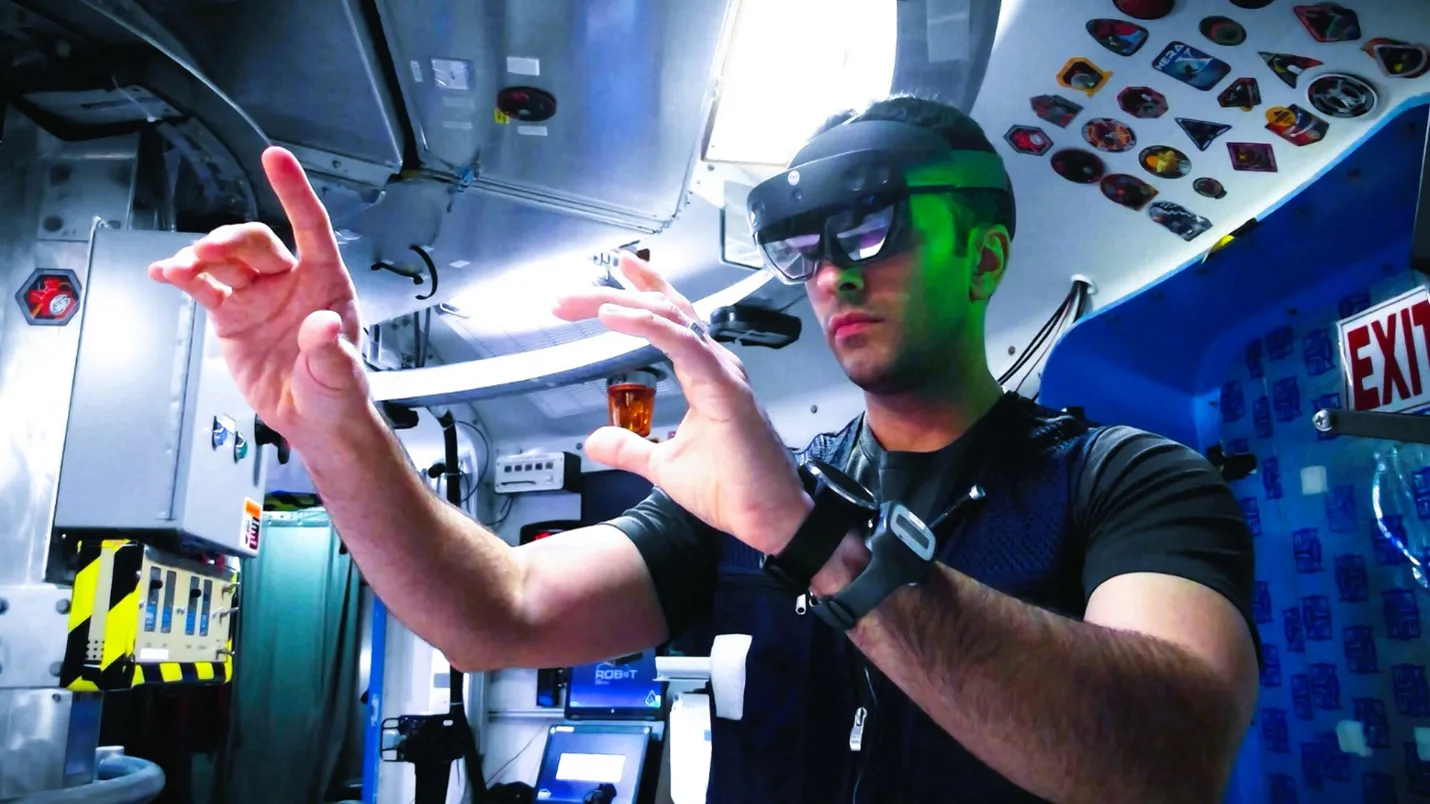
NASA is recruiting research participants for its Moon and Mars Exploration Analog mission, a yearlong simulated deep space experience at Johnson Space Center in Houston, beginning no earlier than August 2027. For decision-makers, it is a near-term “data without flight risk” pipeline to support astronaut safety and hardware readiness for Moon operations and future Mars efforts.
NASA is recruiting research participants for its next yearlong simulated deep space mission, the Moon and Mars Exploration Analog. Beginning no earlier than August 2027, volunteers will spend one year living and working in interplanetary environments at NASA’s Johnson Space Center in Houston, operating under isolated conditions designed to reflect what crews may face during crewed missions to the Moon or the Red Planet.
Here is the practical payoff: NASA says insights from this yearlong experience will help keep astronauts safe and mission-ready during future planetary surface operations. NASA also expects the results to inform plans for a sustained lunar presence through the agency’s Moon Base and future Artemis missions. In other words, this is not a “cool experience” for the sake of it. It is a structured effort to generate human adaptation data, and to stress-test the systems and procedures that could later be used when missions move from Earth to the lunar surface and beyond.
The simulation runs for approximately one year and will take place in two confined habitats. Volunteers selected for the first Moon and Mars Exploration Analog mission will perform tasks in immersive, interactive environments while living inside those habitats that simulate traveling to and living on the Moon and Mars. The program blends the spacecraft-like environment of one habitat with the base-like environment of another, using elements drawn from NASA’s HERA (Human Exploration Research Analog) and CHAPEA (Crew Health And Performance Exploration Analog) missions into a single, integrated mission format.
NASA describes this approach as a way to streamline evaluation of astronaut adaptation across the full range of potential mission scenarios. In the analog design, the HERA habitat is used as a spacecraft, and the CHAPEA habitat is used as a base. Volunteers will live and work in confined, isolated environments meant to simulate months-long flights to and from other planetary surfaces. They will also mimic surface operations, including mock Mars walks and using a rover to travel to exploration sites located beyond the main habitat. Those details matter because the operational challenge is not just endurance, it is doing real work in a constrained environment with limited resources and time.
Across the year, researchers will study crew health and performance under resource limitations and mission demands. NASA also frames the analogs as a way to assess and validate hardware, technologies, protocols, requirements, and other systems designed to support crew health and performance on long-duration deep space missions, without leaving Earth. For founders, investors, and builders in adjacent aerospace ecosystems, this is a clear signal about where NASA is willing to invest in learning: in Earth-based testing that can de-risk decisions before crews ever carry new hardware, new processes, or new operational concepts into space.
This kind of human-validation pipeline also tends to ripple outward into procurement timelines and development priorities. When agencies can generate structured results from controlled analog studies, they can narrow requirements earlier, reduce ambiguity, and potentially cut down on expensive iteration later. That matters for any organization designing life support-adjacent tech, crew monitoring systems, training tools, operational software, or procedures that must function under stress. NASA is explicit that the effort will provide valuable data for its Human Research Program, which innovates ways to keep astronauts healthy and mission-ready.
To be considered, NASA says candidates must meet specific physical and education requirements, be willing to take part in a multi-day selection process, and pass NASA’s physical and psychological assessments. The application and related requirements are available on the Moon and Mars Exploration Analog web page (and the recruitment page noted by NASA). NASA also emphasizes motivation and fit: candidates should have a strong desire for unique, rewarding experiences and interest in contributing to NASA’s work to prepare for extended stays on the lunar surface and the first crewed mission to Mars.
The broader context is NASA’s “Golden Age of innovation and exploration,” as the agency describes it, with an emphasis on increasingly difficult missions to explore more of the Moon for scientific discovery, economic benefits, and the goal of establishing an enduring human presence on the lunar surface. From a strategic standpoint, this analog is a bridge between the Artemis-era push for lunar operations and the longer-range challenge of sustained stays and first crewed Mars efforts. If you are a peer decision-maker watching human spaceflight timelines, the headline lesson is straightforward: NASA is trying to compress learning cycles by moving critical unknowns into a one-year, Earth-based stress environment now, so future crews can spend more time doing mission work and less time improvising under conditions no one has enough data on yet.
This story's Key Insights and Take-aways are locked.
Create a free account to unlock Executive Actions for one credit.
Register to UnlockAlways free for Executives Club members. Join the Club
More in Science

Alaska's 1,580-foot tsunami had warning signs. Scientists just found them.
Rapid glacier retreat, heavy rainfall, and thousands of tiny tremors preceded Alaska's 1,580-foot tsunami, a warning for every coastal community in a warming world.

The rare mutation that lets high-risk brains dodge Alzheimer's
Scientists found a natural defense against protein buildup, opening a new path to preventive treatments.

3,000 steps a day may halve Alzheimer's decline, study finds
New research links a modest daily walk to less tau buildup and nearly half the cognitive and functional decline, even for those with early signs.