

NASA’s CAPSTONE 02 sends two probes to master “three-body orbits” before Artemis in 2027
Two spacecraft will fly in formation to test navigation, comms, and maneuvering in the moon’s messy gravity.
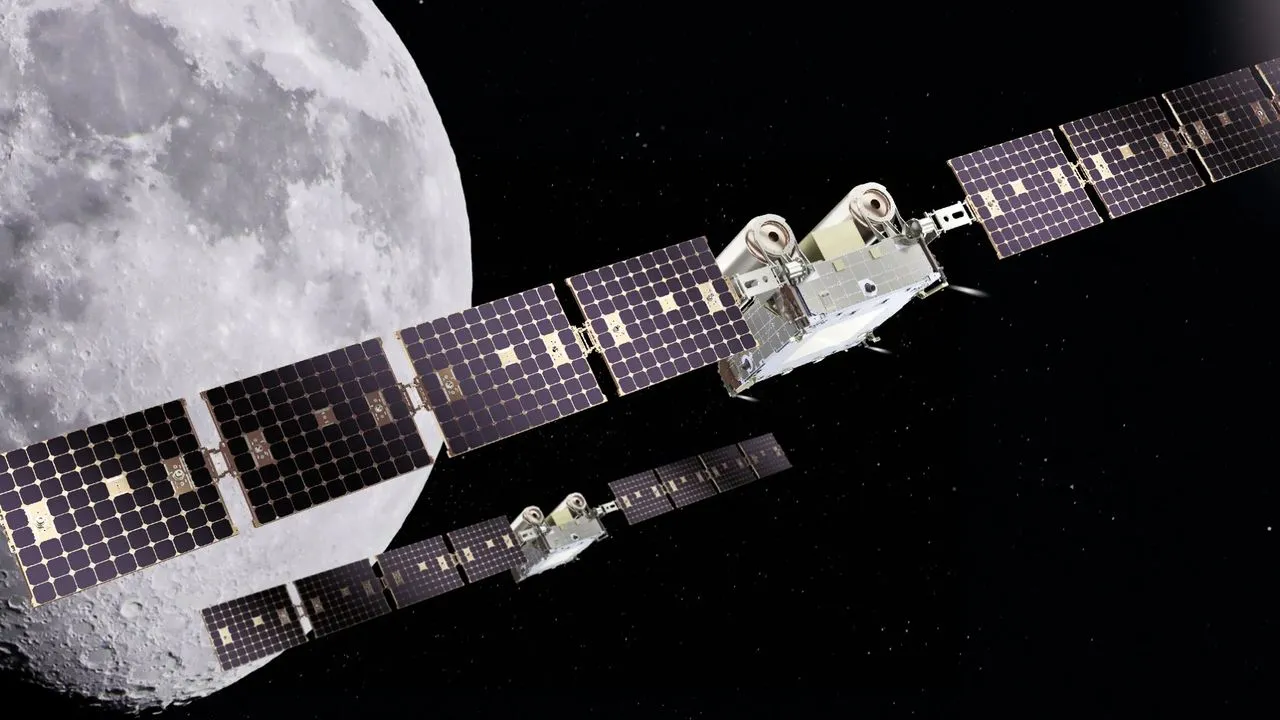
NASA is planning CAPSTONE 02, a two-probe mission built by Terran Orbital Systems, aiming to launch in 2027. The pair will maneuver in close proximity to study how spacecraft handle complex “three-body orbits,” while also validating communication and navigation techniques for Artemis.
NASA is sending two maneuverable probes to lunar orbit as part of CAPSTONE 02, and the mission’s whole point is brutally practical: figure out how spacecraft perform when the gravity field stops behaving nicely. CAPSTONE 02 is currently aiming to launch in 2027, and it will put two probes into a “formation” flight, maneuvering in close proximity so mission operators can observe the gravitational effects in cislunar space with much higher fidelity than you can get on Earth.
Here’s the key concept that makes this more than a science experiment. In cislunar space, a spacecraft doesn’t live under just Earth’s gravity or just the moon’s. It’s under both. That’s why NASA frames the challenge as “three-body orbits,” where the combined pulls of the Earth, the moon, and the spacecraft create paths that can be difficult to predict and difficult to control. CAPSTONE 02 is designed to test spacecraft maneuverability in those complex orbits while simultaneously studying communication and navigation systems that will feed directly into NASA’s Artemis missions and the long-term goal of a moon base.
NASA’s own messaging connects the dots to operational readiness. Sean Fuller, Moon Base CAPSTONE manager, said in an agency statement: “This mission represents an important step in the maturation of cislunar capabilities.” He added that CAPSTONE 02 “lays the foundation for lunar infrastructure and commercial services that support Artemis, Moon Base, and future missions to deep space.” That matters because cislunar capability is not just about getting there. It’s about staying there, coordinating trajectories, and building repeatable services that other missions and commercial players can rely on.
CAPSTONE 02 also matters because it tests these problems in a specific, observable way. Once in space, the two CAPSTONE 02 spacecraft will alternate jobs while flying in formation, switching between what NASA calls “chaser” and “target” roles. That means the pair will not just drift along the same track and hope. Instead, they will deliberately act on each other in a controlled operational choreography, which gives ground teams more data about how navigation, maneuvering, and relative positioning behave under real gravitational conditions.
To do that, NASA says the spacecraft pair will use celestial navigation, optical sensors, and data collected by telescopes on the ground during these maneuvers. The mission approach is intentionally layered: onboard sensing plus ground observations. NASA even calls out that this is similar in spirit to how it uses multiple data sources to help its Orion spacecraft meet up with a lunar lander en route to the moon.
This is also why CAPSTONE 02 is being positioned as an enablement step for Artemis, not an isolated tech demo. On Artemis III, currently scheduled for 2027, NASA plans to test some of these rendezvous techniques because Orion will rendezvous with both Blue Origin’s Blue Moon lander and SpaceX’s Starship, if all goes according to plan. In other words, CAPSTONE 02 is working upstream, validating the navigation and communication performance in the environment where those rendezvous operations will happen.
And NASA’s rationale is blunt about constraints. “Transporting crew to the lunar surface from cislunar orbit depends on knowing how well navigation systems will perform during these operations. Since these conditions can't be fully recreated on Earth, they must be tested in space,” NASA wrote in its statement outlining CAPSTONE 02. That sentence is the operational pressure behind the schedule and the engineering choices. If you cannot reproduce the conditions on the ground, your test program becomes a design requirement, not a bonus.
CAPSTONE 02 is the second mission under NASA’s CAPSTONE program, or Cislunar Autonomous Positioning System Technology Operations and Navigation Experiment. The first CAPSTONE probe launched in 2022 and operated for four years before NASA officially concluded its mission in June 2026. NASA says that that microwave-oven-sized CAPSTONE spacecraft tested communications tech and became the first spacecraft to test three-body orbits around the moon. It also flew in what’s described as a near rectilinear halo orbit, which NASA characterizes as gravitationally stable because of the nearly equal pulls of both Earth’s gravity and the moon’s.
Put it together, and CAPSTONE 02 looks like a step-change in how NASA is building trust in lunar logistics. For decision-makers across the space ecosystem, the second-order implication is straightforward: when navigation and comms are proven in the real cislunar environment, rendezvous, operations planning, and the reliability of lunar infrastructure all become more scalable. That affects not only NASA missions tied to Artemis, but also the broader push toward commercial services and the eventual routines that will make “moon base construction” less like a one-off headline and more like an infrastructure program.
This story's Key Insights and Take-aways are locked.
Create a free account to unlock Executive Actions for one credit.
Register to UnlockAlways free for Executives Club members. Join the Club
More in Technology

Google quietly links your phone number to every Android account on your SIM
Adding a SIM now ties your phone number to all Google accounts - and future accounts inherit it. Here's the security and privacy stakes.

Hijacker AI 'Skynet mode' runs 100,000 attack steps against exposed models
Symantec caught a criminal AI agent that borrows other models, steals data, and mines crypto; the only relief is no confirmed victims yet.

Nvidia's AI-financier shift faces its first big test as neoclouds stumble
A rout in neocloud stocks is forcing investors to weigh Nvidia's hidden exposure as both supplier and lender to the AI buildout.